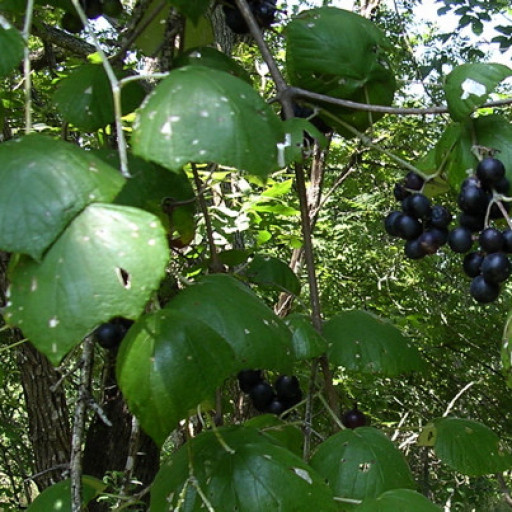
Plant Overview
Known across the American South as the "Mustang Grape," this woody vine is a true survivor of the Texas heat. It is a vigorous, climbing powerhouse that can drape itself over fences and trees like a lush, green blanket. While its dark, heavy clusters of fruit look tempting, they carry a fiery, acidic punch that has earned them a reputation among local foragers and winemakers alike.
🔍 How to Identify
- 🍃 The "Woolly" Leaf: The most distinct feature is the leaf's underside, which is covered in a dense, white-to-gray velvety fuzz. The top side is dark green and leathery.
- 🍇 Dark Clustered Fruit: It produces small, spherical grapes that turn a deep, almost black-purple when ripe, usually appearing in mid-to-late summer.
- 🧗 Woody Tendrils: As a "scandent" shrub, it uses tough, wiry tendrils to hitchhike up any vertical surface, often reaching heights of 40 feet or more.
🏡 In Your Garden
- 🌱 Space and Support: This isn't a plant for a small balcony. It is incredibly vigorous and requires a sturdy trellis or a long fence line to roam. Because of its deep taproot, it is exceptionally drought-tolerant once established.
- ✂️ Pruning Strategy: To keep it from swallowing your garden, aggressive pruning in the dormant winter season is a must. It thrives in alkaline soils and doesn't mind the rocky, limestone-rich earth found in its native habitats.
⚠️ Safety & Toxicity
- 👅 Acidity Warning: The raw fruit is extremely acidic. Eating them straight off the vine can cause a painful burning sensation in the mouth and throat, often referred to as "Mustang itch."
- 🐾 Toxic to Pets: Like all members of the Vitis genus, these grapes are highly toxic to dogs and can cause acute kidney failure. Keep your furry friends away from fallen fruit.
- 🧤 Skin Irritation: The sap and the skin of the grapes contain tartaric acid which can irritate sensitive skin; it is best to wear gloves when harvesting or processing large amounts.
✨ Fun Fact
During the Civil War, when imported supplies were cut off, Texans used Mustang Grapes to produce a dry, deeply colored red wine. Because the grapes are so tart, legendary amounts of sugar had to be added to make the "Texas Claret" drinkable!

Detailed Care Instructions
To grow Vitis mustangensis, also known as Mustang grape, follow these steps:
- Climate and Soil: Ensure that you are in a suitable climate for growing Mustang grape. They thrive in warm regions such as the southern United States. The soil should be well-draining, loamy, and slightly acidic.
- Site Selection: Choose a location that receives ample sunlight, at least 6-8 hours a day. Ensure there is enough space for the vine to spread out as it grows.
- Planting: Plant the vine in early spring or fall. Dig a hole large enough to accommodate the roots. Place the plant in the hole, making sure the crown, where the roots meet the stem, is at ground level. Backfill the hole with soil, tamping it down gently.
- Trellis or Support: Mustang grape is a climbing vine and requires a trellis or support system to grow properly. Build or install a sturdy trellis or fence for the vine to climb on.
- Watering: Water the plant deeply after planting and then regularly to keep the soil consistently moist, but not waterlogged. Provide enough water during dry periods or droughts.
- Mulching: Apply a layer of organic mulch, such as wood chips or straw, around the base of the vine. This helps retain moisture, suppresses weed growth, and regulates soil temperature.
- Pruning: Perform regular pruning during the dormant season to remove dead or damaged wood and to shape the vine. Mustang grape can be vigorous, so if space is limited, prune more heavily to control its growth.
- Fertilizer: Apply a balanced fertilizer, such as 10-10-10, in early spring and again in late spring. Follow the instructions on the fertilizer package for proper application rates.
- Pest and Disease Control: Monitor the plant regularly for any signs of pests, such as aphids or grape leafhoppers. Treat any infestations promptly with appropriate organic or chemical controls. Additionally, be on the lookout for diseases such as powdery mildew or black rot. Consult with a local extension office or nursery for suitable control options.
- Harvesting: Depending on the variety, Mustang grapes are usually ready for harvest in late summer or early fall. Pick the grapes when they are fully ripe, usually when they turn dark purple. Use them for eating fresh, making jelly, or even trying your hand at winemaking.
Remember to research specific growing techniques and local recommendations for your area, as different regions may have varying conditions and requirements for growing Vitis mustangensis.

Place in a bright room that is sun drenched almost all day. Or directly in a south-facing window.

To properly water this plant, it is important to consider the specific needs of the species and its growing conditions. It is recommended to water thoroughly but infrequently, allowing the soil to dry out slightly between watering sessions. This promotes deep root growth and helps prevent root rot. It is also important to water at the base of the plant rather than from above, as wet foliage can promote fungal growth and disease. During periods of high heat or drought, it may be necessary to water more frequently to ensure the plant does not become stressed. Additionally, providing the plant with well-draining soil and ensuring proper drainage in its container or planting location can also aid in maintaining optimal moisture levels.
For best results, fertilize your Vitis Mustangensis with a balanced all-purpose fertilizer in early spring and again in mid-summer. Be careful not to over-fertilize, as this can lead to excessive growth at the expense of fruit production. It's also important to ensure that the soil is well-draining and not overly acidic, as this can inhibit nutrient uptake. Regular watering and pruning to promote healthy growth will also help your plant thrive.
The ideal soil type for Vitis Mustangensis should have good drainage and should be moderately fertile. It should have a pH range of 6.0 to 7.5. Organic matter- rich soil is preferred, and sandy or loamy soil with high drainage capacity is ideal. The soil should not be excessively heavy, clayey, or compacted as it can lead to poor drainage and soil aeration, leading to root rot or other diseases. Additionally, the soil should not be too dry or too wet but should have a moderate moisture retention capacity. It is advisable to add compost or slow-release fertilizers to the soil before planting to ensure good soil health and optimal nutrient availability.
Vitis Mustangensis plant can be propagated through a process known as stem-cutting. Select a healthy and matured stem from the plant and cut it into 6-8 inch pieces using sterilized pruners. Make sure the cutting is done at an angle to increase the surface area.
Remove all the leaves from the bottom half of the cutting and dip it into rooting hormone powder. This will help the cutting to produce roots. Then, plant the cutting in a pot filled with well-draining soil. Water the cutting and keep it in a warm and shaded area.
Make sure to keep the soil moist but not soaked. The cutting should start showing new leaves after a few weeks, indicating that it has rooted. Once the roots are well established, transfer the new plant to a larger pot or outdoors.
It's important to note that Vitis Mustangensis plant propagates best in the spring when new growth is starting, but it can also be done in the fall when the plant is going dormant. Additionally, it's crucial to choose healthy mother plants, as diseased or unhealthy plants will produce weak offspring.
Common pests of the mustang grape include Mealybugs, spider mites. Make a habit of checking your mustang grape frequently for pests so that any infestations can be caught and managed early.








