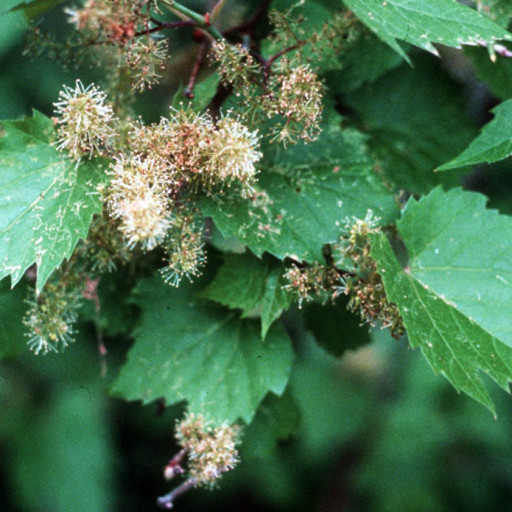
Plant Overview
Commonly known as the Riverbank Grape or Frost Grape, Vitis riparia is the rugged, wild ancestor of many modern vineyards. Found sprawling across riverbanks and forest edges throughout North America, this vine is famous for its incredible cold hardiness and its sweet-smelling flowers that perfume the air in late spring. While its berries are smaller and tarter than the grapes you find at the grocery store, it remains a vital species for both wildlife and the global wine industry.
🔍 How to Identify
- 🍃 Heart-Shaped Leaves: The leaves are large, often three-lobed, with sharply "toothed" edges. They have a deep green color and a smooth surface, unlike some other wild grapes that feel fuzzy.
- 🍇 Dark Purple Clusters: It produces small, dark purple to black berries covered in a "glaucous bloom"—a dusty, waxy coating that makes them look slightly frosted.
- 🔗 Forked Tendrils: Look closely at the climbing vines; they use branched (forked) tendrils to latch onto trees and fences, allowing the plant to climb dozens of feet into the canopy.
🏡 In Your Garden
- 🌱 Vigorous Growth: If you plant this in a garden, be prepared for its speed! It is a "pioneer species," meaning it grows rapidly to cover bare ground or fences. It’s perfect for a natural privacy screen but requires heavy pruning to keep it from smothering nearby shrubs.
- 💧 The Riparian Specialist: True to its name, it thrives in moist soil and can even handle occasional flooding. However, it is surprisingly drought-tolerant once its deep root system is established, making it a "set it and forget it" plant for difficult corners of the yard.
⚠️ Safety & Toxicity
- 🐾 Toxic to Pets: Like all members of the Vitis genus, the grapes are highly toxic to dogs, potentially causing kidney failure even in small amounts. Keep this vine away from areas where pets roam.
- 🍇 Edibility & Lookalikes: The fruit is edible for humans and makes excellent tart jellies. However, foragers must be extremely careful to distinguish it from Canada Moonseed, a toxic lookalike. Remember: wild grapes have seeds shaped like teardrops and forked tendrils; Moonseed has a single crescent-moon-shaped seed and no tendrils.
✨ Fun Fact
The Riverbank Grape is a literal hero of history! In the late 19th century, a tiny insect called Phylloxera nearly destroyed the French wine industry. Because Vitis riparia evolved alongside the insect, its roots are resistant. To this day, most of the world's finest wine grapes are actually grafted onto the hardy rootstocks of this wild American vine!

Detailed Care Instructions
To grow Vitis riparia, also known as the riverbank grape, you can follow these steps:
- Select a suitable location: Vitis riparia prefers full sun but can tolerate partial shade. It requires well-draining soil rich in organic matter.
- Propagate from seeds or cuttings: If starting from seeds, collect ripe fruits from existing grapevines and remove the seeds from the pulp. Soak the seeds in water for 24-48 hours before planting in a nursery pot filled with well-draining soil. Keep the soil consistently moist but not waterlogged. Seedlings should emerge in approximately 10-12 days. Alternatively, you can purchase cuttings from a reputable nursery or obtain cuttings from an established Vitis riparia plant.
- Prepare the planting area: Dig a planting hole twice as wide and deep as the root ball or the size of the nursery pot. Incorporate compost or well-rotted manure into the soil to improve fertility and drainage.
- Planting: Place the seedling or cutting in the hole, ensuring the graft union (if relevant) is above the soil line. Backfill the hole with soil, gently firming it around the base of the plant. Water thoroughly.
- Watering and maintenance: Water the vine regularly, especially during the first growing season, to establish a strong root system. Provide a trellis or support structure for the vine to climb, as it is a vigorous climber. Prune the vine in late winter or early spring to remove dead or damaged wood and shape the plant.
- Fertilization: Apply a balanced organic fertilizer in early spring and again in early summer to provide necessary nutrients.
- Pest and disease management: Monitor the plant regularly for pests such as aphids or fungal diseases like powdery mildew. Use organic insecticides or fungicides if necessary, following the instructions on the product label.
- Harvesting: Vitis riparia produces small, sweet grapes typically ripening in late summer to early fall. Harvest the grapes when they are fully ripe and enjoy them fresh or use them for making juice, jam, or wine.
By following these steps, you can successfully grow Vitis riparia and enjoy its edible fruits!

Place in a bright room that is sun drenched almost all day. Or directly in a south-facing window.

The best way to water this plant is by making sure the soil is consistently moist but not waterlogged. You should water deeply once a week and allow the soil to dry out slightly before watering again. Be sure to water the plant at the base and avoid getting the leaves wet. It is important to monitor the moisture level, especially during hot and dry weather, as the plant may require more frequent watering. Mulching around the base of the plant can also help to retain moisture in the soil.
To fertilize this plant, it is recommended to use a balanced fertilizer with equal amounts of nitrogen, phosphorus, and potassium. Apply the fertilizer in early spring before new growth begins, and again in early summer. Use a slow-release fertilizer to avoid burning the roots. Make sure to water the plant thoroughly after fertilizing to help the nutrients penetrate the soil. Avoid over-fertilizing as this can lead to excessive growth and weaken the plant.
When planting Vitis Riparia plants, it is important to select a soil type that is well-draining. The soil should contain a balanced mix of nutrients and have a slightly acidic pH level. It is recommended to avoid heavy clay soils, as they may cause waterlogging and root rot. Instead, opt for loamy or sandy loam soils. Adding compost or organic matter to the soil can improve its fertility and drainage. It is important to ensure that the soil remains moist but not waterlogged to promote healthy growth.
To propagate this plant, take a cutting from a healthy and mature plant during the spring or early summer. Choose a stem that is around 6-8 inches long and has at least two nodes on it. Cut the stem at a 45-degree angle just below a node and remove the lower leaves. Dip the cut end in rooting hormone powder and plant it in a pot filled with damp soil. Cover the pot with a plastic bag to create a humid environment and keep it out of direct sunlight. Water the cutting regularly and mist it with water if necessary to keep the soil and air moist. After a few weeks, check for root growth by gently tugging on the cutting. Once the cutting has developed a sufficient root system, transplant it into a larger pot or into the ground.
Common pests of the riverbank grape include Mealybugs, spider mites. Make a habit of checking your riverbank grape frequently for pests so that any infestations can be caught and managed early.








