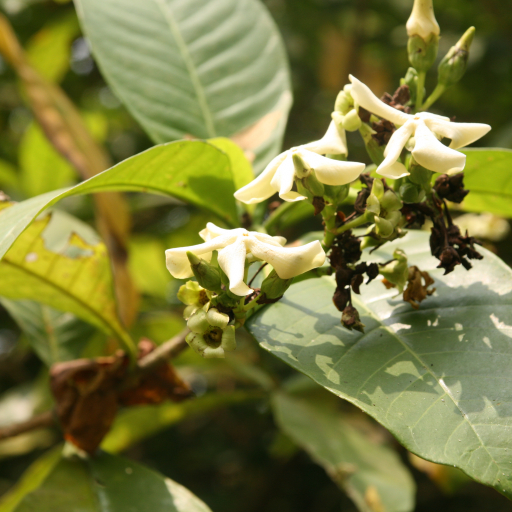
Plant Overview
Often called the Voacanga tree, this West African native is a botanical powerhouse cloaked in mystery. Used for centuries in traditional healing and spiritual rituals, it is prized for its complex chemistry and striking, almost extraterrestrial-looking fruit. It is a slow-growing shrub or small tree that brings a sense of the deep tropical jungle into any botanical collection.
🔍 How to Identify
- 🍃 The Foliage: Large, deeply veined, glossy green leaves that can grow up to 30 cm long, providing a dense, lush canopy.
- 🌼 The Blooms: Small, funnel-shaped flowers ranging from white to pale yellow, emitting a sweet, heavy fragrance to attract nocturnal pollinators.
- 🍒 The "Twin" Fruit: Its most distinctive feature is the large, mottled green berries that almost always grow in pairs, giving the fruit a unique, heavy, "double-lobed" appearance.
🏡 In Your Garden
- 🌡️ Tropical Needs: This plant is a true child of the equator; it thrives in high humidity and consistently warm temperatures. If you live in a temperate zone, it must be kept in a heated greenhouse or brought indoors before the first sign of frost.
- 🪴 Stable Environment: Voacanga africana hates being moved. It develops a sensitive root system and may drop all its leaves in protest if its light or temperature levels change too drastically.
⚠️ Safety & Toxicity
- 🚫 Status: Highly Toxic & Psychoactive.
- 🐾 Details: Every part of the plant, especially the bark and seeds, contains potent alkaloids (including voacangine). Ingestion can cause severe neurological distress, heart palpitations, or hallucinations. It is vital to keep this plant far away from curious pets and small children.
✨ Fun Fact
In West African folklore, the Voacanga is considered a "sacred" tree. It is botanically related to the famous Iboga plant and was historically used by shamans and healers to induce visionary states and treat everything from mental health conditions to physical fatigue.

Detailed Care Instructions

Place in a bright room that is sun drenched almost all day. Or directly in a south-facing window.

When the top few inches of soil dry out, water your plants. If the top few inches of soil are still moist, do not water your plant. Wait a few days, then poke your finger into the soil to see if anything has changed. Overwatering poses a disease risk, such as the development of fungal diseases in the roots. These plants have adaptations in there leaves that allow them to survive in low water supply.








