Plant Overview
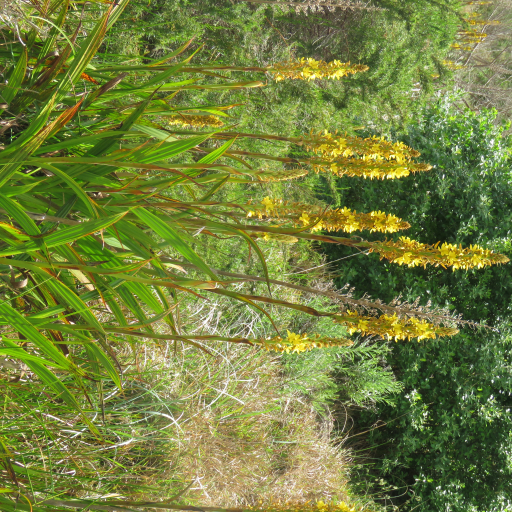
The Wachendorfia thyrsiflora, affectionately known as the Marsh Butterfly Lily or Bloodroot, is a spectacular giant of the South African wetlands. Rising like a golden scepter from damp soil, its towering spikes of apricot-yellow flowers can reach heights of over two meters, making it a dramatic architectural choice for water gardens. It earns its "Bloodroot" nickname from the startling, vivid orange-to-red sap found within its underground rhizomes.
🔍 How to Identify
- 🌼 The Flower Spike: A dense, cylindrical cluster (thyrse) of star-shaped, golden-yellow flowers that bloom from the bottom upward.
- 🍃 Pleated Foliage: Long, sword-shaped leaves that are distinctly "pleated" or ribbed lengthwise, arranged in an attractive fan shape at the base.
- 🥕 The Root System: If slightly unearthed, the rhizomes are a shocking, saturated red or bright orange, looking almost like raw beets.
🏡 In Your Garden
- 💧 The "Wet Feet" Rule: Unlike many garden lilies, this plant is a true marsh dweller. It thrives in boggy conditions and can even grow in shallow standing water, making it perfect for pond edges where other plants might rot.
- ☀️ Sun & Space: It craves full sun to produce its best color, but it needs plenty of room to expand. Because of its height, it serves as a "living screen" or a bold backdrop, but be careful moving it—its deep rhizomes prefer to stay undisturbed once established.
⚠️ Safety & Toxicity
- ✅ Status: Generally non-toxic to humans and pets.
- 🎨 The Dye Factor: While not "poisonous," the red sap in the roots and stems is a potent natural dye. If you are pruning or dividing the plant, be aware that the juice can permanently stain garden gloves, clothing, and even temporarily tint your skin.
✨ Fun Fact
The vibrant red pigment in the roots isn't just for show; it was historically used by early Cape settlers and indigenous groups as a natural dye for wool and textiles, producing rich earthy tones.

Detailed Care Instructions
To grow Wachendorfia Thyrsiflora, also known as African blood lily or pineapple lily, you can follow these steps:
- Climate and soil: Wachendorfia Thyrsiflora thrives in a mild to warm climate. It prefers well-draining soil with a slightly acidic pH level. Ensure the location you choose provides ample sunlight.
- Starting from bulbs: You can start by purchasing bulbs from a reputable nursery or garden center. Plant the bulbs in spring or early summer, roughly 4-6 inches deep and 6-8 inches apart.
- Watering: Water the plant after planting, and whenever the soil feels dry to the touch. Make sure not to overwater, as this can cause rotting. During the growing season, provide regular watering to keep the soil consistently moist.
- Fertilization: Apply a balanced slow-release fertilizer during the growing season to provide essential nutrients. Follow the manufacturer's instructions for dosage and frequency.
- Mulching: Mulching the area around the plant can help retain moisture and regulate soil temperature. Apply a layer of organic mulch, like bark chips or compost, around the base of the plant.
- Support: As the plant grows, it may require support to prevent bending or flopping over. Install a plant support stake or trellis near the base of the plant. Tie the stalks gently with garden twine to keep them upright.
- Pruning: After the flowering season, trim off the spent flower stalks to maintain a tidy appearance. Be careful not to remove any new growth or emerging flower stalks.
- Propagation: Wachendorfia Thyrsiflora can be propagated by division. Dig up established clumps during the dormant period and carefully separate the bulbs. Replant the divided bulbs into their desired locations.
- Pest and disease control: Monitor the plant regularly for pests such as aphids or snails. Use appropriate organic or chemical controls if necessary. These plants are generally disease-resistant, but improper watering or excessive moisture can lead to root rot.
- Winter care: In regions with colder winters, African blood lilies can be grown as tender perennials or treated as annuals. If growing as a perennial, add a layer of mulch around the base of the plant to protect it from frost. In colder climates, consider lifting and storing the bulbs indoors during the winter.
Remember to consult local gardening resources or experts to learn about specific care guidelines based on your region's climate and conditions.

Place in a bright room that is sun drenched almost all day. Or directly in a south-facing window.

To properly water this plant, ensure that the soil is moist but not waterlogged. This can be achieved by watering the plant deeply once or twice a week, or as needed based on the moisture level of the soil. Avoid letting the soil completely dry out or sitting in standing water, as this can lead to root rot or other issues. Additionally, consider using a well-draining soil mix and adding a layer of mulch around the base of the plant to help retain moisture.
To fertilize this plant, it is recommended to use a balanced fertilizer with equal parts of nitrogen, phosphorus, and potassium. Apply the fertilizer during the active growing season, which is typically in the spring and summer months. Be sure to dilute the fertilizer according to the manufacturer's instructions, and avoid applying too much as this can lead to burning the roots. Additionally, you can also supplement with organic matter, such as compost or well-rotted manure, to improve soil quality and provide additional nutrients.
Wachendorfia thyrsiflora, a flowering plant in the family Haemodoraceae, tends to thrive best in soil that is well-draining and moisture-retentive. It can adapt to a range of soil types, including sandy, loamy, or clayey soils, as long as they are not too heavy or waterlogged. However, it prefers a slightly acidic to neutral soil pH, ideally between 6.0 and 7.5.
To create the ideal soil mix for Wachendorfia thyrsiflora, it is recommended to incorporate organic matter such as compost or well-rotted manure into the planting area. This will improve soil structure and promote aeration and water retention. Adding sand or grit will also help to improve drainage and prevent soil compaction. It is important to avoid using heavy soil mixtures or those that contain high levels of nutrients, as this can cause excessive foliage growth at the expense of flower development.
In summary, Wachendorfia thyrsiflora prefers a well-draining, moist, slightly acidic to neutral soil that is enriched with organic matter and free from heavy mixtures or excessive nutrients.
Propagation of this plant can be done through the division of rhizomes. The rhizomes can be dug up while the plant is dormant and separated into smaller pieces, each containing at least one growing point. These smaller pieces can then be planted into well-draining soil in a sunny location. It is important to keep the soil moist but not waterlogged during the establishment period to encourage the growth of new roots. Once established, this plant can tolerate periods of dryness and is relatively low maintenance.








