Plant Overview
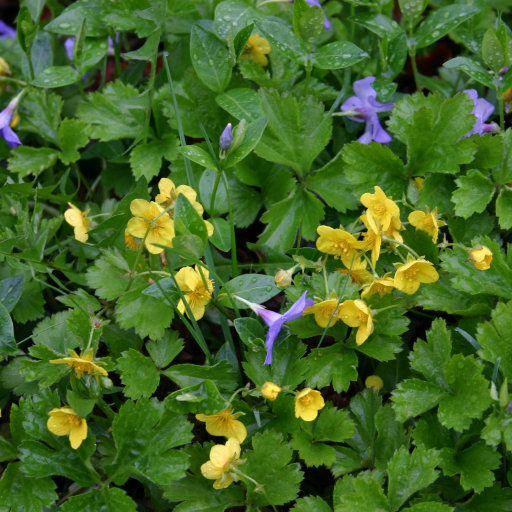
Often called the Barren Strawberry, this charming North American native is a master of disguise. While it mimics the lush, low-growing foliage of a true strawberry plant, it swaps the traditional white blossoms for a carpet of sunny yellow. It is the perfect choice for gardeners who want a "living mulch" that stays green and tidy throughout the seasons without the mess of rotting fruit.
🔍 How to Identify
- 🍃 The Leafy Lookalike: Its leaves are divided into three distinct leaflets with wedge-shaped bases and jagged edges, looking remarkably like a garden strawberry.
- 🌼 Sunny Blooms: Unlike true strawberries which have white flowers, the Barren Strawberry produces clusters of five-petaled, bright yellow flowers in the late spring.
- 📏 Low-Profile Carpet: It creates a dense, mat-forming groundcover that rarely rises more than 4 to 6 inches off the ground.
- 🍓 The "Barren" Fruit: While it does produce a fruit, it is small, dry, and inconspicuous—nothing like the juicy red berry you’d put on a sundae.
🏡 In Your Garden
- 🌳 Forest Edge Spirit: This plant thrives in the "in-between" spaces. In the wild, it loves woodland edges, meaning it is exceptionally well-suited for dappled shade where other grass or flowers might struggle.
- 🛡️ Living Mulch: Because it spreads via thick underground rhizomes, it is excellent for weed suppression. Once established, it creates a root mat so dense that most weed seeds simply cannot find the light to germinate.
- 🍂 Semi-Evergreen Resilience: In many climates, the foliage takes on a lovely bronze or purplish hue in the winter rather than dying back completely, providing year-round visual interest.
⚠️ Safety & Toxicity
- ✅ Non-Toxic: Waldsteinia fragarioides is generally considered non-toxic to humans, dogs, and cats.
- 👅 Not for Snacking: While it isn't poisonous, it is called "Barren" for a reason. The tiny dry fruits are tasteless and woody, so there is no culinary reason to harvest them.
- 🧤 Skin Friendly: Unlike some groundcovers that can cause contact dermatitis, this plant is gentle to the touch and safe for children to play near.
✨ Fun Fact
Despite its strawberry-like appearance, this plant is actually a member of the Rose family (Rosaceae). Its genus name, Waldsteinia, was given in honor of Count Franz de Paula Adam von Waldstein, an 18th-century Austrian soldier and botanist who spent his life exploring the forests of Central Europe.

Detailed Care Instructions
To grow Waldsteinia Fragarioides, follow these steps:
- Choose a suitable location: Waldsteinia Fragarioides prefers partial shade or full shade. Ensure the area has well-drained soil.
- Prepare the soil: Waldsteinia Fragarioides thrives in moist, fertile soil. Amend the soil with compost or organic matter to improve its texture and nutrient content.
- Planting: Dig a hole slightly larger than the plant's root ball. Place the plant in the hole and backfill with soil, ensuring the crown of the plant is level with or slightly above the soil surface.
- Watering: Keep the soil evenly moist during the first growing season to help the plant establish. Once established, Waldsteinia Fragarioides is drought-tolerant, but regular watering during dry spells will benefit its growth.
- Mulching: Apply a layer of organic mulch around the base of the plant to retain moisture, suppress weed growth, and moderate soil temperature.
- Fertilizer: Waldsteinia Fragarioides generally doesn't require regular fertilization. However, if the plant appears weak or lacks vigor, apply a balanced, slow-release fertilizer according to the manufacturer's instructions.
- Pruning: Waldsteinia Fragarioides doesn't require extensive pruning. Remove any dead or damaged foliage as needed to maintain a neat appearance.
- Dividing: Every few years, divide the plant to maintain vigor and prevent overcrowding. Dig up the entire clump and carefully separate it into smaller sections, ensuring each section has roots attached. Replant the divided sections in appropriate locations.
- Pests and diseases: Waldsteinia Fragarioides is generally resistant to pests and diseases. However, occasional pests like slugs, snails, or aphids may be a problem. Monitor the plant regularly and take appropriate measures to control any infestation.
With proper care and the right growing conditions, your Waldsteinia Fragarioides plant should thrive and provide attractive ground cover with its bright green foliage and yellow flowers.
Waldsteinia fragarioides is a plant that belongs to the family Rosaceae. This plant requires regular watering, especially during hot and dry weather. When watering this plant, it is important to avoid getting water on the leaves as this can lead to fungal diseases. It is best to water the plant at the base, near the soil.
Before watering, it is important to check the soil moisture. This can be done by inserting a finger into the ground to see if it feels dry or moist. If the soil feels dry, it is time to water the plant. If the soil feels moist, it is best to wait a day or two before watering again.
When watering, it is best to use a watering can or a hose with a gentle spray attachment to avoid disturbing the soil or causing runoff. Waldsteinia fragarioides prefers well-draining soil, so it is important not to overwater or let the soil become waterlogged.
In general, Waldsteinia fragarioides requires regular watering, but the frequency depends on the climate and soil conditions. In hotter and drier climates, the plant may need to be watered more frequently than in cooler and wetter climates. It is important to monitor the plant for signs of stress, such as wilting or yellowing leaves, and adjust the watering as needed.
To fertilize this plant, use a balanced, slow-release fertilizer in early spring. Apply the fertilizer according to package instructions, taking care not to over-fertilize. It is also important to provide adequate water, as the soil should be moist but not saturated. Avoid fertilizing during extended periods of drought or high temperatures.
The recommended soil for this plant is a well-draining soil that is rich in organic matter, such as compost. The pH level of the soil should range from slightly acidic to neutral, with a pH level between 6.0 and 7.0 being ideal. This plant prefers soil that is moist but not overly saturated, so be sure to avoid heavy clay soils or soils that retain too much water. Sandy loam soils are ideal for this plant, but adding organic matter to heavier soils can improve drainage and overall health of the plant. A light top dressing of mulch can also help retain moisture in the soil and prevent weeds. It is important to monitor the soil moisture level regularly and adjust watering accordingly to avoid overwatering or underwatering.
To propagate this plant, you will need to dig up a mature plant and separate the rhizomes. Cut the rhizomes into sections, each with several buds. Make sure each section has enough roots to support itself. Plant each section in well-draining soil, making sure the buds are at or just below the soil surface. Keep the soil consistently moist and place the newly planted sections in a location with bright, indirect light. After a few weeks, the plant should begin to grow new shoots.








