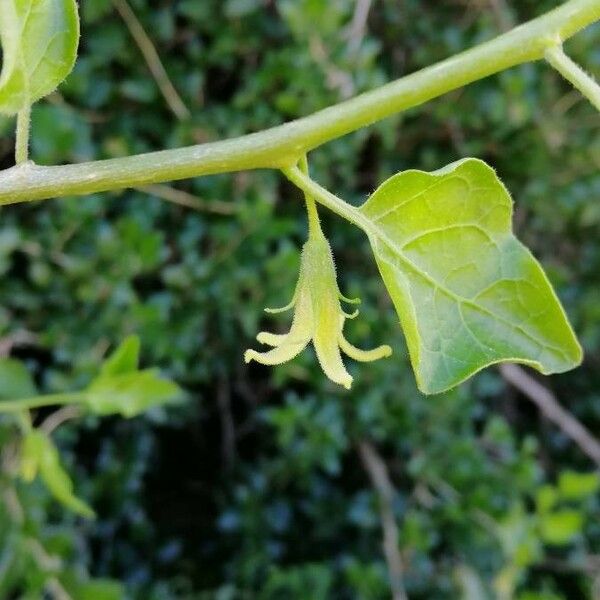
Plant Overview
Often referred to as the Shrubby Winter Cherry or the Spanish Withania, this resilient Mediterranean native is the rugged, wild cousin of the famous Ashwagandha. In Spain, it is affectionately known as Manto de la Virgen (The Virgin's Mantle), a name inspired by its dense, protective canopy of soft, velvety foliage. While it may not share the same global fame as its medicinal relatives, it is a master of survival in harsh, sun-drenched coastal landscapes.
🔍 How to Identify
- 🍃 The Foliage: Look for ovate, grayish-green leaves that feel slightly leathery or velvety to the touch. They are arranged alternately along stiff, woody stems.
- 🔔 The Blooms: It produces small, inconspicuous bell-shaped flowers. They are usually a pale yellowish-green or cream color and tend to hang modestly downward.
- 🍒 The Fruit: The most striking feature is its small red berry, which sits tucked inside a star-shaped, papery green "cup" (the calyx) that expands as the fruit matures.
🏡 In Your Garden
- ☀️ Sun Seeker: This plant is a true child of the sun. It thrives in high-heat environments and is exceptionally drought-tolerant once established, making it a perfect candidate for xeriscaping or rock gardens.
- 🌱 Soil Specialist: Unlike many finicky garden plants, Withania frutescens prefers poor, well-draining, or even rocky alkaline soils. It actually struggles in overly rich or soggy "potting mix" conditions, which can lead to root rot.
⚠️ Safety & Toxicity
- 🚫 Status: Toxic to ingest.
- 🐾 Details: As a member of the Solanaceae (Nightshade) family, the plant contains alkaloids and withanolides. While it has been used in traditional folk medicine, the raw berries and leaves should be kept far away from curious pets and children, as ingestion can cause digestive distress or more severe symptoms.
✨ Fun Fact
In some Mediterranean rural traditions, the juice from the crushed berries of the Shrubby Winter Cherry was historically used as a vegetable rennet to help curdle milk and thicken artisanal cheeses!

Detailed Care Instructions
To grow Withania Frutescens (also known as Winter Cherry or Indian Ginseng), follow these steps:
- Choose a suitable location: Select a sunny spot in your garden with well-draining soil. Withania Frutescens prefers full sun, but it can tolerate partial shade.
- Prepare the soil: Ensure the soil is well-draining, as the plant does not tolerate waterlogged conditions. If the soil is heavy or clayey, add organic matter such as compost or well-rotted manure to improve drainage and fertility.
- Propagation: Withania Frutescens can be propagated from seeds or cuttings. If using seeds, soak them in warm water for 24 hours before sowing. Sow the seeds about 1/4 inch deep in individual pots or directly in the ground.
- Watering: Initially, keep the soil moist until the seeds germinate or cuttings establish roots. Once established, water the plant sparingly, allowing the soil to dry out slightly between waterings. Overwatering can cause root rot.
- Fertilizing: Apply a balanced, slow-release fertilizer during the growing season (spring and summer). Follow the manufacturer's instructions for application rates.
- Pruning: Prune the plant annually in early spring to encourage bushy growth and remove any dead or damaged branches. Withania Frutescens can be pruned quite heavily, and this can help maintain its compact shape.
- Pests and diseases: Monitor the plant for common pests like aphids, whiteflies, or spider mites. Treat infestations with appropriate insecticidal soap or organic pesticides. The plant is generally resistant to diseases, but avoid overwatering to prevent root rot.
- Harvesting: Withania Frutescens is usually harvested for its medicinal properties. The roots are the valuable part and are typically harvested after 1-2 years of growth. Dig up the plant carefully, wash the roots, and dry them in a cool, well-ventilated area.
Remember to research and familiarize yourself with the plant's specific growing requirements and local regulations regarding cultivation of medicinal plants.

Place in a bright room that is sun drenched almost all day. Or directly in a south-facing window.

To properly water this plant, you should first check the soil moisture level by inserting your finger into the soil up to the first knuckle. If the soil feels dry to the touch, it's time to water the plant. Use room temperature water and pour it directly into the soil around the base of the plant, making sure not to water the leaves. Water the plant thoroughly until water starts to drain out of the bottom of the pot. Don't let the plant sit in standing water as this can cause root rot. Allow the soil to dry slightly before watering again. Avoid overwatering, as this can also cause root damage.
- Choose a well-draining soil mix for the plant to thrive in.
- Add organic matter to the soil to improve nutrient retention and soil structure.
- Fertilize with a balanced, slow-release fertilizer in the early spring.
- Avoid over-fertilizing as it can burn the roots and inhibit growth.
- If necessary, top-dress the soil with a light application of a balanced fertilizer in mid-summer.
- Water the plant evenly to ensure that the nutrients are evenly distributed.
- Monitor the plant carefully and adjust fertilization accordingly to ensure it stays healthy and strong.
The soil that is suitable for Withania Frutescens plant should be well-draining and fertile. It should have a pH range between 6.0 and 7.5. The plant prefers sandy-loam soil that is rich in organic matter. The soil should be moist but not waterlogged, and it should be able to retain moisture. The plant requires good aeration in the soil, and therefore, it is recommended to add perlite or sand to the soil to improve drainage. The soil should also have good nutrient content as the plant is a heavy feeder. Adding compost or well-rotted manure can be beneficial for the plant's growth and overall health. It is important to avoid using soil that is compacted or heavy clay-like, as this can impede the plant's growth and cause root rot. Additionally, adding a layer of mulch can help retain soil moisture and regulate the soil temperature.
To propagate this plant, take a stem cutting from a healthy, mature plant in the spring or summer. Use a clean, sharp knife to cut a stem that is at least six inches long and has several leaves. Remove the leaves from the bottom half of the stem and dust the cut end with rooting hormone powder. Place the stem cutting in a well-draining potting mix and keep the soil moist but not waterlogged. Cover the pot with a plastic bag or dome to create a humid environment and place it in a warm, bright spot out of direct sunlight. Roots should begin to form in 2-4 weeks. Remove the plastic cover once the plant has rooted and begin to acclimate it to normal indoor or outdoor conditions.








