Plant Overview
Commonly known as Ashwagandha or "Indian Ginseng," this ancient powerhouse has been a staple in Ayurvedic medicine for over 3,000 years. Its name is derived from the Sanskrit words ashva (horse) and gandha (smell), referring to its unique root aroma and the legendary belief that it grants the strength and vitality of a stallion. While it looks like a modest shrub, it is one of the most famous "adaptogens" in the botanical world.
🔍 How to Identify
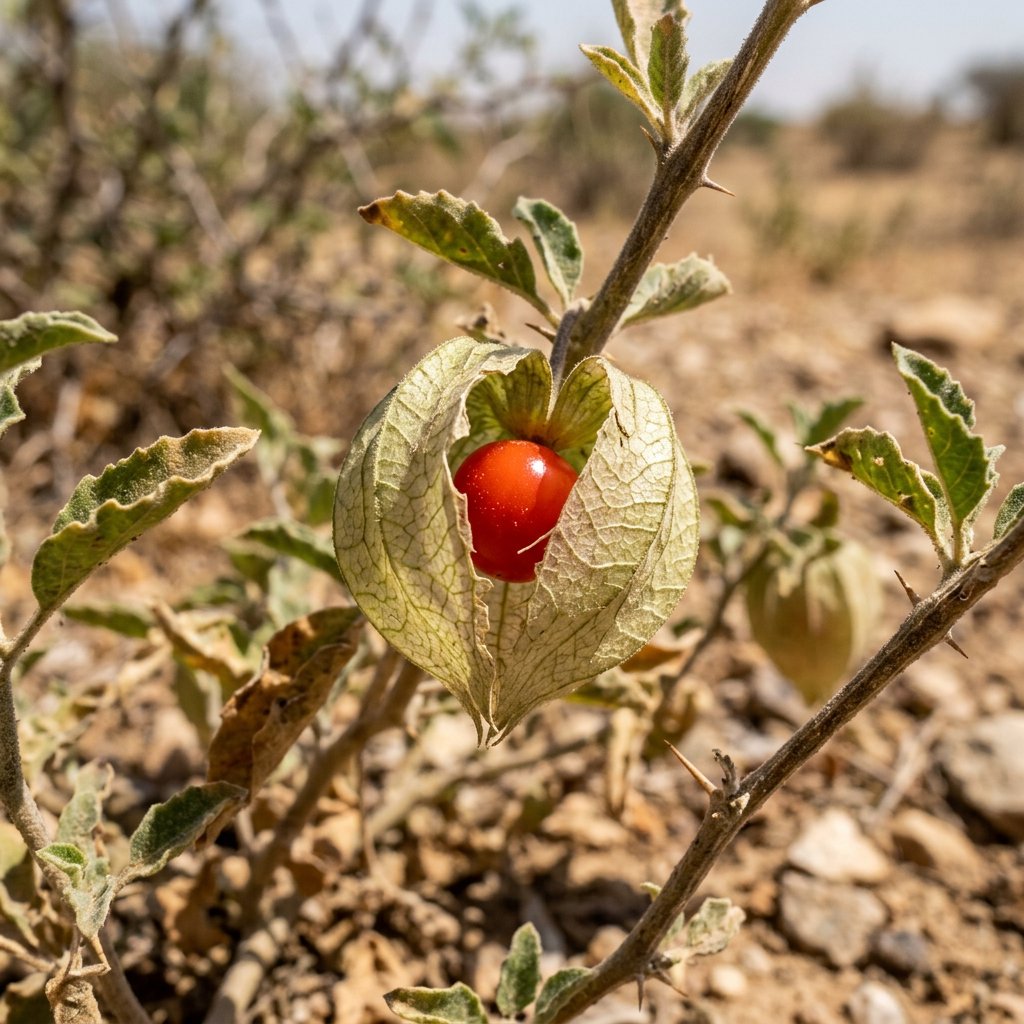
- 🍃 Velvety Foliage: The leaves are dull green, elliptical, and covered in fine, silver-gray hairs that give the plant a soft, matte texture.
- 🌼 Hidden Flowers: It produces tiny, bell-shaped flowers that are greenish-yellow. They aren't very showy and often hide discreetly under the leaf axils.
- 🍒 Lantern Fruit: Its most striking feature is the small, bright orange-red berry that matures inside a papery, lantern-like husk (calyx), much like a Tomatillo or Cape Gooseberry.
🏡 In Your Garden
- ☀️ The Dryness Lover: Ashwagandha is a "tough love" plant. It thrives in poor, stony, or sandy soil where other plants might struggle. The biggest mistake growers make is overwatering; it hates "wet feet" and is highly prone to root rot.
- 🌡️ Heat & Space: This is a tropical/subtropical shrub that loves the sun. It grows into a bushy form about 3 feet tall, so give it plenty of elbow room to allow air circulation around its velvety leaves.
⚠️ Safety & Toxicity
- 🐾 Toxic to Pets: While humans use the roots medicinally, the berries and leaves contain alkaloids that are toxic to dogs, cats, and horses. Ingestion can lead to gastrointestinal upset or more severe lethargy.
- 🤰 Human Caution: The plant is potent. It is strictly advised that pregnant individuals avoid Ashwagandha as it may lead to complications. As with any medicinal herb, never forage or consume it without expert pharmacological guidance.
✨ Fun Fact
- 💤 The Sleep Secret: The species name somnifera is Latin for "sleep-inducing." This refers to the plant's long history of being used to calm the nervous system and help restless minds drift off to sleep.

Detailed Care Instructions
| Color | Green Or Pale Green |
| Soil Ph | 6.5-8 |
| Lighting | Full Sun |
| Toxicity | Toxic |
| Soil Type | Sandy And Well-Draining |
| Bloom Time | Late Spring, Summer Or Early Fall |
| Plant Type | Annual Shrub |
| Mature Size | 1-3 Feet Tall |
| Native Area | The Middle East, Parts Of Africa And Asia |
| Sun Exposure | Full Sun To Partial Shade |
| Hardiness Zones | 10-12 |
Here are some steps you can follow to grow Withania Somnifera, also known as Ashwagandha:
- Obtain Seeds or Seedlings: You can either purchase Withania Somnifera seeds from a reputable seed supplier or acquire seedlings from a nursery.
- Select a Suitable Location: Choose a sunny spot in your garden or a location with partial shade. Ensure the soil is well-draining and loose.
- Prepare the Soil: Break up any clumps of soil and remove any weeds from the chosen location. Consider adding organic matter, such as compost or well-rotted manure, to improve the soil's fertility and moisture retention.
- Sow Seeds or Plant Seedlings: If you are using seeds, sow them about 1/4 to 1/2-inch deep in the soil. If using seedlings, dig a hole that is large enough to accommodate the root ball of the seedling and place it in the hole.
- Water Adequately: After sowing seeds or planting seedlings, water the soil well. Make sure to keep the soil consistently moist, but not waterlogged. Watering in the morning is preferable.
- Mulch: Apply a layer of organic mulch, such as straw or wood chips, around the plants. This will help retain soil moisture, suppress weed growth, and regulate soil temperature.
- Provide Support: As Withania Somnifera grows, it may require support to prevent the stems from bending or breaking. You can use stakes or cages to support the plants.
- Fertilize: Withania Somnifera benefits from regular fertilization. Use a balanced organic fertilizer, or apply compost or well-rotted manure around the base of the plants once every few months.
- Weed Control: Regularly remove any weeds that may compete with the plants for nutrients and water.
- Harvesting: The roots and berries of Withania Somnifera are commonly used. Harvest the roots after a minimum of six months, once they have matured. The berries can be harvested when they turn red and then dried for future use.
Remember to research specific growing conditions for the particular variety of Withania Somnifera you have, as different varieties may have slightly different requirements.

Place in a bright room that is sun drenched almost all day. Or directly in a south-facing window.

Watering this plant requires monitoring the moisture content of the soil. It is important to ensure that the soil is consistently damp but not excessively wet. One way to determine if the plant needs water is by checking the top layer of soil; if it feels dry to the touch, then it is time to water. When watering, it is best to avoid getting water on the leaves and instead aim for the soil directly around the base of the plant. In addition, this plant prefers well-draining soil, so it is important not to let it sit in standing water. Overwatering can lead to root rot, which can be fatal to the plant.
For best results, fertilize the plant once a month during the growing season with a balanced fertilizer that has an equal ratio of nitrogen, phosphorus, and potassium. You can also use a high-phosphorus fertilizer once or twice during the blooming season to promote flower formation. Be sure to dilute the fertilizer according to the package instructions and water the plant thoroughly after fertilizing. Avoid fertilizing during the dormant season.
The best type of soil to use for this particular plant is well-draining soil that is rich in nutrients. The soil should be loamy, with a good mixture of sand, silt, and clay. It should also have a neutral pH level, preferably between 6.0 and 7.5. Avoid using soil that is too acidic or alkaline, as this can limit the growth and development of the plant. Adding organic matter, such as compost or aged manure, can improve the soil quality and provide the necessary nutrients for the plant to thrive. It is also important to ensure that the soil is well-aerated, as this will help the roots to oxygenate properly and prevent fungal growth. Additionally, the plant prefers moderate watering as it grows in dry regions of the world.
To propagate this plant, one can take a stem cutting from a mature plant. The cutting should be around 4-6 inches long and should be taken in the early summer when the plant is actively growing. The lower leaves should be removed from the stem and the cutting should be dipped into rooting hormone. Then, the cutting should be planted in a well-draining soil mix and kept in a warm, humid environment. The cutting should be watered regularly and kept out of direct sunlight. After about 2-3 weeks, new growth should start to appear, indicating that the cutting has successfully rooted. The newly propagated plant should be carefully transplanted into a larger pot or in the garden once it has grown to a suitable size.
Common pests of the ashwagandha include Mealybugs, spider mites, aphids. Make a habit of checking your ashwagandha frequently for pests so that any infestations can be caught and managed early.








