Plant Overview
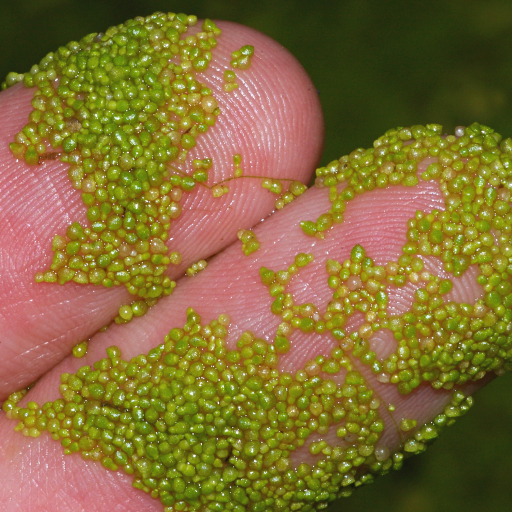
Imagine a plant so tiny it looks like a sprinkle of floating cornmeal on the water's surface. Known as the Rootless Duckweed or Watermeal, Wolffia arrhiza holds the prestigious title of the world's smallest flowering plant. These microscopic marvels drift across still ponds and lakes throughout Europe, Africa, and Asia, forming vibrant green carpets that look more like a velvet painting than a collection of individual plants.
🔍 How to Identify
- 🟢 Microscopic Scale: Each individual plant is roughly the size of a grain of salt (0.5 to 1.5 mm). To the naked eye, they appear as tiny, oval-shaped green dots.
- 🚫 Rootless Wonder: Unlike its larger duckweed cousins, Wolffia has no roots, stems, or true leaves. It consists of a single floating "frond" that contains everything the plant needs to survive.
- 🌸 Invisible Blooms: It is a flowering plant, but its "flower" is tucked into a microscopic pit on the plant’s top surface. You would need a powerful magnifying glass to see its single stamen and pistil.
🏡 In Your Garden
- 🌊 The Green Blanket: In a backyard pond, these plants multiply through rapid budding. While they are excellent for blocking sunlight to prevent algae growth, they can quickly take over the entire surface if not thinned out occasionally.
- 🥣 Natural Filter: Wolffia is a powerhouse at absorbing excess nutrients like nitrogen and phosphorus from the water. This makes it a fantastic natural "bio-filter," though it prefers very still water with almost no current.
⚠️ Safety & Toxicity
- ✅ Non-Toxic: Wolffia arrhiza is generally considered safe and non-toxic to humans, dogs, cats, and livestock.
- 🦠 Pond Hygiene: While the plant itself isn't dangerous, it thrives in stagnant water which can harbor harmful bacteria or parasites. If you are handling it in a wild pond, ensure you wash your hands thoroughly afterward.
✨ Fun Fact
- 🍔 The Future of Food: Despite its size, this tiny plant is a nutritional giant. It is composed of about 40% protein—roughly the same as a soybean—leading scientists to study it as a potential "space food" for long-term astronaut missions!

Detailed Care Instructions
Growing Wolffia arrhiza, also known as duckweed, is relatively easy and low-maintenance. Here are some key steps to grow Wolffia arrhiza successfully:
- Source the plants: Obtain Wolffia arrhiza either from a local garden center or order online from a reputable source. Alternatively, if you have a pond or any freshwater body nearby, you may find Wolffia arrhiza naturally growing on the surface.
- Container or pond setup: Choose a small container or an outdoor pond for growing Wolffia arrhiza. If using a container, ensure it has no drainage holes as duckweed prefers stagnant water.
- Fill the container or pond: Fill the container or pond with clean water, preferably from a natural source, such as rainwater or tap water that has been left standing for a few days to allow any chlorine to evaporate.
- Introduce the plants: Gently place the Wolffia arrhiza plants into the water. Spread them out evenly across the surface to encourage growth.
- Provide sunlight: Locate the container or pond in a position that receives plenty of sunlight. Wolffia arrhiza requires full sun to thrive. If growing indoors, consider using grow lights to provide ample light.
- Maintain water conditions: Ensure the water temperature remains between 15-30°C (59-86°F), as this is the optimal temperature range for Wolffia arrhiza growth. Monitor water quality and remove any debris or dead plant material regularly.
- Fertilization: Wolffia arrhiza generally obtains nutrients from the water, but if necessary, you can add a diluted aquatic plant fertilizer following the manufacturer's instructions. However, be careful not to over-fertilize, as it can lead to excessive algae growth.
- Harvesting: As the Wolffia arrhiza plants multiply rapidly, you may need to harvest the excess to prevent overcrowding. Use a fine mesh net or sieve to scoop out the excess plants gently. The harvested plants can be composted or used as a food source for livestock or aquatic animals.
- Troubleshooting: Monitor for any signs of pests or diseases, such as discoloration, wilting, or unusual growth patterns. If needed, consult a local horticulturist or seek advice from a gardening community.
Remember, Wolffia arrhiza grows quickly and can become invasive, so ensure it doesn't escape into natural water bodies where it can adversely affect ecosystems.

Place in a bright room that is sun drenched almost all day. Or directly in a south-facing window.

Wolffia Arrhiza is a type of plant that grows in water and doesn't have roots like other plants. To water Wolffia Arrhiza, you should provide it with freshwater by submerging the container in which it is growing in water or adding water to the container. It is essential to maintain the water level to prevent the plant from drying out. The best way to water Wolffia Arrhiza is to keep it in a consistent water level environment without disturbing it too much. Overwatering can cause the plant to drown, while too little water can cause the plant to die. Therefore, it is essential to find the right balance and be consistent in your watering practices to ensure the plant's health and growth.
To fertilize the plant, prepare a solution of a balanced, water-soluble fertilizer with equal quantities of nitrogen, phosphorus, and potassium. Dilute the solution according to the package instructions and apply it to the plant's growing medium once a month during the growing season. Avoid over-fertilizing the plant as it may cause damage to the delicate roots.
The ideal soil type for this plant is a nutrient-rich aquatic substrate that is usually mixed with an organic or clay substrate to provide the necessary nutrients and support for the plant's growth. This substrate should have a pH level between 6.5 and 7, be well-drained, and have ample amounts of nitrogen, potassium, and phosphorous for optimal growth. Additionally, the substrate should be regularly aerated to ensure that the plant’s roots have access to oxygen, and to prevent the buildup of harmful gases. It is important to note that the type of substrate used can have a significant impact on the overall growth and health of the plant, so it is important to use a high-quality substrate that is specifically tailored to meet the needs of Wolffia Arrhiza.
The process of propagating this plant involves carefully separating the individual plants from the parent plant. This is typically done by gently pulling the plants apart, taking care not to damage the delicate roots or fronds of each plant. It's important to provide the new plants with a suitable growing medium, such as a nutrient-rich aquatic environment or a damp soil that is high in organic matter. Additionally, providing sufficient lighting and regular water changes can help ensure the success of the new plants. Over time, the individual plants will grow and multiply, producing a vibrant and healthy colony.








