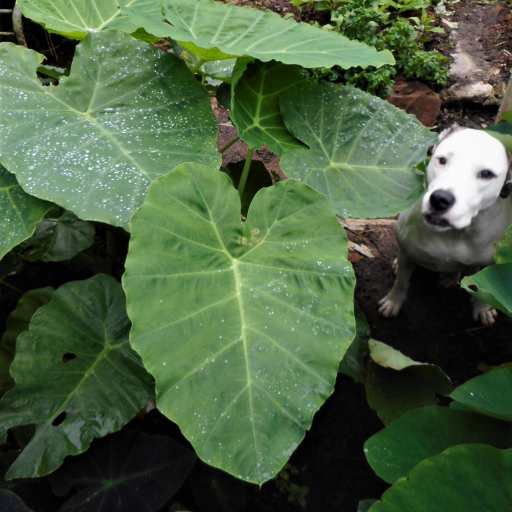
Plant Overview
Often called Tahitian Spinach or Belembe, this lush tropical aroid is a staple in Caribbean soul food. Unlike its famous cousin the Elephant Ear, which is mostly grown for its massive size, this plant is prized for its edible, nutrient-dense leaves. It brings a dense, "jungle-floor" aesthetic to any space with its vibrant, deep green foliage.
🔍 How to Identify
- 🍃 Leaf Shape: Distinctly sagittate (arrowhead-shaped) with long, pointed tips and deep lobes at the base where the leaf meets the stem.
- 🌱 The Stem Join: A key identifier is that the stem attaches right at the edge of the leaf notch, rather than in the center of the leaf like some other Colocasia species.
- 🟢 Texture & Color: The leaves are smooth, slightly waxy to the touch, and feature a rich emerald green color with prominent, pale green veins.
🏡 In Your Garden
- 💧 Thirsty Habits: Because it is a tropical native, it thrives in high humidity and consistently moist soil. It is known to "pout" or droop quickly if the soil dries out, making it a great indicator plant for your garden's hydration levels.
- ☀️ Light Nuance: While it loves the warmth, direct midday sun can scorch the tender leaves. It performs best in "dappled" sunlight or bright partial shade, mimicking the filtered light of a forest canopy.
⚠️ Safety & Toxicity
- 🚫 Raw Warning: NEVER consume this plant raw. Like most members of the Arum family, it contains raphides (needle-shaped calcium oxalate crystals) that feel like thousands of tiny needles sticking into your throat if eaten uncooked.
- 🍳 Safe Consumption: For humans, the leaves are safe and delicious only after being thoroughly boiled or steamed, which dissolves the crystals.
- 🐾 Pets & Kids: Highly toxic to cats, dogs, and curious toddlers. If chewed, it causes immediate mouth pain, excessive drooling, and swelling.
✨ Fun Fact
In the West Indies, this plant is the star ingredient of the famous dish Callaloo. While different islands use different greens (like amaranth or taro), Xanthosoma brasiliense is considered the "true" gourmet choice because its leaves lack the "scratchy" throat sensation found in other varieties when cooked.

Detailed Care Instructions
To grow Xanthosoma brasiliense (also known as Tahitian Taro or Amazon Elephant Ear), follow these steps:
- Choosing a suitable location: Select an area with partial shade or filtered sunlight, as direct sunlight can scorch the leaves. Ensure the soil is well-draining and fertile.
- Obtaining a healthy plant: Purchase a healthy Xanthosoma brasiliense plant from a reputable nursery or garden center. Look for plants with large, undamaged leaves and no signs of pests or diseases.
- Planting: Dig a hole that is slightly larger than the root ball of the plant. Place the plant in the hole, making sure it is sitting upright, and cover the roots with soil. Gently firm the soil around the plant, ensuring there are no air pockets.
- Watering: Xanthosoma brasiliense requires regular watering, especially during periods of drought or high temperatures. Keep the soil moist, but not waterlogged. Avoid overwatering, as it can lead to root rot.
- Mulching: Apply a layer of mulch around the base of the plant to help retain moisture, regulate soil temperature, and suppress weed growth. Use organic mulch, such as wood chips or straw.
- Fertilizing: Feed the plant with a balanced fertilizer every two to three months during the growing season. Follow the instructions provided on the fertilizer packaging for the correct application rate.
- Pruning: Remove any dead or damaged leaves to maintain a tidy appearance and prevent the spread of diseases. Pruning can be done throughout the year as needed.
- Pests and diseases: Monitor the plant regularly for any signs of pests, such as aphids or mites. Treat any infestations promptly using organic insecticides or by manually removing the pests. Also, keep an eye out for diseases like root rot or leaf spot and take appropriate action if needed.
- Propagation: Xanthosoma brasiliense can be propagated by dividing the tubers in spring or early summer. Carefully separate the tubers and plant them in individual pots or directly into the garden.
- Winter care: In colder climates, where temperatures drop below freezing, Xanthosoma brasiliense may need protection from frost. Consider digging up the tubers in fall and storing them in a cool, dry place until the next growing season.
Remember to research and understand your specific climate requirements for successful growing.
To water this plant, you should first check to see if the soil feels dry to the touch. If it is dry, water the plant thoroughly, making sure to saturate the soil evenly. Avoid overwatering, as excess water may cause the soil to become waterlogged, which could lead to root rot and other issues. Allow the soil to dry out slightly before watering again, as this plant prefers well-draining soil. Additionally, make sure the plant is receiving adequate sunlight, as this will affect how much water it requires.
To fertilize this plant, use a balanced fertilizer with an N-P-K ratio of 10-10-10 every two weeks during the growing season (spring and summer). Mix the fertilizer according to the package instructions and dilute it to half strength. Water the plant thoroughly before applying the fertilizer solution. Avoid getting the fertilizer solution on the leaves or stems of the plant, as this can cause burning. During the dormant season (fall and winter), reduce fertilization to once a month or stop altogether.
Xanthosoma brasiliense requires a well-draining and nutrient-rich soil that is slightly acidic with a pH level between 5.5 and 6.5. The ideal soil for this plant is a mixture of equal parts of peat, perlite, and coarse sand. The soil should also be kept moist but not too wet, as excessive moisture can lead to root rot. Additionally, adding organic matter to the soil can help improve its fertility and structure, providing essential nutrients for the plant's growth and development.
Propagation of this plant can be done through various methods such as stem cutting, division, and seed propagation. One way to propagate this plant is through stem cutting. Take a stem cutting with at least two nodes and remove the lower leaves. Dip the cut end of the stem into rooting hormone and plant it in a well-draining potting mix. Keep the soil moist and place the pot in a location with indirect sunlight. After a few weeks, roots should start to form, and the plant can be transplanted into a larger pot.
Another method of propagation is through division. This is done by gently separating the plant into smaller sections, making sure each section has enough roots to sustain itself. The separated sections can then be planted into individual pots with well-draining soil and kept in a location with indirect sunlight.
Lastly, seed propagation can also be done by collecting mature seeds from the plant and sowing them in a well-draining potting mix. Keep the soil moist and place the pot in a location with indirect sunlight. After a few weeks, seedlings should emerge, and they can be transplanted into individual pots once they are large enough.








