Plant Overview
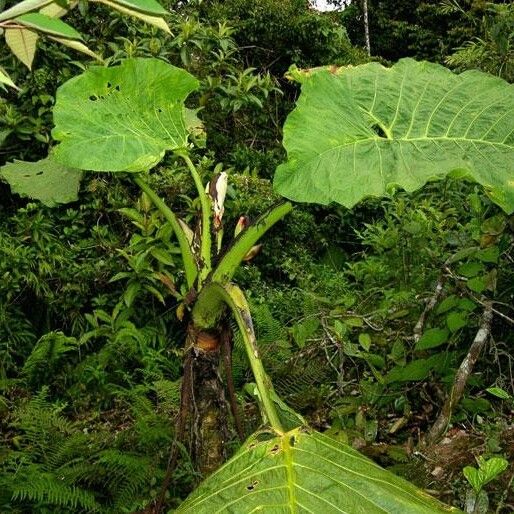
Known as the Tall Elephant Ear or Green Malanga, Xanthosoma undipes is a titan of the tropical world. Emerging from the lush rainforests of Central and South America, this plant is famous for creating a prehistoric, "Jurassic Park" atmosphere in any landscape. It is a bold architectural masterpiece that doesn't just sit in a room—it commands it.
🔍 How to Identify
- 🍃 Massive Foliage: Features enormous, arrow-shaped (sagittate) leaves that can reach up to three or four feet in length.
- 🌊 Undulating Edges: The species name undipes refers to the "wavy" margins of the leaves, which have a distinct ruffled texture compared to their flatter Alocasia cousins.
- 🪵 Trunk-like Stem: As the plant matures, it develops a thick, semi-woody upright stem (rhizome) that can make it look like a small, leafy tree.
🏡 In Your Garden
- ☁️ Humidity Hunter: This plant is a true child of the tropics; it craves high humidity. If the air is too dry, the leaf tips will quickly turn brown and "crispy" as a sign of distress.
- 🍴 Heavy Feeder: Because it produces such massive leaves at a rapid pace, it requires nutrient-rich soil and frequent organic fertilization during the growing season to maintain its structural integrity.
- 🛡️ Wind Protection: Due to the sheer size of the leaves, they act like sails; place it in a sheltered spot to prevent the wind from shredding its beautiful foliage.
⚠️ Safety & Toxicity
- 🚫 Toxic Status: Highly toxic if ingested.
- 👄 Calcium Oxalate: The plant contains needle-like calcium oxalate crystals. If chewed, these cause immediate burning, intense swelling of the mouth and throat, and digestive upset.
- 🐾 Pet Safety: Keep this plant out of reach of cats, dogs, and curious toddlers, as even a small bite can cause significant discomfort.
✨ Fun Fact
In its native habitats, the massive leaves of the Xanthosoma are often used by locals as emergency umbrellas during sudden tropical downpours! One leaf is usually wide enough to keep a full-grown adult dry.

Detailed Care Instructions
To grow Xanthosoma undipes, also known as Black Taro or Black Elephant Ear, follow these steps:
- Obtain a healthy plant: Purchase a Xanthosoma undipes plant from a reputable nursery or online store. Ensure that the plant is healthy, with no signs of disease or pests.
- Choose the right location: Xanthosoma undipes thrives in partial shade or dappled sunlight. Select a spot in your garden or outdoor space that receives a few hours of sunlight each day but also offers shade during the hottest parts of the day. The soil should be well-draining and rich in organic matter.
- Planting: Dig a hole in the ground or prepare a large container with well-draining potting mix. Place the plant in the hole or container, making sure the top of the root ball is level with or just slightly above the soil surface. Backfill with soil, gently firming it around the plant to remove any air pockets.
- Watering: Xanthosoma undipes requires regular watering to keep the soil consistently moist, but not waterlogged. Water deeply when the top inch of soil feels dry, providing enough water to thoroughly saturate the root zone. Avoid overwatering, as it can lead to root rot.
- Fertilization: Apply a balanced, slow-release fertilizer or organic compost to the soil around the plant every 4-6 weeks during the growing season. Follow the product instructions for proper application rates. This will provide the necessary nutrients for healthy growth.
- Mulching: Apply a layer of organic mulch, such as wood chips or straw, around the base of the plant to retain soil moisture and help regulate temperature.
- Pruning: Remove any damaged or yellowing leaves to maintain the plant's health and appearance. Prune back any excessive growth if needed, but avoid excessive pruning, as the leaves play a vital role in photosynthesis.
- Pests and diseases: Xanthosoma undipes is generally resistant to pests and diseases. However, keep an eye out for common issues such as aphids or slugs. If pests are present, treat them accordingly with organic or chemical controls.
- Harvesting: The tubers of Xanthosoma undipes can be harvested once they reach a suitable size. Carefully dig around the base of the plant, loosening the soil, and gently remove the tubers. They can be stored in a cool, dry place for future use.
By following these guidelines, you should be able to successfully grow Xanthosoma undipes and enjoy its unique foliage and edible tubers.

Place in a window with dappled sun or a spot in the middle of a room. Or directly in a window facing west or east.

Xanthosoma Undipes plants require a consistent and thorough watering schedule in order to thrive. These plants prefer a consistently moist soil, but it is important not to over-water them as this can lead to root rot. You should aim to water the soil deeply, allowing the water to soak down into the root zone, and allowing the top layer of soil to dry out before watering again. It is also important to ensure that the soil is well-draining and that the plant is not sitting in standing water. When watering, try to avoid getting water on the leaves as this can increase the risk of fungal diseases. In general, Xanthosoma Undipes plants should be watered regularly during the growing season, and less frequently in the winter when they are dormant.
To fertilize this particular plant, you should use a well-balanced fertilizer with equal parts nitrogen, phosphorus, and potassium. Make sure to dilute the fertilizer to half strength before applying it to the soil during the growing season. Apply the fertilizer every 4-6 weeks during the growing season, but be careful not to over-fertilize as this can damage the plant's roots and the leaves. It is also important to water the plant regularly and ensure that the soil is moist but not waterlogged.
Xanthosoma Undipes plant prefers well-draining soil with moderate fertility and organic matter content. The soil should be slightly acidic with a pH in the range of 6.0-6.5. It is important to avoid waterlogging, as the plant can be susceptible to root rot. A soil mix containing a combination of peat moss, perlite, and sand is ideal. Additionally, regular application of a balanced fertilizer can help promote healthy growth and development.
Xanthosoma undipes is a tropical plant that can be propagated by several methods such as division, offsets, bulbils, or stem cuttings.
To propagate Xanthosoma undipes through division, you will need to carefully dig up the plant from the soil and separate the healthy root clumps while making sure that each section has several leaves. Then, replant each division in well-draining soil and water it thoroughly.
Another way to propagate Xanthosoma undipes is through offsets. Offsets are small plants that grow at the base of the parent plant. Dig up the parent plant and separate the offsets from the main rhizome. Replant the offsets in a container or in the ground, using well-draining soil.
Bulbils, also known as tiny bulbs, can be found growing near the main rhizome of the plant. To propagate Xanthosoma undipes using bulbils, select a healthy bulbil and gently remove it from the parent plant. Plant the bulbil in well-draining soil, covering it with the top layer of soil.
Finally, Xanthosoma undipes can also be propagated using stem cuttings. To do this, select a healthy stem and make a clean cut below a leaf node. Remove any leaves from the lower part of the cutting, leaving only a few leaves at the top. Dip the cut end into rooting hormone and plant it in well-draining soil. Ensure that the soil is moist and keep it in a warm and bright location until it develops roots.
No common names used.








