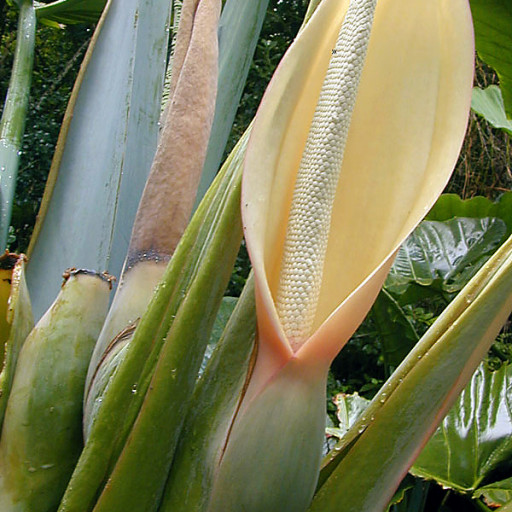
Plant Overview
Often called "Elephant Ears" or "Malanga," Xanthosoma plants are the bold, tropical giants of the rainforest floor. Native to Central and South America, these lush beauties bring a prehistoric, jungle-like vibe to any garden or home with their dramatic, oversized foliage. In many Caribbean and Latin American cultures, they are more than just a pretty face—they are a vital food crop prized for their starchy, nutty-flavored tubers.
🔍 How to Identify
- 🌿 Leaf Shape: Their most striking feature is the large, arrowhead-shaped (sagittate) leaves. Unlike their cousins, the leaves often point downward and feature deeply carved, prominent veins.
- 📐 Stem Attachment: You can tell a Xanthosoma apart from a Colocasia by looking at where the stem meets the leaf; in Xanthosoma, the stem (petiole) attaches right at the notched "V" of the leaf rather than in the center.
- 🐘 Growth Habit: They typically grow in a clumping fashion from a thick underground corm or tuber, with stems that can become quite thick and succulent as the plant matures.
🏡 In Your Garden
- ☁️ Humidity is Key: These plants breathe through their massive leaves and thrive in high humidity. If the air is too dry, the edges of those spectacular leaves will quickly turn brown and crispy.
- 🌤️ Filtered Sunlight: Think of the jungle floor—they love bright, indirect light. Direct, harsh afternoon sun is their enemy and will "bleach" the vibrant greens right out of the foliage.
- 🪴 Soil Breathability: While they are thirsty plants, they hate "wet feet." They require a chunky, well-draining potting mix (like an aroid mix with bark and perlite) to prevent the tubers from rotting in stagnant water.
⚠️ Safety & Toxicity
- 🚫 Status: Toxic if handled or eaten incorrectly.
- 👄 Crystal Danger: Like many aroids, Xanthosoma contains calcium oxalate crystals. If any part of the plant is bitten or chewed raw, these needle-like crystals cause immediate burning, intense swelling of the mouth and throat, and digestive distress.
- 🐾 Pets & Kids: Keep these out of reach of curious nibblers. While the tubers are edible when cooked thoroughly (which neutralizes the crystals), the raw plant is a major irritant to skin and mucous membranes.
✨ Fun Fact
One of the most whimsical members of this family is Xanthosoma 'Mickey Mouse'. It is a variegated variety where the leaves are naturally "deformed" and splashed with white, often creating a shape that looks exactly like the silhouette of the famous Disney mouse!

Detailed Care Instructions
To grow a Xanthosoma plant, also known as elephant ear or taro, you can follow these steps:
- Choose a suitable location: Xanthosoma requires plenty of indirect sunlight, so find a spot that receives partial shade. It should also have well-draining soil with rich organic matter.
- Prepare the soil: The soil should be moist and nutrient-rich. Add compost or well-rotted manure to improve the soil's fertility. Ensure good drainage to prevent waterlogging.
- Propagation: Xanthosoma can be propagated in two ways - by dividing tubers or by planting corms. Dividing tubers involves separating the small, tuberous rhizomes from an existing plant and replanting them. Corms are small bulbs that can be directly planted in the ground or containers.
- Planting: Dig a hole in the soil, making sure it is slightly larger than the size of the tuber or corm. Place the tuber or corm in the hole with the bud facing upward and cover with soil. Space multiple plants about 2-3 feet apart.
- Watering: Xanthosoma requires regular watering to keep the soil moist but not waterlogged. Water deeply, ensuring the soil is evenly moist. Avoid over-watering, as it may cause the tubers to rot.
- Mulching: Mulching around the plant can help retain soil moisture and suppress weed growth. Apply a layer of organic mulch, such as straw or wood chips, around the base of the plant.
- Fertilizing: Xanthosoma plants benefit from regular feeding. Use a balanced, slow-release fertilizer according to the package instructions. Feed every 4-6 weeks during the growing season.
- Support: As the plant grows, it may require support to prevent it from bending or flopping over. Stake the plant or use a plant support system to keep it upright.
- Pruning: Remove any dead or damaged leaves regularly to maintain the overall health and appearance of the plant.
- Overwintering: In areas with cold winters, Xanthosoma is not frost-tolerant. Before the first frost, dig up the tubers, cut back the foliage, and store them in a cool, dry place until the following growing season.
Remember to check for any specific care requirements for the particular variety of Xanthosoma you are growing, as different species may have slightly different preferences.

Place in a window with dappled sun or a spot in the middle of a room. Or directly in a window facing west or east.

1. Understand the watering needs of the plant: Xanthosoma plant requires watering when the soil feels dry to the touch. The plant prefers moist soil but can't withstand waterlogging.
2. Observe the soil: The best way to determine whether the plant needs water or not is to observe the soil's moisture level. Insert your finger into the soil till your second knuckle. If the soil feels dry, it's time to water the plant. If the soil is still moist, you can wait for a day or two before checking again.
3. Watering frequency: The frequency of watering Xanthosoma plant depends on the environment and season. During the summer season or when the temperature is hot, the plant may require frequent watering, whereas during the winter season, the plant may require less watering.
4. Watering technique: While watering the plant, avoid waterlogging or leaving water on the leaves. Water the soil till it feels saturated, and the excess water drains off from the drainage holes.
5. Avoid overwatering: Overwatering can lead to root rot, and the plant may die off. If you notice the leaves turning yellow or wilting, it may be a sign of overwatering.
6. Consistency: Water the Xanthosoma plant regularly to maintain a consistent moisture level in the soil. Uneven watering can cause stress to the plant and affect its growth and health.
7. Water quality: Use clean, distilled, or rainwater for watering Xanthosoma plant. Tap water can contain chemicals and minerals that may harm the plant.
8. Humidity: Xanthosoma plant prefers high humidity. You can mist the plant with water regularly to increase the humidity level around the plant.
9. Pot size: The size of the pot and the drainage holes can affect the plant's watering needs. Ensure that the pot has adequate drainage holes to avoid waterlogging.
10. Soil type: Xanthosoma plant thrives in well-draining, porous soil that retains moisture. You can add peat moss, perlite, or sand to the potting mix to aerate the soil and improve drainage.
To fertilize this plant, use a balanced fertilizer with equal amounts of nitrogen, phosphorous, and potassium. Apply the fertilizer once a month during the growing season, which is typically spring and summer. Dilute the fertilizer in water according to the instructions on the label and apply it directly to the soil around the base of the plant. Avoid getting fertilizer on the leaves as this can cause damage. Water the plant thoroughly after fertilizing.
The ideal soil for Xanthosoma plants should be rich in nutrients and well-drained. It should be a mixture of organic matter, sand, and loam soil. The pH level of the soil should be between 6.0 to 7.5. It is also recommended to add additional organic matter when planting to improve soil quality. The soil should be kept moist but not waterlogged to prevent root rot. The plant prefers slightly acidic to neutral soil.
To propagate this plant, you will need a healthy mother plant with well-established roots, a sharp knife or scissors, and clean, sterile soil. First, select a healthy stem or shoot from the mother plant that is at least 3 inches long and has several leaves. Using a sharp knife or scissors, cut the stem or shoot from the mother plant at an angle, making sure to avoid damaging the parent plant.
Next, remove the lower leaves of the stem or shoot, leaving only one or two at the top. This will help the plant conserve energy and focus on root growth. Dip the cut end of the stem or shoot into a rooting hormone powder or gel to stimulate root growth, then plant it in a pot filled with clean, sterile soil.
Water the new plant regularly and keep it in a warm, humid environment with plenty of indirect sunlight. Over time, the stem or shoot should develop its own roots, and new leaves should begin to sprout. Once the new plant is well-established and has several healthy leaves, it can be transplanted into a larger pot or planted outdoors in a suitable location.
Common pests of the elephant's ear include Mealybugs, spider mites, fungus gnats, aphids, thrips. Make a habit of checking your elephant's ear frequently for pests so that any infestations can be caught and managed early.







