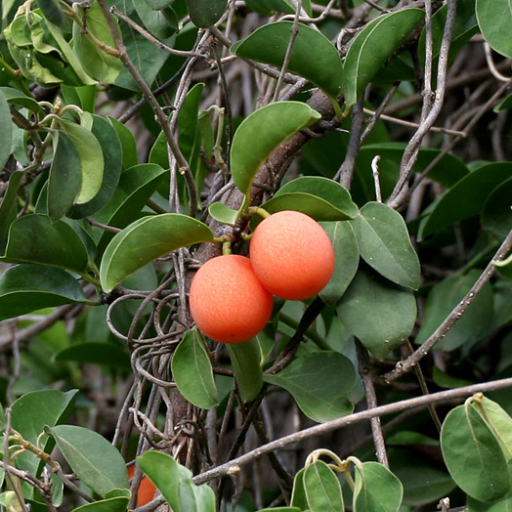
Plant Overview
Known as the "Tallowwood," "Sea Lemon," or "Wild Plum," Ximenia americana is a hardy, sun-loving traveler found on sandy coastlines and dry woodlands across the globe. This versatile shrub has been a "general store" for indigenous cultures for centuries, providing everything from tart snacks to traditional medicines and even cosmetic oils. While it looks like a friendly fruit tree, it hides a few prickly secrets behind its waxy leaves.
🔍 How to Identify
- 🌵 The Thorns: Look for sharp, straight spines (about 1 cm long) tucked into the leaf axils; these make the plant an excellent, though painful, natural security hedge.
- 🌸 Bearded Blooms: The small, fragrant, greenish-white flowers are unique because their four petals are covered in a dense, woolly "beard" on the inner surface.
- 🍋 The "Lemon" Fruit: It produces oval, plum-like fruits that turn a bright, waxy yellow when ripe, often hanging in small, inviting clusters.
🏡 In Your Garden
- 🌊 Coastal Champion: This plant is exceptionally salt-tolerant and drought-resistant, making it a "set-and-forget" choice for seaside landscapes or rocky, nutrient-poor soils where other plants struggle.
- 🧛 The Root Thief: It is a "hemi-parasite," meaning that while it can grow on its own, its roots often sneakily attach to nearby plants to steal extra water and minerals to thrive in harsh conditions.
- 🦋 Wildlife Magnet: In a garden setting, it acts as a high-traffic hub for butterflies and bees, while birds are frequently drawn to the bright yellow fruit.
⚠️ Safety & Toxicity
- 🍋 Edible Pulp: The fruit pulp is edible and very high in Vitamin C, but the flavor is an acquired taste—ranging from refreshingly tart to intensely bitter or "almond-like."
- 🚫 Seed & Leaf Warning: The seeds (kernels) and young leaves contain hydrocyanic acid (cyanide-forming compounds). They should not be consumed, as they can be toxic to humans and pets if ingested in significant amounts.
- 🐾 Pet Safety: Keep curious dogs away from the fallen pits/seeds, as the high oil content and chemical compounds can cause digestive distress or worse.
✨ Fun Fact
The seeds are nearly 60% oil! This "Tallowwood" oil is so stable and rich that it has been used historically as a preservative for leather, a soothing skin ointment, and even as a substitute for butter in some traditional African cuisines.

Detailed Care Instructions
To grow Ximenia Americana, also known as sour plum or hog plum, follow these steps:
- Climate and soil requirements: Ensure you live in a tropical or subtropical climate, as Ximenia Americana thrives in these regions. The plant prefers well-draining sandy or loamy soil with a pH range of 6.5 to 7.5.
- Propagation: Obtain seeds from a reputable nursery or save them from ripe fruits. Soak the seeds in water for 24 hours to help with germination.
- Germination: Fill a seed tray or pot with a mixture of sand and peat moss. Sow the seeds about 1 inch deep into the soil and keep the tray in a warm, well-lit area. Maintain a temperature range of 75-85°F (23-29°C). Water the seeds regularly, keeping the soil slightly moist.
- Transplantation: Once the seedlings have grown at least 2-3 sets of true leaves, they can be transplanted to larger pots or directly into a prepared garden bed. Make sure to space the plants at least 8-10 feet apart to allow for their spreading growth.
- Sunlight and watering: Ximenia Americana requires full sun exposure, so choose a location that receives direct sunlight for at least 6-8 hours per day. Water the plant regularly, ensuring the soil remains consistently moist but not waterlogged.
- Fertilization: Apply a balanced slow-release fertilizer, following the recommended dosage, during the growing season. This will help promote healthy growth and fruit production.
- Pruning: Prune the plant during the dormant season to remove dead or damaged branches and to maintain a compact shape. Regular pruning will also help improve airflow and sunlight penetration, enhancing overall plant health.
- Pest and disease control: Monitor the plant for common pests like aphids, mealybugs, or scale insects. Use organic insecticides or neem oil if necessary. Ximenia Americana is generally not prone to major diseases but keep an eye out for any signs of fungal or bacterial infections.
- Harvesting: Ximenia Americana fruits will ripen within 3-6 months after flowering, turning from green to yellow or reddish-orange. Pick the fruits when they are fully ripe and the flesh feels slightly soft. They can be eaten fresh, used in cooking, or made into preserves.
Remember to be patient when growing Ximenia Americana, as it may take several years for the plant to start fruiting. Regular care and maintenance will ensure a healthy and productive plant.

Place in a bright room that is sun drenched almost all day. Or directly in a south-facing window.

Ximenia Americana is a plant that requires regular watering to ensure healthy growth. The best way to water this plant is by using a watering can or a hose with a gentle flow of water. It is essential to keep the soil moist but avoid overwatering as it can lead to root rot.
To determine when to water the plant, you need to touch the soil around the plant. If the top inch of soil feels dry, it's time to water. When watering, make sure to cover the entire soil surface, so all parts of the root system receive an adequate supply of water.
If the plant is potted, ensure that the pot has adequate drainage holes to prevent waterlogging. It is good to allow excess water to drain out of the pot, and also you can remove excess water from the saucer to avoid standing water.
Watering frequency may vary depending on your plant's location, temperature, humidity, and soil types. During hot weather, you may need to water your plant more frequently than in cooler months. Also, pay attention to any signs of under or overwatering, such as wilted leaves, yellowing foliage, or waterlogged soil.
Finally, it is important to note that the plant prefers a slightly acidic soil pH (pH 5.0-6.5). You can test the soil's pH with a pH meter or a soil testing kit and adjust it accordingly with specialized soil amendments.
To fertilize this plant, use a balanced fertilizer with equal amounts of nitrogen, phosphorus, and potassium. Apply the fertilizer to the soil around the plant, avoiding contact with the leaves. Utilize a slow-release fertilizer to prevent burning the plant's roots. Water thoroughly after fertilizing. For best results, fertilize during the growing season, approximately every two to three months.
The ideal soil for Ximenia Americana plant should be well-draining and enriched with organic matter. It should have a slightly acidic to neutral pH level, ranging from 5.5 to 7.0. Sandy loam soil is the best option for this plant, which is rich in nutrients and aids in the proper drainage of water. It is also recommended to mix the soil with some compost or well-rotted manure to improve its fertility, which will promote healthy growth. Overly compacted or clayey soils should be avoided, as they can retain too much moisture and lead to waterlogging. Additionally, it is important to ensure that the soil is not too alkaline, as this may reduce the availability of certain nutrients needed for healthy growth. Finally, it is recommended to mulch the soil surface around the plant to prevent moisture loss, suppress weeds, and regulate soil temperature.
To propagate this plant, you will need to collect mature seeds from the fruit. The fruit should be left on the plant until it is fully ripened and begins to split open. The seeds can then be removed and cleaned thoroughly.
Once you have obtained the seeds, you should plant them in a moist, nutrient-rich soil mixture. The seeds should be planted shallowly, just beneath the surface of the soil.
The newly planted seeds will need to be kept moist and warm, either in a greenhouse or indoors. You can cover the seed tray with a plastic sheet to help retain moisture and heat.
Within a few weeks, you should begin to see signs of germination. Once the seedlings have developed their first set of true leaves, they can be transplanted into individual pots.
When transplanting, take care not to damage the delicate roots of the seedlings. It is important to provide them with plenty of water and nutrients to help them grow strong and healthy.
With proper care, the Ximenia Americana seedlings should grow quickly and develop into mature plants within a few years.








