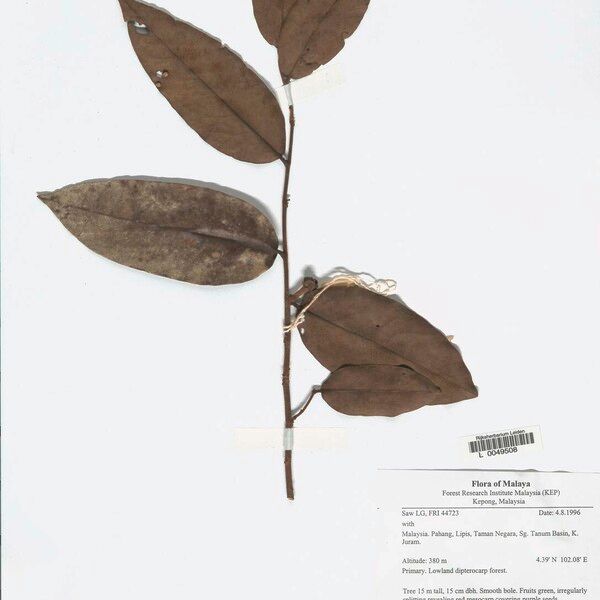
Plant Overview
Known as the "Giant Bitter-wood," Xylopia magna is a majestic titan of the Neotropical rainforests. Found primarily in the lush lowlands of Central and South America, this tree is a distinguished member of the Annonaceae family—the same lineage that gives us custard apples and pawpaws. It stands out not just for its impressive height, but for the aromatic, spicy fragrance that lingers in the air whenever its bark or leaves are disturbed.
🔍 How to Identify
- 🍃 Stately Foliage: The leaves are large, glossy, and arranged alternately along the branches. They often have a slightly leathery texture and a pale underside that shimmers in the forest light.
- 🌸 Geometric Blooms: It produces thick, tri-petaled flowers that are creamy-yellow or greenish. These blooms have a heavy, exotic scent designed to attract specialized beetle pollinators.
- 🫛 Cluster Fruits: The most striking feature is the fruit—a collection of elongated, finger-like pods (monocarps) that grow in a bunch. When ripe, they may split to reveal dark seeds contrasted against a colorful interior.
🏡 In Your Garden
- 🌳 Space Requirements: Because it is a true forest giant, X. magna is rarely found in average home gardens. It requires significant vertical space and is best suited for large botanical collections or tropical estates where it can act as a canopy provider.
- 💧 Tropical Cravings: This species thrives on high humidity and consistent moisture. It "sulks" and may drop leaves if exposed to dry air or prolonged droughts, as it is evolutionarily tuned to the damp floor of the rainforest.
- 🌱 Soil Preference: It demands deep, acidic, and well-draining soil rich in organic matter to mimic the decomposing leaf litter of its natural habitat.
⚠️ Safety & Toxicity
- 🐾 General Precaution: While some species in the Xylopia genus produce seeds used as spices (like the "Grains of Selim"), the raw seeds and bark of X. magna contain concentrated alkaloids.
- 🚫 Keep Away: It is considered non-edible for humans and pets. Ingestion of the seeds or bark can cause stomach upset or more severe neurological reactions due to its chemical defenses. Always wear gloves if pruning to avoid potential skin irritation from the aromatic oils.
✨ Fun Fact
The genus name Xylopia is derived from the Greek words xylon (wood) and pikron (bitter). This refers to the incredibly bitter taste of the timber, a natural defense mechanism that makes the tree nearly "termite-proof" and highly resistant to rot!

Detailed Care Instructions








