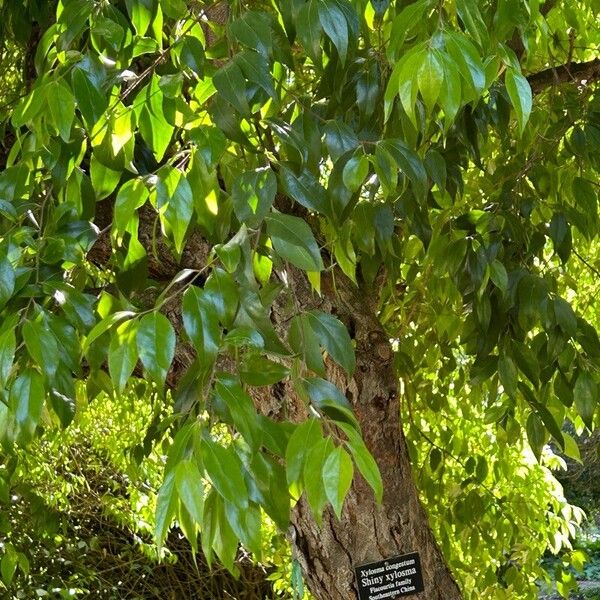
Plant Overview
Often called the "Shiny Xylosma," this plant is the unsung hero of privacy hedges and structural landscaping. Native to East Asia, it is beloved for its waxy, light-reflecting foliage that seems to glow even on overcast days. Whether pruned into a formal geometric shape or allowed to fountain naturally into a small tree, it provides a lush, polished backdrop that stays vibrant year-round.
🔍 How to Identify
- 🍃 Lustrous Leaves: The foliage is exceptionally glossy and oval-shaped. New growth often emerges in a striking coppery-bronze or yellowish-green hue before maturing into a deep, rich emerald.
- 🪚 Serrated Margins: If you look closely at the edges of the leaves, you’ll notice fine, elegant serrations that give the plant a crisp, textured appearance.
- 🪵 Hidden Spines: While many nursery-bred varieties are "clean," older wood or wilder specimens often feature sharp, inconspicuous thorns along the stems, tucked away beneath the dense leaves.
🏡 In Your Garden
- 🧱 The Ultimate Screen: Because it handles heavy pruning with ease, it is a favorite for creating "living walls." Its dense branching habit makes it an excellent sound barrier and a secure boundary for backyard privacy.
- ☀️ Adaptable Nature: Xylosma is famously tough. It thrives in full sun but is one of the few evergreen shrubs that can maintain a dense, healthy look in partial shade. Once its root system is established, it becomes remarkably drought-tolerant, making it ideal for low-maintenance landscapes.
⚠️ Safety & Toxicity
- 🧤 Physical Hazard: While the plant is generally considered non-toxic to humans and pets if accidentally nibbled, those hidden thorns are a real concern.
- 🩹 Pruning Safety: Always wear thick gardening gloves when shaping this shrub. The thorns can cause painful scratches or skin irritation if they catch you off guard, so it is best kept away from narrow pathways where children or pets frequently run.
✨ Fun Fact
Though it is grown almost exclusively for its beautiful leaves, Xylosma produces tiny, inconspicuous yellow flowers in late summer. You might not see them, but you will certainly smell them—they emit a surprisingly sweet, honey-like fragrance that attracts bees and butterflies from across the garden!

Detailed Care Instructions

Place in a bright room that is sun drenched almost all day. Or directly in a south-facing window.

The presence of a dry surface layer of soil does not indicate that the plant requires water. Instead, stick your finger 1-2" (3-5 cm) deep in the soil to feel dampness or moisture content. If the soil seems dry, it's time to water your greens. If the soil is still moist, however, it is better not to water your plant and instead wait a day or two. Overwatering or waterlogging raises the risk of root rot. So if the soil takes longer than a week to dry, check the light conditions because it's likely that the plant isn't getting enough light. It's fine if the upper layer of soil is dry between waterings, but the deeper soil layer should always have some moisture.
These plant needs regular fertilizing during growing seasons. Fertilizing your plants in dormant state during the winter, might result in scorching or browning of the leaf tips. If mature plants display signs of nutrient insufficiency, fertilizer administration is necessary to restore the plant to its previous state.
You may use All Purpose Plant Food or All Purpose Fertilizer for your Dense Logwood
Common pests of the dense logwood include Scale insect, mealybugs, aphids, thrips, whiteflies. Make a habit of checking your dense logwood frequently for pests so that any infestations can be caught and managed early.







