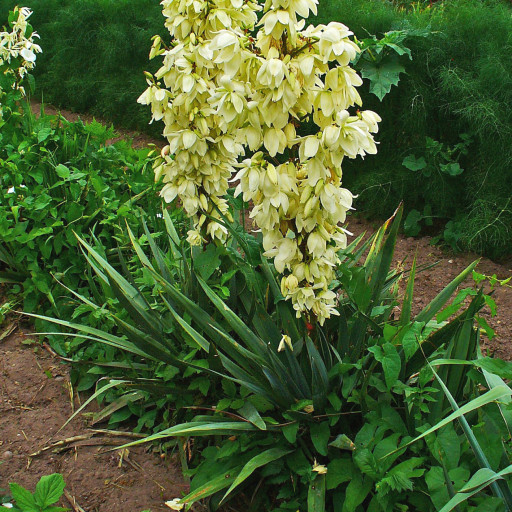
Plant Overview
Known affectionately as Adam’s Needle or Thread-and-Needle, Yucca filamentosa is a striking architectural staple of the American Southeast. It is best known for the dramatic, curly white threads that peel away from its leaf margins, giving it a slightly "shaggy" but elegant appearance. This plant is a favorite for those seeking a "set and forget" landscape feature that looks just as good in a modern minimalist garden as it does in a wild, desert-themed xeriscape.
🔍 How to Identify
- 🧵 Curly Filaments: The most distinct feature is the thin, white thread-like fibers that peel off the edges of the leaves, looking like loose sewing threads.
- 🗡️ Sword-Shaped Rosette: The plant grows in a stemless clump of stiff, evergreen leaves that radiate outward like a burst of green daggers.
- 🔔 Towering Blooms: In early summer, it sends up a massive flower stalk (often reaching 5-8 feet tall) laden with heavy, creamy-white, bell-shaped blossoms.
🏡 In Your Garden
- 🏜️ The Drainage Specialist: While incredibly hardy, the Adam's Needle is a "dry feet" enthusiast. It thrives in sandy or rocky soils where water moves quickly; sitting in soggy soil will cause its fleshy roots to rot almost overnight.
- 🧱 Permanent Placement: Because of its deep, tenacious taproot, this plant is notoriously difficult to move once established. Pick your spot wisely, as any leftover root fragments in the soil can eventually sprout into new "baby" yuccas.
- ☀️ Sun-Seeker: To get those iconic flower spikes, it needs full sun. In the shade, the leaves may become floppy and lose their architectural rigidity.
⚠️ Safety & Toxicity
- ⚔️ Physical Hazard: The "needle" in its name is no joke. Each leaf ends in a very sharp, stiff point that can easily puncture skin or poke an eye. Avoid planting it right next to narrow walkways or children's play areas.
- 🐾 Pet Safety: This plant contains saponins, which are toxic to dogs, cats, and horses if ingested. While the leaves are too tough for most pets to chew on, ingestion can cause drooling, vomiting, and coordination issues.
✨ Fun Fact
The Yucca filamentosa has a "soulmate" in the Yucca Moth. This is one of the most famous examples of obligate mutualism in nature: the plant can only be pollinated by this specific moth, and the moth’s larvae can only survive by eating a portion of the developing yucca seeds. Neither species could exist without the other!

Detailed Care Instructions
| Color | Creamy White |
| Soil Ph | 5.5-7.5 |
| Lighting | Full Sun |
| Soil Type | Dry To Medium-Moisture, Well-Drained Soil |
| Bloom Time | June To July |
| Plant Type | Broadleaf Evergreen Shrub |
| Mature Size | 4 To 8 Feet Tall, 2- To 3-Foot Spread |
| Native Area | Sandy Beaches And Fields Of Southeastern U.s. |
| Sun Exposure | Full Sun |
| Hardiness Zones | 5-10 |
To grow Yucca filamentosa, or Adam's needle, you can follow these steps:
- Choose a suitable location: Yucca filamentosa is a hardy plant that prefers full sun but can tolerate some shade. Ensure that the soil is well-draining to prevent root rot.
- Prepare the soil: Amend the soil with organic matter, such as compost or aged manure, to improve drainage and fertility. Yuccas prefer slightly acidic to neutral soil with a pH range of 6.0-7.0.
- Propagation: Yucca filamentosa can be grown from seeds or by division. If starting from seeds, sow them indoors in early spring and transplant the seedlings outdoors once they are established. If using division, carefully separate offsets from the parent plant and replant them in the prepared soil.
- Planting: Dig a hole slightly larger than the root ball of the yucca plant. Place the plant in the hole, ensuring that it is at the same depth as it was in the nursery pot. Backfill with soil, firming it gently around the roots.
- Watering: Yuccas are drought-tolerant plants and do not require frequent watering once established. Water deeply but infrequently, allowing the soil to dry out between waterings.
- Mulching: Apply a layer of organic mulch, such as wood chips or straw, around the base of the plant to conserve moisture, suppress weeds, and insulate the roots from temperature fluctuations.
- Pruning: Prune any dead or damaged leaves from the yucca plant to maintain its appearance. Avoid cutting the stem as this may affect future growth.
- Fertilizing: Yucca filamentosa generally does not require frequent fertilization. However, you can apply a slow-release fertilizer formulated for flowering plants in spring to promote healthy growth.
- Winter care: Yucca filamentosa is cold-hardy but may benefit from winter protection in colder climates. Apply a layer of mulch around the base of the plant to insulate the roots from freezing temperatures.
With proper care, your Yucca filamentosa plant should grow and prosper. Remember to monitor its progress, water it appropriately, and provide occasional fertilization to ensure its health.

Place in a bright room that is sun drenched almost all day. Or directly in a south-facing window.

To water this plant, ensure that the soil is dry before watering. When watering, pour water directly onto the soil and avoid getting water on the leaves or stem. Water sparingly, as the plant only needs to be watered when the soil is completely dry. Overwatering can cause root rot and other plant issues. In the winter, reduce watering even further as the plant enters a dormant stage.
To fertilize this plant, it is recommended to use a well-balanced, slow-release fertilizer in early spring before new growth emerges. Be careful not to over-fertilize, as this can lead to excessive growth and potentially harm the plant. It is also important to water the plant thoroughly before applying fertilizer to avoid burning the roots. Additionally, it can be beneficial to add a layer of organic mulch around the base of the plant to help retain moisture and nutrients.
The ideal soil for the plant in question should be well-draining and sandy with a pH range of 6.0-7.5. It prefers a soil that is slightly acidic to neutral. It can tolerate some amount of clay in the soil, but it should not be too heavy or compacted. The soil should have good drainage to prevent the plant from sitting in standing water, which can cause root rot. Adding organic matter such as compost or peat moss can help improve soil quality and provide additional nutrients for healthy growth. It is also recommended to avoid using soil that is too rich in nutrients, as this can cause the plant to grow too quickly and become weak.
To propagate this plant, you will need to find healthy shoots or offsets growing from the parent plant. Using clean and sharp pruning shears or a knife, carefully remove the offsets from the parent plant.
Before planting the offsets, they need to dry and callus for a few days to prevent rotting. Place the cuttings in a warm and dry location with good air circulation for 2-3 days.
Fill a pot or container with well-draining soil mix and make a hole in the center. Plant the dried offset into the soil and make sure to cover the base of the plant with soil. Water the plant lightly and place it in bright, indirect sunlight.
Keep the soil moist but not waterlogged to encourage root growth. Once new growth is observed and the plant has established roots, it can be transplanted into a larger pot or directly into the ground.
Common pests of the yucca include Scale insect, mealybugs. Make a habit of checking your yucca frequently for pests so that any infestations can be caught and managed early.








