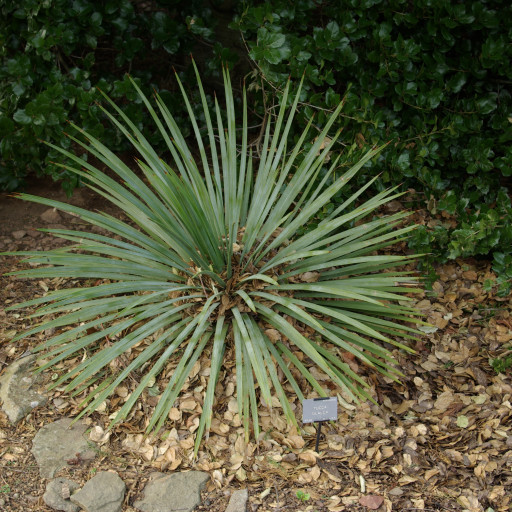
Plant Overview
Commonly known as Soapweed Yucca or the "Small Soapweed," this hardy evergreen is a quintessential symbol of the American Great Plains. With its explosive, architectural shape and spear-like foliage, it looks like a desert survivor that wandered into the prairie. Indigenous cultures historically revered this plant not just for its beauty, but as a "natural drugstore" and cleaning supply.
🔍 How to Identify
- 🗡️ The Foliage: Long, narrow, and stiff blue-green leaves that radiate from a central base. They are much thinner and more "grass-like" than the thick leaves of a Joshua Tree or Yucca aloifolia.
- 🧵 White Filaments: Look closely at the leaf edges; you’ll see distinctive curly, white threads peeling away from the margins, giving the plant a slightly "hairy" appearance.
- 🔔 The Bloom: In late spring, it sends up a tall, sturdy stalk (up to 3 feet high) laden with nodding, bell-shaped flowers that range from creamy white to pale greenish-white.
🏡 In Your Garden
- 🌱 The "Stay Put" Rule: This yucca develops an incredibly deep and resilient taproot to find water. Because of this, it absolutely hates being moved once established. Choose its "forever home" carefully, as transplanting often leads to shock.
- 🏜️ Drainage is Non-Negotiable: While it can survive freezing winters that would kill other succulents, it cannot handle "wet feet." In a garden setting, it thrives in sandy or rocky soil where water moves away quickly from the crown.
- 🌬️ Xeriscaping Hero: It is virtually maintenance-free once established. It is highly resistant to drought, wind, and heat, making it perfect for rock gardens or slopes where other plants might wither.
⚠️ Safety & Toxicity
- ⚔️ Physical Hazard: The most immediate danger is the leaf tip. Each leaf ends in a very sharp, needle-like point that can easily pierce skin or poke an eye. Avoid planting it right next to narrow walkways.
- 🐾 Pet Safety: The plant contains saponins, which are toxic to dogs and cats if ingested in large quantities. While the bitter taste usually deters chewing, ingestion can cause drooling, vomiting, or lethargy.
- 🧼 Skin Sensitivity: While the root was traditionally used to make soap, some individuals may experience mild skin irritation (dermatitis) when handling the sap or broken leaves.
✨ Fun Fact
The Soapweed Yucca has a "secret marriage" with the Yucca Moth (Tegeticula yuccasella). They are completely dependent on each other: the moth is the plant's only pollinator, and the plant's seeds are the only food the moth's larvae can eat. The moth actually "calculates" how many eggs to lay so that the larvae don't eat all the seeds, ensuring both species survive!

Detailed Care Instructions
| Lighting | Full Sun |
| Hardiness Zones | Min 4A |
To grow Yucca Glauca (also known as soapweed or plains yucca), follow these steps:
- Choose a suitable location: Yucca Glauca thrives in full sunlight, so select a spot in your garden that receives at least 6-8 hours of direct sunlight per day. Ensure the soil is well-draining to prevent waterlogged roots.
- Prepare the soil: Yucca Glauca prefers sandy or loamy soil with a slightly acidic to slightly alkaline pH (around 6.0-7.5). If your soil is heavy or clay-like, improve drainage by adding sand or organic matter such as compost.
- Planting method: You can either plant Yucca Glauca using seeds or through offsets (smaller plants that arise from the base of an established plant). Seeds should be planted in well-draining soil and lightly covered with a thin layer of soil. Water gently and keep the soil moist until germination occurs. As for offsets, they can be removed from the parent plant during the growing season, ensuring they have some roots attached. Plant the offsets in the prepared soil, leaving some space between each plant.
- Watering: Once established, Yucca Glauca is drought-tolerant and does not require frequent watering. Water sparingly, allowing the soil to dry out between waterings. Overwatering may lead to root rot, so it's essential to maintain well-drained soil.
- Mulching: Applying a layer of organic mulch around the base of the plant can help conserve moisture and suppress weeds. Use a thin layer of mulch, keeping it away from the main stem to prevent rotting.
- Pruning and maintenance: Yucca Glauca requires minimal pruning. Remove any dead or damaged leaves, as well as spent flower stalks. Be cautious of the sharp, tough leaves when pruning to avoid injury.
- Winter care: Yucca Glauca is cold hardy, but it's good to provide some protection during harsh winters, especially if you reside in a colder climate. Applying a layer of mulch around the base of the plant or covering it with a burlap sack can help insulate it from extreme temperatures.
By following these steps, you can successfully grow Yucca Glauca and enjoy its unique beauty in your garden.

Place in a bright room that is sun drenched almost all day. Or directly in a south-facing window.

First, it is important to know the watering requirements of this plant. Yucca Glauca prefers well-draining soil and does not tolerate consistently damp conditions. Therefore, it is best to wait until the top inch of soil is dry before watering.
When watering, use room temperature water and allow it to saturate the soil until it runs out of the drainage holes. Be sure to empty any excess water that collects in saucers or trays under the pot to prevent the roots from sitting in water.
During the cooler months, it is recommended to reduce watering frequency, as the plant requires less water during its dormant period. Conversely, during hot and dry periods, more frequent watering may be required.
It is also important to avoid getting water on the plant's foliage, as this can lead to fungal diseases. Instead, aim to water directly at the base of the plant.
Finally, remember to take into account the humidity levels in the plant's environment. Yucca Glauca prefers low humidity, so be sure to avoid misting or placing the plant in a humid location.
- Choose a balanced fertilizer that contains equal amounts of nitrogen, phosphorus, and potassium.
- Dilute the fertilizer to half strength according to package instructions.
- Apply the fertilizer to the soil around the base of the plant, avoiding contact with the leaves.
- Water the plant thoroughly after fertilizing to help the nutrients move into the soil.
- Repeat fertilization every two to three months during the growing season, which typically runs from late spring to early fall.
- Always follow package instructions for the specific fertilizer product you are using.
- Consider using an organic fertilizer to reduce chemical exposure and promote the health of beneficial soil microbes.
The ideal soil for Yucca Glauca is a well-draining, sandy soil with a slightly alkaline pH level. It is important that the soil has good drainage to prevent waterlogging, as Yucca Glauca is susceptible to root rot in poorly drained soil. Additionally, adding perlite or coarse sand to the soil can help with drainage. Yucca Glauca can also tolerate dry soil conditions, so avoid overwatering.
Yucca Glauca plant can be propagated through division. To do this, first, find an established plant that has multiple offsets or "pups" growing around its base. Using a sharp, clean knife or gardening shears, cut away the pup from the parent plant. Make sure that each pup has a healthy root system attached.
Plant the pup in well-draining soil mixture. Place the plant in an area with bright, indirect sunlight. Water the plant deeply once a week, but do not overwater as this can cause root rot.
After a few weeks, new growth should become visible, indicating that the plant is establishing roots and becoming established. Once it has grown and is established, transplant the newly propagated plant into a larger container or outdoor garden space, taking care to provide the same growing conditions as for the parent plant.
It is important to note that propagation should be done during the plant's active growing season, which is typically in the spring or early summer. Additionally, it is important to use proper protective gear, such as gloves and eye protection, when working with Yucca Glauca plant as it can have sharp and spiny leaves.








