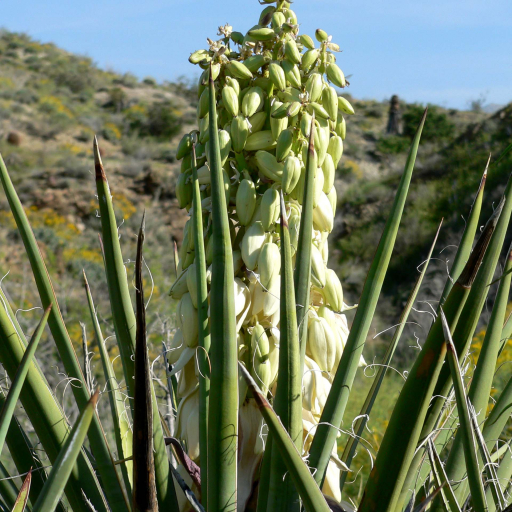
Plant Overview
Known as the "Mojave Yucca" or "Spanish Dagger," this plant is a rugged icon of the American Southwest. It carves a prehistoric silhouette against the desert horizon, characterized by its bayonet-like leaves and stubborn resilience to heat. For centuries, it served as a "wilderness general store" for Indigenous peoples, providing soap from its roots and tough fibers for weaving sandals and rope.
🔍 How to Identify
- 🗡️ The Foliage: Long, stiff, yellowish-green leaves that form a dense rosette; each leaf ends in a dangerously sharp, dark brown spine.
- 🧶 Curly Fibers: One of its most distinct features is the presence of white, thread-like fibers that peel away and curl along the margins of the leaves.
- 🔔 The Blooms: It produces a massive, heavy stalk (up to 4 feet tall) crowded with waxy, bell-shaped flowers that range from creamy white to tinged with purple.
- 🪵 The Trunk: While young plants look like ground-level spikes, older specimens develop a thick, shaggy trunk covered in old, dead leaves that hang down like a "skirt."
🏡 In Your Garden
- 🏜️ Arid Ambitions: This is a "set it and forget it" plant for xeriscaping. It requires almost no supplemental water once established and thrives in the kind of intense, baking sun that would wither most other garden plants.
- 🪨 Gritty Foundations: Soil drainage is non-negotiable. If planted in heavy clay or potting soil that stays damp, the Mojave Yucca will succumb to root rot almost overnight.
- ⚓ Permanent Placement: Think carefully before planting; the Mojave Yucca develops a deep, stubborn taproot. It resents being moved and can be nearly impossible to fully erupt once it has claimed its spot.
⚠️ Safety & Toxicity
- 🐾 Pet Warning: The plant contains steroidal saponins. If ingested by dogs or cats, it can cause drooling, vomiting, and loss of coordination.
- ⚔️ Physical Hazard: The common name "Spanish Dagger" is literal. The leaf tips are sharp enough to puncture skin or cause eye injuries, so it should be kept away from narrow walkways, play areas, or curious toddlers.
✨ Fun Fact
The Mojave Yucca has a secret role in the modern pet industry! Extracts from this plant are frequently added to high-quality dog and cat food because the natural compounds inside help neutralize the ammonia in pet waste, significantly reducing the odor of their litter boxes and stools.

Detailed Care Instructions
| Humidity | Normal |
| Lighting | Full Sun |
| Difficulty | Medium |
| Hibernation | Cold Period |
| Temperature | 26°C - 32°C |
| Hardiness Zones | 9 - 10 |
To grow a Yucca Schidigera plant, follow these steps:
- Choose a suitable location: Yucca Schidigera prefers full sun to partial shade. Select a spot in your garden that receives at least 6 hours of direct sunlight per day.
- Prepare the soil: Yucca Schidigera thrives in well-draining soil. If your soil is heavy clay, amend it with organic matter such as compost or well-rotted manure to improve drainage.
- Planting: Dig a hole that is slightly larger than the root ball of the plant. Place the Yucca Schidigera in the hole and backfill with soil, firming it gently around the roots. Make sure that the plant is at the same level as it was in the container.
- Watering: Water the plant thoroughly after planting to settle the soil. Yucca Schidigera is drought-tolerant, so water sparingly once established. Allow the soil to dry out between waterings to prevent overwatering.
- Mulching: Apply a layer of organic mulch, such as wood chips or straw, around the base of the plant. Mulching helps retain moisture, suppresses weeds, and regulates soil temperature.
- Fertilizing: Yucca Schidigera does not require regular fertilization. However, you can feed it with a balanced, slow-release fertilizer in early spring to boost its growth.
- Pruning: Remove dead or damaged leaves as needed. Cut back the flower stalk after it has finished blooming to promote new growth.
- Protecting from frost: Yucca Schidigera is hardy to USDA zones 7-11. If you live in a colder climate, consider growing it in a container that can be brought indoors during the winter or provide protection, such as covering it with a frost cloth.
- Pest and disease control: Yucca Schidigera is relatively resistant to pests and diseases. However, keep an eye out for common problems like aphids or mealybugs. If necessary, treat with insecticidal soap or neem oil.
- Propagation: Yucca Schidigera can be propagated through division or stem cuttings. Dividing the plant is best done in spring, while stem cuttings can be taken in summer. Follow the appropriate techniques for each method to ensure successful propagation.
With proper care and attention, your Yucca Schidigera plant should thrive and grow into a beautiful and striking addition to your garden.

Place in a bright room that is sun drenched almost all day. Or directly in a south-facing window.

To water this plant, thoroughly saturate the soil around the base of the plant. The plant should be watered when the top inch of soil is dry to the touch, but be careful not to overwater as soggy soil can lead to root rot. Allow any excess water to drain away, and avoid getting water on the leaves or stem. The frequency of watering depends on the temperature, humidity, and light levels in the plant's environment. If the plant is in a sunny, warm area, it may need to be watered more frequently than if it is in a cooler, shadier spot. Always check the soil moisture level before watering to ensure the plant isn't receiving too much or too little water.
To fertilize this plant, use a balanced fertilizer with equal parts nitrogen, phosphorus, and potassium. Apply the fertilizer during the plant's active growing season, which typically occurs during the spring and summer months. Dilute the fertilizer solution to half the recommended strength, and apply it every two to three weeks. Make sure to water the plant thoroughly before and after fertilizing to avoid over-fertilizing. Avoid fertilizing this plant during the fall and winter months when it is dormant.
The ideal soil for the Yucca Schidigera plant should be well-draining with good water retention capacity. It should have a pH level of 6-7 and should be rich in nutrients such as nitrogen, phosphorus, and potassium. The soil should also be able to hold moisture without becoming waterlogged. A sandy loam soil mix with added organic matter such as compost or peat moss is ideal for this plant. It is important to avoid soil mixes that are too heavy or compacted, as this can lead to root rot and other problems. Regularly checking the plant's moisture levels and adjusting the soil accordingly is also important for the health of the Yucca Schidigera plant.
Yucca Schidigera plant can be propagated through stem cuttings or offsets. To propagate through stem cuttings, select a healthy stem that is at least 6-8 inches long and has a few leaves at the top. Make a clean cut at a 45-degree angle just below a leaf node using a sharp, sterilized knife. Remove the lower leaves from the stem, leaving only a few at the top. Dip the cut end in rooting hormone and plant it in a well-draining soil mix. Place the pot in a warm, bright location and keep the soil moist until roots appear.
To propagate through offsets, wait for the plant to produce "pups" or new growths from the base of the plant. Once the offsets are large enough, carefully separate them from the mother plant using a sterilized knife and plant them in their own pots with well-draining soil mix. Water the new plants sparingly and keep them in a warm, bright location until they establish their own roots.








