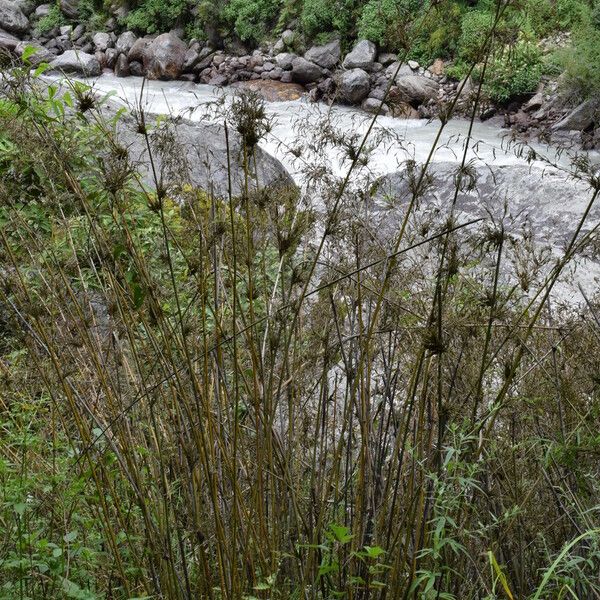
Plant Overview
Native to the misty, high-altitude slopes of the Eastern Himalayas, the Maling Bamboo (Yushania maling) is a symbol of resilience and elegance. Often found growing in dense thickets across Nepal, Bhutan, and India, this bamboo is prized by gardeners for its non-invasive "clumping" habit and its ability to withstand colder temperatures that would make other tropical bamboos shiver.
🔍 How to Identify
- 🎋 Slender Culms: The stems are remarkably thin and wiry, usually maturing to a pale green or yellowish-tan color, often covered in a light, white powdery bloom when young.
- 🍃 Delicate Foliage: It features small, narrow, lance-shaped leaves that grow in dense, weeping clusters, giving the plant a soft, feathery texture from a distance.
- 🍂 Persistent Sheaths: Look at the base of the branches; this species often retains its papery, reddish-brown culm sheaths longer than other bamboos, providing a distinct textured look to the stalks.
🏡 In Your Garden
- 🏔️ The "Cool" Bamboo: Unlike many tropical species, Yushania maling thrives in temperate climates. It prefers areas with high humidity and consistent moisture, mimicking the cloud forests of its Himalayan home.
- 🛑 Non-Invasive Growth: Because it is a "pachymorph" (clumping) bamboo, it expands slowly in tight circles rather than sending out aggressive underground runners. This makes it a perfect choice for privacy screens or focal points in smaller gardens without the fear of it "taking over" the neighborhood.
⚠️ Safety & Toxicity
- ✅ Pet & Human Friendly: Maling Bamboo is considered non-toxic to cats, dogs, and humans. It is a safe choice for households with curious pets or children.
- 🌵 Mechanical Irritation: While not poisonous, the dry sheaths and the edges of the leaves can be quite sharp or "toothy." Wear gloves when pruning to avoid tiny silicate cuts or splinters from the culms.
✨ Fun Fact
In its native Himalayan regions, the tough, flexible culms of Yushania maling are a primary material for traditional weaving. Local artisans use the split stems to create "malingo" mats and durable baskets that can withstand the rigors of mountain life!

Detailed Care Instructions
Here are some steps to help you grow Yushania Maling plants:
- Select a suitable location: Yushania Maling plants thrive in bright, indirect sunlight or partial shade. Choose a spot that offers these growing conditions.
- Prepare the soil: Yushania Maling plants prefer well-draining soil with a slightly acidic to neutral pH level. Amend the soil with organic matter such as compost or peat moss to improve its fertility and drainage.
- Planting: Dig a hole that is slightly larger than the plant's root ball. Place the Yushania Maling plant in the hole, making sure it sits at the same depth it was in its nursery container. Fill the hole with soil and gently firm it around the plant.
- Watering: Keep the soil consistently moist, especially during the plant's establishment period. However, ensure the soil is not waterlogged as excessive moisture can cause root rot. Water deeply but infrequently, allowing the top inch or two of soil to dry out slightly before the next watering.
- Mulching: Apply a layer of organic mulch, such as wood chips or straw, around the base of the plant. This helps retain soil moisture, regulate temperature, and inhibit weed growth.
- Fertilizing: Yushania Maling plants can benefit from occasional feeding. Use a balanced slow-release fertilizer or a bamboo-specific fertilizer according to the instructions on the product packaging. Apply the fertilizer in early spring and late summer.
- Pruning: Regular pruning helps maintain the plant's shape and remove dead or damaged canes. Prune Yushania Maling plants in late winter or early spring before new growth appears. Cut back any unwanted or crowded canes to maintain a healthy and visually pleasing plant.
- Winter care: Yushania Maling plants are cold-hardy, but if you live in an extremely cold climate, provide some protection by mulching around the base and covering the plant with burlap or a frost cover during winter.
Remember to monitor the plant for any signs of pests or diseases. If any issues arise, promptly treat them with appropriate organic or chemical remedies.
Yushania Maling is a plant that requires consistent watering to thrive. It is important to keep the soil surrounding the plant moist but not waterlogged. One way to achieve this is to water the plant deeply every few days, allowing the water to soak into the soil. Avoid watering the plant too frequently or too shallowly, as this can cause the soil to become too wet, leading to root rot. It is also important to water the plant at its base, rather than over the foliage, to prevent excess moisture from accumulating on the leaves. Finally, be sure to monitor the plant's moisture levels regularly and adjust your watering schedule as necessary based on the plant's needs and environmental conditions.
To fertilize the Yushania Maling plant, use a balanced fertilizer with equal amounts of nitrogen, phosphorus, and potassium. Apply the fertilizer once every month during the growing season. Be sure to water the plant thoroughly before and after fertilizing to prevent root burn. Always follow the instructions on the fertilizer package for the recommended amount to use. Avoid over-fertilizing the plant as this can cause damage and stunted growth.
Yushania Maling plant prefers well-draining soil with good moisture retention and adequate nutrients. The ideal soil for this plant is slightly acidic to neutral, with a pH range of 5.5 to 7.0. It is recommended to use a soil mix that contains a combination of organic matter, such as peat moss or compost, and inorganic matter, such as perlite or sand, to help facilitate drainage and aeration.
The soil should be enriched with a slow-release fertilizer that contains nitrogen, phosphorus, and potassium. Additionally, adding a layer of mulch around the base of the plant will help to retain moisture and keep the soil cool. Care should be taken to avoid waterlogging, as this can lead to root rot and other fungal diseases.
To propagate this plant, you will need to collect its seeds. The seeds should be collected when they are fully ripe and have turned brown. They can be stored in a cool, dry place until you are ready to plant them.
To plant the seeds, prepare a pot with well-draining soil. Scatter the seeds on top of the soil and cover lightly with a thin layer of soil. Water the soil gently, being careful not to disturb the seeds.
Keep the pot in a warm, bright location but out of direct sunlight. The seeds should germinate within a few weeks, at which time you can transplant the seedlings into individual pots or into your garden.
If you prefer to propagate the plant by division, wait until spring or fall when the plant is dormant. Carefully dig up the clump of Yushania Maling and separate it into smaller sections, being sure to keep the roots intact. Replant the sections immediately in their new location, watering well and keeping the soil moist until the plant is established.








