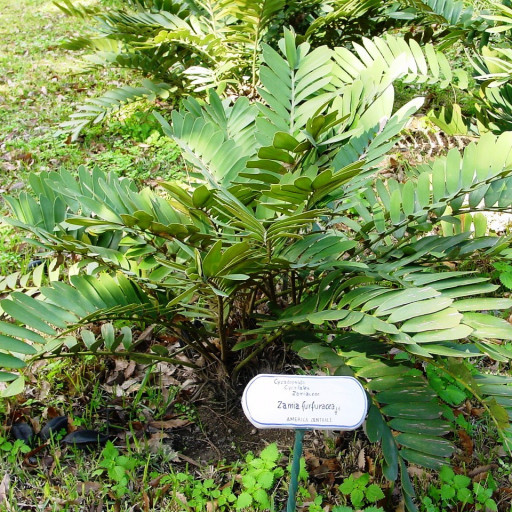
Plant Overview
Known affectionately as the "Cardboard Palm," the Zamia furfuracea is not actually a palm at all, but a cycad—a group of ancient plants that shared the earth with dinosaurs. Native to the sandy coastal cliffs of Mexico, this "living fossil" is prized for its architectural symmetry and its incredibly tough, leathery foliage that feels exactly like its namesake: stiff cardboard.
🔍 How to Identify
- 🌿 The Foliage: Its leaves grow in a tight, circular rosette. Each leaf consists of 6 to 12 pairs of thick, oval leaflets that are covered in a fine, bronze-colored fuzz when young, turning olive green as they age.
- 📜 The Texture: The leaflets are famously rigid and sand-papery. If you run your finger across them, they don’t bend like most leaves; they feel like heavy-duty cardstock or suede.
- 🥔 The Trunk: It features a short, thick, partially underground trunk called a "caudex." This woody base acts as a water reservoir, allowing the plant to survive long periods of drought.
🏡 In Your Garden
- ☀️ Sun & Salt: Because of its coastal heritage, the Cardboard Palm is exceptionally salt-tolerant and loves bright, direct light. In indoor settings, it needs to be right by your sunniest window to prevent its fronds from stretching and becoming "leggy."
- 💧 The "Less is More" Rule: This plant is a champion of neglect. It stores water in its thick trunk, making it highly susceptible to root rot if overwatered. It prefers to dry out almost completely between drinks, and it hates sitting in heavy, mucky soil.
⚠️ Safety & Toxicity
- 🚫 High Toxicity: This plant is extremely toxic to humans and pets. It contains a toxin called cycasin, which can cause severe liver failure if ingested.
- 🐾 Pet Warning: The seeds (found in the central cones) are the most toxic part and are often attractive to dogs. Keep this plant well out of reach of curious pets and small children.
✨ Fun Fact
The Cardboard Palm belongs to a lineage that is over 250 million years old. It has remained virtually unchanged since the Mesozoic Era, meaning a Triceratops likely would have recognized this exact plant while grazing!

Detailed Care Instructions
| Soil Ph | Acidic |
| Humidity | Normal |
| Lighting | Full Sun |
| Toxicity | Toxic |
| Soil Type | Sandy, Well-Drained |
| Difficulty | Medium |
| Plant Type | Perennial |
| Hibernation | Cold Period |
| Mature Size | 3–5 Ft. Tall, 4–6 Ft. Wide |
| Native Area | Central America |
| Temperature | 25°C - 28°C |
| Sun Exposure | Full Sun |
| Hardiness Zones | 9-11 |
To grow Zamia furfuracea, also known as the cardboard palm, you can follow these steps:
- Choose a suitable location: Select a spot that receives bright, indirect light. The cardboard palm can tolerate low light conditions but thrives in partial shade.
- Temperature and humidity: This plant prefers warm temperatures between 70-90°F (21-32°C). It can tolerate lower temperatures but should be protected from frost. Maintain a moderate to high humidity level around the plant.
- Soil: Use a well-draining soil mix that is slightly acidic to neutral. The addition of organic matter like peat moss or compost can be beneficial for the plant's growth.
- Watering: Water the plant thoroughly but allow the top inch of soil to dry out before watering again. Avoid overwatering as it can lead to root rot. In the winter, reduce watering frequency to prevent overwatering.
- Fertilizing: Apply a balanced, slow-release fertilizer in the spring to promote growth. Follow the package instructions for the appropriate dosage.
- Repotting: As the plant grows, it may need to be repotted every 2-3 years. Increase the pot size gradually, providing enough room for the plant to spread its roots.
- Pruning: Remove any dead or damaged leaves by cutting them close to the base. This will help maintain the plant's appearance and health.
- Propagation: The cardboard palm can be propagated through seeds or division. Seeds can take a long time to germinate, so patience is required. Division can be done by separating the offsets that develop at the plant's base.
- Pests and diseases: The Zamia furfuracea is generally resistant to pests and diseases. However, it can attract mealybugs or scale insects. Regularly inspect the plant and use appropriate treatment if necessary.
Remember to research the specific care requirements for Zamia furfuracea and adjust your care routine accordingly.

Place in a window with dappled sun or a spot in the middle of a room. Or directly in a window facing west or east.

To water this type of plant, it is important to first determine the soil moisture level. This can be done by sticking a finger about 1-2 inches deep into the soil or by using a soil moisture meter. If the soil feels dry, it is time to water.
When watering, the soil should be thoroughly saturated but not waterlogged. This can be achieved by slowly pouring water into the soil until it runs out of the drainage holes at the bottom of the pot. Allow the water to drain completely before placing the plant back in its normal location.
It is important not to let the plant sit in standing water as this can lead to root rot. The frequency of watering may vary depending on factors such as humidity, temperature, and the size of the pot. In general, it is better to underwater than to overwater as this plant prefers drier conditions.
It is important to note that this plant is sensitive to salts and minerals in tap water, so it is recommended to use filtered or distilled water to avoid buildup in the soil.
First, purchase a balanced fertilizer that contains equal amounts of nitrogen, phosphorus, and potassium.
In the growing season, which is typically from spring to fall, apply the fertilizer every 4-6 weeks. During the dormant season, which is usually in the winter, reduce the frequency to every 8-10 weeks.
Ensure that the fertilizer is evenly distributed around the base of the plant and water the plant thoroughly afterwards.
Avoid over-fertilizing, as this can cause damage to the plant. Keep an eye out for any signs of excessive growth or burning of the leaves.
Regular fertilization will promote healthy growth and ensure the plant produces lush, green foliage.
Zamia Furfuracea plant prefers the use of well-draining and aerated soil that is rich in organic matter. The soil should have a pH range of 6.0 to 6.5 and should be able to retain moisture while still allowing excess water to drain. A mix of perlite, peat moss, and coarse sand can be used to provide good drainage. It is best to avoid heavy, compacted soils and clay soils as they can retain too much water and lead to root rot. Regular fertilization is also required with a balanced fertilizer to provide the necessary nutrients for healthy growth.
To propagate this plant, first carefully remove the offsets or baby plants from the parent plant. Then, allow the cut edges to callus over for a few days before planting the offsets in a well-draining potting mix. Keep the soil lightly moist and the plant in a bright but shaded area until it establishes roots. Water regularly but avoid overwatering until the plant is established.
Common pests of the cardboard palm include Scale insect, mealybugs, spider mites. Make a habit of checking your cardboard palm frequently for pests so that any infestations can be caught and managed early.








