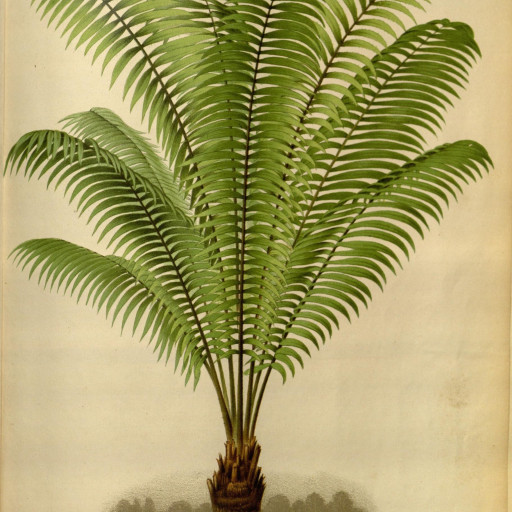
Plant Overview
Known as the "Amazonian Zamia," Zamia poeppigiana is an architectural masterpiece that looks like it stepped straight out of a prehistoric landscape. Originating from the deep rainforests of Peru, Brazil, and Colombia, this cycad is a "living fossil" that has remained largely unchanged for millions of years. It is prized by collectors for its massive, leathery fronds and its ability to bring a primal, tropical atmosphere to any space.
🔍 How to Identify
- 🍃 Giant Fronds: The leaves are impressively large and arching, often reaching lengths of 6 to 9 feet in mature specimens.
- 🗡️ Spiny Petioles: The leaf stalks (petioles) are heavily armed with sharp prickles, serving as a natural defense mechanism against herbivores.
- 📐 Serrated Leaflets: Unlike many other Zamia species, the individual leaflets are broad, lance-shaped, and usually feature fine, jagged teeth near the tips.
🏡 In Your Garden
- ☁️ Rainforest Roots: Because it hails from the Amazon basin, this plant craves high humidity and filtered "dappled" sunlight. It will struggle in dry, air-conditioned rooms without a humidifier or regular misting.
- 🪴 Deep Root Space: This species develops a substantial underground storage organ (caudex) and a sensitive taproot. It hates being moved or repotted, so choose a permanent, well-draining spot where it can grow undisturbed for years.
⚠️ Safety & Toxicity
- 🚫 Toxic Status: Highly Toxic. Every part of the plant—especially the seeds and the trunk—contains cycasin, which is a potent neurotoxin and carcinogen.
- 🐾 Pet & Child Risk: Ingestion can lead to permanent liver damage or death in dogs, cats, and humans. It should be kept out of reach of curious pets.
- 🧤 Physical Hazard: The sharp spines along the stems can cause painful punctures or scratches; always wear thick gardening gloves when pruning or cleaning the plant.
✨ Fun Fact
Cycads like Zamia poeppigiana are so ancient that they were a primary food source for herbivorous dinosaurs. While the dinosaurs went extinct 66 million years ago, this resilient plant lineage survived multiple mass extinctions to remain with us today!

Detailed Care Instructions
To grow Zamia Poeppigiana plants, you can follow these steps:
- Choose a suitable location: Zamia Poeppigiana plants prefer partial shade to full sun. Ensure that the area has good drainage to prevent waterlogging.
- Prepare the soil: The soil should be well-draining and have a slightly acidic to neutral pH. If the soil is heavy or compacted, mix in organic matter such as compost to improve its structure.
- Planting: Dig a hole that is slightly larger than the root ball of the Zamia Poeppigiana plant. Place the plant in the hole, making sure that the top of the root ball is level with the surrounding soil. Backfill the hole and gently firm the soil around the plant.
- Watering: Water the newly planted Zamia Poeppigiana thoroughly and then regularly thereafter. However, ensure that the soil is not constantly wet as excessive moisture can lead to root rot.
- Mulching: Apply a layer of mulch around the base of the plant to help conserve moisture, suppress weed growth, and regulate soil temperature. Leave a gap around the stem to prevent moisture accumulation.
- Fertilizing: Zamia Poeppigiana plants generally do not require much fertilizer. However, you can apply a balanced slow-release fertilizer in the spring and summer months to provide essential nutrients.
- Pruning: Zamia Poeppigiana plants do not require regular pruning. However, you can trim off any dead or damaged fronds for aesthetic purposes or to maintain the plant's shape.
- Protection from frost: If you live in a region that experiences frost, protect the Zamia Poeppigiana plant by covering it with a frost cloth or bringing it indoors during cold periods.
- Pests and diseases: Zamia Poeppigiana plants are generally quite resistant to pests and diseases. However, occasionally, they may suffer from spider mite infestations or fungal infections. Monitor the plant regularly and take appropriate action if necessary.
By following these steps, you can successfully grow Zamia Poeppigiana plants and enjoy their beautiful foliage in your garden or indoor space.

Place in a window with dappled sun or a spot in the middle of a room. Or directly in a window facing west or east.

To water this plant, you should make sure the soil is dry to the touch before watering. When watering, pour water slowly and evenly around the base of the plant, allowing the soil to absorb the moisture. Avoid getting water on the leaves or in the center of the plant, as this can cause rot. Check the soil regularly and adjust watering as needed based on the moisture level. It is important not to overwater the plant as this can also cause root rot.
To fertilize your plant, use a balanced fertilizer with equal amounts of nitrogen, phosphorus, and potassium. Choose a slow-release fertilizer and apply it in early spring and mid-summer. Avoid over-fertilizing as it can cause damage to the plant. Water the plant thoroughly before and after fertilizing.
For the Zamia Poeppigiana plant, you should use a well-draining soil that is rich in organic matter. The soil should have a pH level of around 6.0 to 6.5, which is slightly acidic. It is also important to avoid using heavy soil that can retain too much water, which can lead to root rot. When planting, make sure the soil is loose and aerated to promote healthy root growth. You can also mix in a small amount of sand or perlite to improve drainage and prevent compaction. It is recommended to avoid using fertilizers that are high in nitrogen, as this can damage the plant. Instead, use a balanced fertilizer or one that is specifically formulated for cycads.
Propagation of this plant can be done by collecting seeds that have matured and dried out, or by taking offsets from the parent plant. To collect seeds, wait until the female cone has produced seeds and the cone has begun to dry out and turn brown. Remove the cone and extract the seeds, which can be sown immediately or stored for up to a year. To take offsets, carefully remove a small plant from the base of the parent and replant it in well-draining soil. Always use gloves when handling this plant, as its leaves are sharp and can cause skin irritation.
Common pests of the zamia poeppigiana include Scale insect, mealybugs, spider mites. Make a habit of checking your zamia poeppigiana frequently for pests so that any infestations can be caught and managed early.








