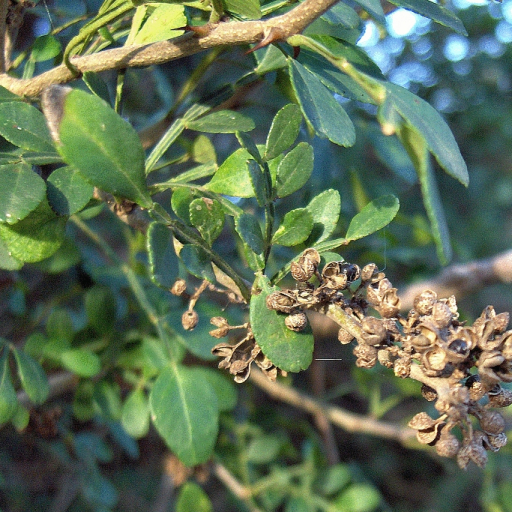
Plant Overview
Often called the Wild Lime or Colima, Zanthoxylum fagara is a resilient, evergreen shrub that brings a tropical, zesty fragrance to any landscape. Despite its name, it isn't a true citrus, but its leaves emit a sharp lime scent when crushed, hinting at its membership in the Rue family. Historically, its exceptionally hard wood was prized for making durable walking sticks, earning it a reputation for being as tough as it is beautiful.
🔍 How to Identify
- 🍃 The "Winged" Stem: Look closely at the leaf stalk; it has narrow, leafy "wings" running between the leaflets, a unique signature of this species.
- 🐾 Cat-Claw Thorns: The branches are armed with sharp, curved spines that hook backward, much like a cat’s claw, making it an excellent natural security fence.
- ✨ Glossy Foliage: The leaves are small, rounded, and boast a high-gloss finish that reflects sunlight, giving the shrub a shimmering appearance.
🏡 In Your Garden
- 🦋 Butterfly Sanctuary: This plant is a vital "nursery" for the Giant Swallowtail and Schaus' Swallowtail butterflies, serving as a primary food source for their hungry caterpillars.
- 🛡️ Coastal Warrior: It is incredibly salt-tolerant and drought-resistant, making it a perfect choice for seaside gardens where other plants might wither from the spray.
- 🌱 Slow & Steady: It has a slow growth habit and a deep taproot; once planted, it prefers to stay put, so choose its permanent home carefully to avoid transplant shock.
⚠️ Safety & Toxicity
- ⚔️ Physical Hazard: While not chemically toxic, the thorns are hooked and very sharp. They can easily snag skin or clothing, so it should be planted away from high-traffic walkways or play areas.
- 🧴 Skin Sensitivity: The essential oils in the leaves are aromatic, but in some individuals, the sap can cause mild skin irritation or photosensitivity if exposed to the sun after handling.
- 🐾 Pet Safety: It is generally considered non-toxic to pets if nibbled, though the thorns provide a natural deterrent that keeps most curious chewers at a distance.
✨ Fun Fact
- 👅 The Tingle Factor: Zanthoxylum fagara is a cousin to the plant that produces Sichuan peppercorns. If you were to chew a leaf (though we don't recommend it!), you might experience a slight numbing or tingling sensation on your tongue!

Detailed Care Instructions
To grow Zanthoxylum fagara, commonly known as Fagara or Wild Lime, you can follow these steps:
- Climate: Zanthoxylum fagara is native to the southern United States and Central America, so it prefers warm climates. It can survive temperatures as low as 20°F (-6°C) but grows best in USDA hardiness zones 9-11.
- Soil: Zanthoxylum fagara grows well in various soil types, including sandy, loamy, or clay-rich soil. However, it prefers well-draining soil with a neutral to slightly acidic pH level.
- Sunlight: The plant requires full sun or partial shade for optimal growth. Find a location in your garden or yard where it can receive at least 6-8 hours of direct sunlight.
- Propagation: Zanthoxylum fagara can be propagated from seeds or cuttings. If using seeds, soak them in lukewarm water for 24 hours before sowing. Sow the seeds in seed trays filled with moist, well-draining soil. Keep the soil consistently moist but not waterlogged. Seed germination can take several weeks to months.
- Transplanting: Once the seedlings have grown to a suitable size (6-12 inches), transplant them into larger pots or directly into the ground. Ensure they are spaced adequately to allow room for growth.
- Watering: While Zanthoxylum fagara is drought-tolerant once established, it still requires regular watering during the initial stages. Water the plant deeply but infrequently, allowing the soil to slightly dry out between waterings. Avoid overwatering, as it can lead to root rot.
- Fertilization: Apply a slow-release, balanced fertilizer in early spring to provide necessary nutrients. Follow the manufacturer's instructions for proper application. Avoid excessive fertilization as it may negatively impact the plant's health.
- Pruning: Prune the plant in late winter or early spring to remove any dead, damaged, or overgrown branches. This will help promote new growth and maintain a tidy shape.
- Pests and diseases: Fagara plants are generally resistant to pests and diseases. However, keep an eye out for aphids, mites, or scale insects. If infestations occur, treat the affected plants with appropriate organic or chemical insecticides.
- Mulching: Apply a layer of organic mulch around the base of the plant to help retain moisture, suppress weed growth, and protect the roots from extreme temperatures.
Remember to consult local gardening resources or professionals for specific guidance based on your region's climate and conditions.

Place in a window with dappled sun or a spot in the middle of a room. Or directly in a window facing west or east.

To properly water this plant, it is important to consider its watering needs based on the species and its environment. First, it is important to ensure that the plant is placed in a suitable location, which should be a well-draining soil that allows excess water to escape easily.
When watering, it is best to use room temperature water and avoid letting the plant sit in standing water as this can lead to root rot. The frequency of watering should also depend on the weather conditions and season, as this plant requires more water during hot, dry weather and less during cooler months.
A good way to tell if the plant needs water is to check the soil's moisture level by sticking your finger into the top inch of soil. If it feels dry, the plant likely needs water. However, if the soil feels moist, it can wait a few more days before watering again.
It is also important to note that this plant prefers slightly acidic soil, so using rainwater or distilled water for watering can help maintain its pH level. Finally, remember to avoid over-watering, as this can be just as harmful to the plant as under-watering.
To fertilize this plant, apply a slow-release fertilizer with a balanced ratio of nitrogen, phosphorus, and potassium during the growing season. Use the recommended amount according to the label instructions and apply it evenly around the base of the plant. Avoid applying fertilizer too close to the trunk or directly onto the foliage. Water the plant thoroughly after applying fertilizer to help distribute the nutrients and prevent burning the roots. Monitor the plant for signs of nutrient deficiencies or excesses and adjust the fertilization accordingly.
Zanthoxylum Fagara plant prefers well-draining soil that is rich in organic matter. The soil should have a slightly acidic to neutral pH level, ranging from 5.5 to 7.5. For optimal growth, the soil should be kept moist and well-aerated. The soil should also have good drainage to prevent excess water from accumulating around the roots, which can lead to root rot. Adding some sand or perlite to the soil mix can improve drainage. Additionally, it is recommended to use a slow-release fertilizer to provide the plant with essential nutrients over an extended period.
Zanthoxylum Fagara plants can be propagated through various means, including seed propagation and vegetative propagation. Here are some details on each method:
Seed propagation:
- Collect mature seeds from the parent plant in autumn.
- Clean the seeds by removing any flesh and debris.
- Soak the seeds in warm water overnight to increase germination rates.
- Fill seed trays with a well-draining potting mix.
- Sow the seeds on the surface of the mix and cover lightly with a thin layer of vermiculite.
- Water the trays well and keep them in a warm, well-lit location.
- Seeds should start to germinate within 4-6 weeks.
- Once the seedlings have grown a few true leaves, they can be transplanted into individual pots.
Vegetative propagation: - Take cuttings from the parent plant in spring or summer.
- Cut 4-6 inch (10-15 cm) long stems that have several nodes (where leaves attach to the stem).
- Remove the bottom leaves and dip the cut end of the stem in rooting hormone powder.
- Prepare a well-draining potting mix and insert the stems into it.
- Water the cuttings and cover with a plastic bag to create a humid environment.
- Place the pot in a warm and bright location but protected from direct sunlight.
- Check regularly for signs of new growth and roots.
- Once new leaves start to appear, remove the plastic bag and ensure the soil stays moist.
- After a few weeks, the new plants can be transplanted into their own pots.
Common pests of the lime prickly ash include Scale insect, mealybugs, spider mites, aphids. Make a habit of checking your lime prickly ash frequently for pests so that any infestations can be caught and managed early.








