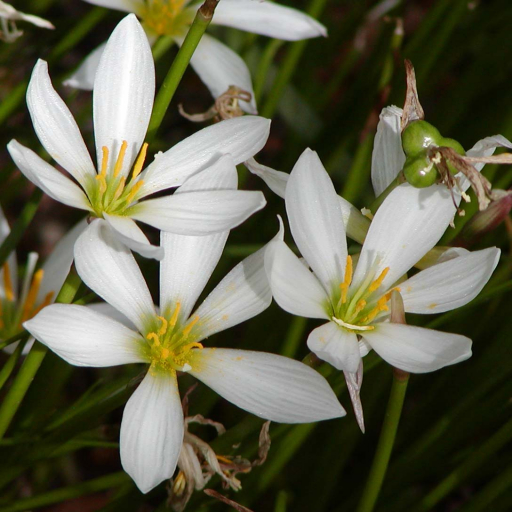
Plant Overview
Known as the "Rain Lily" or "Fairy Lily," the Zephyranthes is a botanical magician that seems to appear out of nowhere. These delicate members of the Amaryllis family are famous for their sudden, synchronized blooming immediately following a summer rainstorm. Originating from the Americas, they have captured the hearts of gardeners who love the "surprise" element of their bright, star-shaped blossoms.
🔍 How to Identify
- 🌸 Star-Shaped Blooms: The flowers are funnel-shaped with six petals, appearing in vibrant shades of white, pink, or sunny yellow.
- 🌿 Grass-Like Foliage: Before they bloom, they are often mistaken for tufts of thick grass or chives due to their slender, dark green, and fleshy leaves.
- 🌱 Clumping Habit: They grow from small bulbs and tend to form dense clusters over time, creating a "carpet" effect when they finally burst into flower.
🏡 In Your Garden
- 🌧️ The Bloom Trigger: Unlike most plants that follow a strict seasonal calendar, Rain Lilies are triggered by the atmospheric pressure changes and moisture of heavy rain. To mimic this at home, allow the soil to dry out significantly between deep waterings to "trick" them into a bloom cycle.
- 🪴 Bulb Sensitivity: They are incredibly easy to grow but hate "wet feet" during their dormant period. Ensure your soil is gritty or sandy because the bulbs are prone to rotting if they sit in stagnant, soggy earth.
- 🧤 Low Maintenance: They are remarkably resilient to pests and deer, making them a perfect "set it and forget it" plant for rock gardens or the edges of garden paths.
⚠️ Safety & Toxicity
- 🚫 Status: Toxic to humans and pets.
- 🐾 Details: All parts of the plant, especially the bulbs, contain various alkaloids like lycorine. If ingested, they can cause vomiting, diarrhea, and convulsions in cats, dogs, and horses. It is best to plant them in areas where curious pets or toddlers won't be tempted to dig up the onion-like bulbs.
✨ Fun Fact
The name Zephyranthes comes from the Greek words Zephyrus (the god of the West Wind) and anthos (flower). It literally translates to "Flower of the West Wind," referencing how the blooms often sway in the breezy storms that bring them to life.

Detailed Care Instructions
| Color | White, Pink, Or Orange |
| Soil Ph | Neutral Or Mildly Acidic |
| Lighting | Part Sun |
| Toxicity | Toxic |
| Soil Type | Average To Rich |
| Bloom Time | Summer, Fall |
| Plant Type | Bulb |
| Mature Size | 6–12 Inches |
| Native Area | South America |
| Sun Exposure | Full Sun |
| Hardiness Zones | 7-11 |

Place in a dark room with little light, like a dark bedroom or a spot far away from a window or directly in a north-facing window.

To water this plant, wait until the top inch of soil feels dry to the touch before giving it water. When watering, do not pour water directly onto the leaves or flowers as this can cause damage. Instead, water the soil around the plant until it is moist. Be careful not to overwater, as this can lead to root rot and other issues. In general, this plant prefers to be kept moist but not waterlogged. During periods of hot, dry weather, it may need more frequent watering.
Zephyranthes plants require well-draining soil that is rich in organic matter. The soil should not be too compact to avoid waterlogging. The ideal soil for Zephyranthes plants should have a pH range of 6.0 to 7.5. A mixture of sand, peat moss, and perlite can be used in equal parts to create a well-draining potting mix. It is also important to add some fertilizers to the soil occasionally to encourage healthy growth and flowering.







