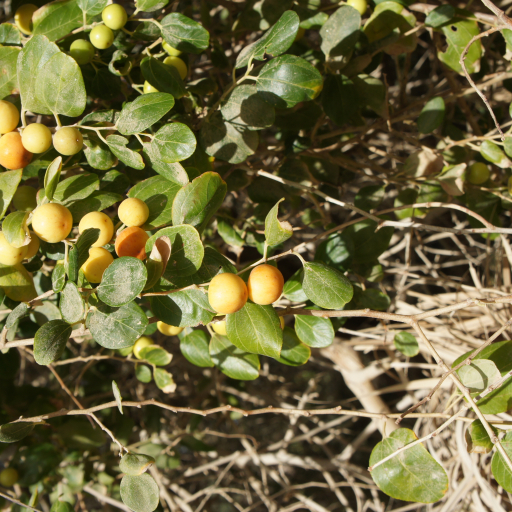
Plant Overview
The Ziziphus lotus, often called the Wild Jujube or the "Lotus Bush," is a plant steeped in ancient legend. Often linked to the mythical "Lotus-eaters" of Homer’s Odyssey, this resilient shrub thrives where others wither, dotting the sun-baked landscapes of the Mediterranean and North Africa. It is a true survivor, transforming harsh, rocky terrain into a sanctuary for local wildlife.
🔍 How to Identify
- 🌿 Zig-Zag Stems: The branches have a distinctive, angular "zig-zag" growth pattern, which gives the shrub a messy, tangled appearance.
- ⚔️ Paired Thorns: At the base of each leaf, you will find a pair of sharp thorns—one straight and one curved—acting as a natural defense.
- 🍃 Glossy Foliage: The leaves are small, oval-shaped, and a bright, waxy green with three very prominent veins running from the base to the tip.
- 🟡 Tiny Blooms: In late spring, it produces clusters of inconspicuous, star-shaped flowers that are pale yellow or greenish-white.
- 🍒 The "Jujube" Fruit: It bears small, round fruits that turn from yellow to a dark brownish-red when ripe, looking like miniature, wrinkled dates.
🏡 In Your Garden
- 🏜️ The Desert Survivor: This plant is exceptionally drought-tolerant and thrives in poor, rocky, or sandy soils where other plants fail. In landscaping, it is often used as a "living fence" or barrier because its dense, thorny branches are nearly impenetrable.
- 🏗️ Deep Root System: It develops an incredibly deep taproot to reach underground water. Because of this, the Wild Jujube hates being moved once established; transplanting it often leads to failure, so choose its permanent spot wisely.
⚠️ Safety & Toxicity
- 🟢 Fruit Edibility: The fruit is safe to eat and has been used in traditional Mediterranean medicine for centuries. It has a dry, mealy texture and a sweet-tart flavor.
- 🛡️ Physical Hazard: The primary danger is physical. The thorns are very sharp and can easily puncture skin or catch on clothing. It is not recommended for areas where small children or pets play frequently.
- 🐾 Pet Safety: While the plant is non-toxic to cats and dogs, the thorns pose a significant risk of injury to paws, eyes, or mouths if a curious pet tries to investigate too closely.
✨ Fun Fact
According to Greek mythology, when Odysseus's crew ate the "Lotus" fruit (believed by many to be this plant), they fell into a peaceful apathy and forgot their desire to return home, choosing instead to stay and eat the sweet fruit forever.

Detailed Care Instructions
To grow Ziziphus Lotus (also known as the Lotus jujube), you can follow these steps:
- Choose a suitable location: Ziziphus Lotus prefers full sun exposure and well-draining soil. Ensure that the location is warm and protected from strong winds, as this plant is susceptible to frost damage.
- Prepare the soil: Before planting, prepare the soil by removing any weeds, rocks, or other debris. Loosen the soil to improve drainage and add organic matter like compost or well-rotted manure for nutrients.
- Propagation: Ziziphus Lotus can be propagated through seeds or cuttings. If using seeds, soak them in water for a day before sowing. If using cuttings, take semi-hardwood cuttings from a healthy plant during early summer and dip them in rooting hormone. Plant the seeds or cuttings about an inch deep in the prepared soil.
- Watering: Keep the soil consistently moist, but not waterlogged. Water deeply and allow the top layer of soil to dry out slightly before watering again. Be careful not to overwater, as excessive moisture can lead to root rot.
- Fertilizing: Ziziphus Lotus does not require frequent fertilization. However, you can apply a balanced slow-release fertilizer in early spring. Avoid excessive nitrogen, as it can promote excessive vegetative growth at the expense of fruit production.
- Pruning: Prune Ziziphus Lotus in late winter or early spring to remove damaged, dead, or crossing branches. This will help maintain its shape and promote better airflow and light penetration. Avoid heavy pruning, as it may affect fruit production.
- Mulching: Apply a layer of organic mulch around the base of the plant to conserve moisture, suppress weed growth, and provide nutrients as it breaks down. Leave some space around the trunk to prevent excess moisture and avoid mulch contact with the bark.
- Pest and disease control: Ziziphus Lotus is generally less prone to pests and diseases. However, keep an eye out for common issues like aphids, scale insects, or powdery mildew. If detected, treat with appropriate organic or chemical controls.
- Harvesting: Ziziphus Lotus generally produces fruit in late summer or early autumn. Harvest the fruit when it turns yellowish-brown and slightly wrinkled. The fruit can be eaten fresh or dried for later use.

Place in a bright room that is sun drenched almost all day. Or directly in a south-facing window.

To water this plant, it is important to consider the soil moisture level before each watering. It prefers well-draining soil and should be watered deeply once the top layer of soil feels dry to the touch. It is important not to overwater as it can lead to root rot. Additionally, it benefits from a misting or humid environment to simulate its natural habitat.
To fertilize this plant, use a balanced fertilizer with equal parts nitrogen, phosphorus, and potassium. Apply the fertilizer in early spring just before new growth appears. Use a slow-release fertilizer and follow the instructions on the package for application rates. Water the plant well before and after fertilizer application. Avoid fertilizing during winter months or when the plant is dormant.
Ziziphus Lotus is a plant that is commonly used for medicine and food. It is important to select the right type of soil for this plant to ensure that it thrives in your garden.
The ideal soil for Ziziphus Lotus should be well-drained, loamy, and fertile. It should have a pH range of 6.5 to 7.5, which is slightly acidic to slightly alkaline. The soil should be rich in organic matter and contain a good amount of nutrients, such as nitrogen, phosphorus, and potassium.
To prepare the soil for planting, you should mix in some organic matter, such as compost, manure, or leaf mold. This will help to improve the soil structure and fertility. You should also ensure that the soil is well-drained, as Ziziphus Lotus does not tolerate waterlogged conditions.
When planting the Ziziphus Lotus, you should dig a hole that is twice as wide and deep as the plant's root ball. Make sure to plant the root ball at the same depth as it was in the nursery pot. Once planted, water the plant thoroughly to help settle the soil and encourage root growth.
Overall, choosing the right soil for Ziziphus Lotus is vital to ensure its healthy growth and development.
Ziziphus Lotus can be propagated by seed or layering.
Seed propagation requires stratification, which is a process of exposing the seeds to a period of cold, damp conditions so that they can break dormancy. This can be achieved by sowing the seeds in a pot outdoors in the fall or by storing them in the refrigerator for several weeks. Once stratified, the seeds can be sown in a seed tray or pots filled with a well-draining soil mix and kept moist. Germination can take several weeks to several months and the seedlings should be kept in a warm, bright area and gradually exposed to more sunlight as they grow.
Layering is another method of propagation, which involves bending a low-growing branch down to the ground and covering it with soil, leaving only the top portion of the branch exposed. The covered portion of the branch will begin to root and can be separated and transplanted as a new plant. Layering can be done in the fall and the new plants should be dug up and transplanted the following spring.








