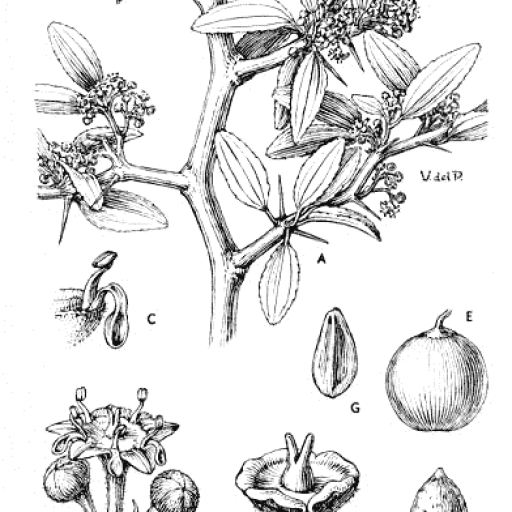
Plant Overview
The Ziziphus Mistol, simply known as "Mistol," is a rugged storyteller of the South American Gran Chaco. This spiny, deciduous tree is deeply woven into the folklore and culinary traditions of Argentina and Bolivia, where its sweet fruits have been harvested for centuries. Often celebrated in folk songs, it is a symbol of resilience, thriving in harsh, arid landscapes where other plants might wither.
🔍 How to Identify
- 🌿 Zig-Zag Branches: Look for a distinctive "zig-zag" pattern in the younger twigs, which change direction at every node.
- 🛡️ Stipular Spines: At the base of each leaf, you will find a pair of sharp, short thorns—the tree’s natural defense system.
- 🍃 Three-Veined Leaves: The oval, grayish-green leaves feature three prominent longitudinal veins starting from the base, a classic trait of the Ziziphus family.
- 🍒 The Fruit: The tree produces small, globose drupes that turn a deep reddish-brown when ripe, containing a sweet, pasty pulp.
🏡 In Your Garden
- ☀️ Sun Seeker: The Mistol is an absolute sun-lover. It requires full exposure to thrive and develop its sugary fruits; it will struggle in damp, shady corners.
- 💧 Drought Warrior: Because it evolved in the dry Chaco forest, it has an incredibly deep taproot. This makes it virtually "set and forget" regarding water once established, but it also means it hates being moved—pick its forever-home carefully!
- 🌍 Soil Preference: It isn't picky about nutrients but demands excellent drainage. It thrives in sandy or rocky soils where water doesn't pool around the roots.
⚠️ Safety & Toxicity
- 🟢 Edible Fruit: The fruits are perfectly safe and highly nutritious for humans. They are traditionally used to make arrope (a thick syrup) or dried into sweets.
- ⚔️ Physical Hazard: While not chemically toxic, the primary danger is the sharp spines. These can cause painful punctures for curious pets or children, so it is best planted away from high-traffic walkways.
- 🦴 The Pit: Like cherries or plums, the central stone is hard and should not be swallowed, as it poses a choking hazard.
✨ Fun Fact
In local South American traditions, the seeds of the Mistol are roasted and ground to create a caffeine-free coffee substitute. It produces a dark, aromatic brew that captures the earthy essence of the wild Chaco forest.

Detailed Care Instructions








