Plant Overview
The Zoegea Leptaurea, often referred to as the "Slender Zoegea," is a resilient wildflower native to the arid steppes and rocky slopes of Western Asia and the Middle East. At first glance, it is frequently mistaken for its cousin, the Knapweed, due to its delicate, fringed petals. This plant is a master of survival, evolved to bloom in harsh, sun-drenched environments where other flowers might wither.
🔍 How to Identify
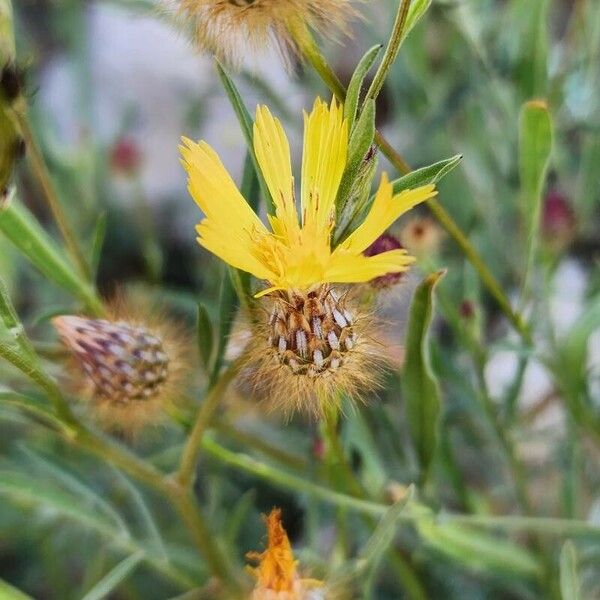
- 🌸 The Bloom: Small, thistle-like flower heads featuring soft pink to lavender-purple florets that radiate outward in a starburst pattern.
- 🛡️ Geometric Bracts: Beneath the petals, the flower base is wrapped in "bracts" (scales) that often have a distinct, slightly papery or spiny texture, resembling a tiny pinecone.
- 🌿 Slender Foliage: True to its name, the plant features very narrow, grayish-green leaves that are sparsely arranged along wiry, upright stems.
- 📏 Growth Habit: It typically grows in a low, branching bush-like shape, staying close to the ground to conserve moisture in dry climates.
🏡 In Your Garden
- ☀️ Heat Seekers: This plant is an "extremophile" in the garden world; it thrives in full, direct sun and actually performs better in poor, rocky soil than in rich, fertilized potting mixes.
- 💧 Drainage is Key: Because it is adapted to dry climates, "wet feet" (soggy roots) are its biggest enemy. It requires excellent drainage and is a perfect candidate for rock gardens or xeriscaping.
- 🦋 Pollinator Magnet: Despite its rugged appearance, the nectar-rich flowers are a favorite for local bees and butterflies, making it a functional choice for biodiversity.
⚠️ Safety & Toxicity
- ✅ General Safety: Zoegea Leptaurea is not known to be highly toxic to humans or common household pets like cats and dogs.
- 🌵 Mechanical Irritation: The dried bracts and stems can become quite stiff and prickly. Use gloves when handling or pruning to avoid small scratches or skin irritation.
- 🐾 Grazing Note: While not poisonous, the texture is generally unpalatable to most animals, making it somewhat deer and rabbit resistant.
✨ Fun Fact
The genus was named Zoegea by Carl Linnaeus in honor of Johan Zoëga, a Danish botanist and student of Linnaeus. It belongs to the same broad family as sunflowers and daisies, proving that even the hardiest "weeds" have royal botanical lineage!

Detailed Care Instructions








