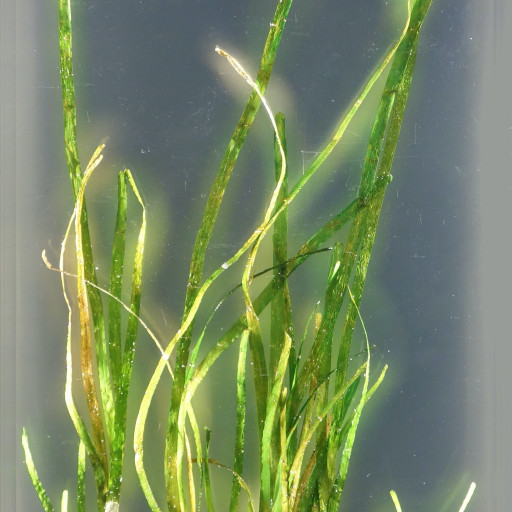
Plant Overview
Known widely as "Common Eelgrass" or "Seawrack," Zostera marina is the secret architect of our coastlines. Unlike seaweed (which is algae), this is a true flowering plant that migrated from land back into the sea millions of years ago. It forms vast, swaying emerald meadows that serve as vital "underwater nurseries" for countless marine species.
🔍 How to Identify
- 🌿 The Blades: Long, vibrant green, ribbon-like leaves that are flat and narrow (about 1 centimeter wide). They can grow up to 3 feet long depending on water depth.
- ⚓ The Root System: A thick, white, creeping rhizome (underground stem) that anchors the plant firmly into the sandy or muddy seafloor, preventing it from being swept away by tides.
- Blooming The Flowers: Though rarely seen by casual beachgoers, it produces tiny, simplified green flowers enclosed in a specialized leaf sheath, eventually releasing seeds that float on the current.
🌊 Habitat & Ecology
- 🐟 The Ocean’s Nursery: These underwater forests are essential for biodiversity. They provide a safe hiding spot and hunting ground for juvenile fish, seahorses, and blue crabs.
- 🛡️ Coastal Protector: By slowing down wave energy and trapping silt with its long blades, Eelgrass keeps the water clear and prevents the shoreline from eroding during storms.
- 🌍 Carbon Champion: This plant is an incredible carbon sink, storing carbon in the seabed much more efficiently than many land-based forests, making it a hero in the fight against climate change.
⚠️ Safety & Toxicity
- ✅ Harmless: Zostera marina is completely non-toxic to humans, dogs, and marine life. You can safely walk through it or handle pieces washed up on the shore.
- 🚫 Fragile Ecosystems: The primary danger is to the plant itself. Eelgrass is highly sensitive to boat propellers and water pollution. In many regions, it is a protected species; pulling it up or anchoring a boat in a "meadow" can cause damage that takes years to heal.
✨ Fun Fact
In the early 20th century, dried Eelgrass was so durable and resistant to rot that it was commercially harvested and used as insulation in houses and as stuffing for high-end mattresses!

Detailed Care Instructions
| Humidity | High |
| Lighting | Full Sun |
| Difficulty | Easy |
| Hibernation | Cold Period |
To grow Zostera marina, also known as eelgrass or seagrass, you will need to consider a few key factors:
- Select the right location: Zostera marina is a marine plant and requires a saltwater environment to thrive. Choose an area near the coast where the plant can be fully submerged in seawater or in a saltwater tank with appropriate water parameters.
- Obtain seeds or rhizomes: Zostera marina can be grown from seeds or rhizomes (underground stems). Seeds can be collected from mature plants when they are released into the water or purchased from a reputable supplier. Rhizomes can be obtained by carefully dividing and replanting existing Zostera marina plants.
- Prepare the planting area: If you are growing Zostera marina in a saltwater tank, ensure the tank has a substrate suitable for the plant's anchoring. If planting in open water, investigate the best practice for anchoring the plant to the seabed or place it in a mesh bag to prevent it from being washed away.
- Proper lighting and temperature: Zostera marina grows best in clear, shallow waters exposed to sunlight. If growing in a tank, provide appropriate lighting conditions to mimic natural sunlight. Maintain the water temperature within the range that Zostera marina prefers, which is typically around 15-25°C (59-77°F).
- Maintain water quality: Zostera marina requires clean water with low levels of pollutants and sediments. Regularly test the water quality and ensure proper filtration and circulation to maintain optimal conditions for growth.
- Allow for natural growth: Zostera marina will naturally propagate by producing rhizomes and seeds. Once established, the plant will spread and form dense meadows. Avoid disturbing or uprooting the plants, as they are fragile and take time to recover from disturbances.
- Monitor and tackle potential challenges: Keep an eye out for any signs of disease or infestation. If you notice any issues, consult with an expert or marine biologist who specializes in Zostera marina to diagnose and address the problem.
Remember, growing Zostera marina can be a complex process due to its specific requirements. It is best to consult with experts or organizations that specialize in marine plant propagation to ensure success.

Place in a bright room that is sun drenched almost all day. Or directly in a south-facing window.
Zostera marina is an aquatic plant that lives in saltwater environments such as estuaries and bays. To water this plant, it is important to maintain a constant level of saltwater around it. This can usually be accomplished by placing the plant in a shallow container of saltwater and keeping the water level consistent. It is also important to ensure that the water is clean and free of any pollutants or debris that could harm the plant. Additionally, it is important to ensure that the plant receives enough sunlight to photosynthesize and thrive.
To fertilize this plant, you will need to use a slow-release, granular fertilizer that is specifically formulated for aquatic environments. You should apply the fertilizer to the base of the plant, taking care not to let it touch the leaves. Water the plant immediately after fertilizing to help the fertilizer penetrate the soil. It is important to only fertilize this plant sparingly, as excess fertilizer can harm aquatic ecosystems.
Zostera Marina requires a specific type of soil that is mainly composed of sand and silt. The ideal soil should have a pH level between 7 and 8. The soil should also be well-drained to prevent waterlogging, which can cause damage to the plant's roots. Additionally, the soil should be nutrient-rich, containing high levels of organic matter such as decomposed leaves, grass, and other plant matter. These nutrients not only provide the necessary food for the plant to grow but can also support the growth of beneficial bacteria in the soil that assist in nitrogen fixation, which is essential for healthy plant growth. Finally, the ideal soil should be free of pollutants, such as heavy metals, which can be harmful both to the plant and to the marine environment in which it grows.
Zostera Marina is a seagrass that can be propagated through either runner or seed propagation. For runner propagation, a section of the rhizome, or underground stem, is cut and planted just below the surface of the substrate. The new plant will develop roots and shoots from the rhizome.
For seed propagation, the seeds can be collected from mature plants and allowed to dry for a few days. The seeds are then planted in a substrate that is kept moist. It is important to keep the substrate from being too wet or too dry during this process.
Once the new plants have developed, they can be transplanted into their new location. It is best to transplant the plants during the early spring or late fall, as these are the times when the plants are least likely to be disturbed by changes in temperature or salinity. During the transplant process, be sure to keep the plants well hydrated and avoid excessive disturbance of the roots.
Overall, propagating Zostera Marina can be a delicate process, but with patience and proper care, it can be a rewarding way to help support the health of marine ecosystems.








