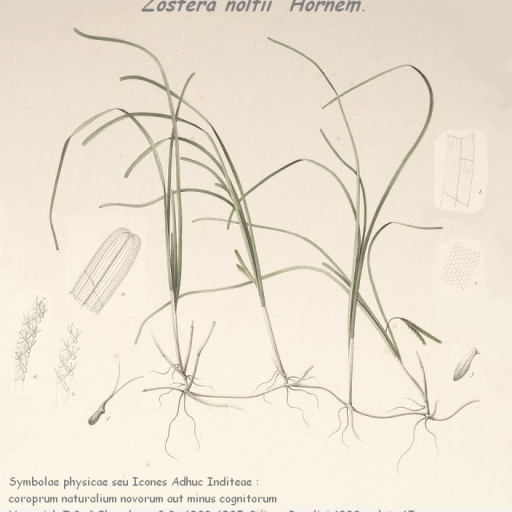
Plant Overview
Often called the Dwarf Eelgrass, Zostera noltii is a silent hero of our coastlines and estuaries. Unlike seaweeds, which are types of algae, this is a true flowering plant that migrated back into the ocean millions of years ago. It forms vast, emerald-green underwater meadows that act as "blue carbon" sinks, trapping carbon dioxide far more efficiently than many land forests.
🔍 How to Identify
- 🌿 Slender Ribbons: The leaves are very narrow and flat, typically only 0.5 to 2 millimeters wide, featuring three distinct veins running along their length.
- 🌱 Creeping Rhizomes: Beneath the sand or mud, it spreads via a network of horizontal stems (rhizomes) that anchor the plant against the tug of the tides.
- 📏 Dwarf Stature: True to its name, it is much smaller than its cousin (Zostera marina), usually reaching only 10 to 20 centimeters in height.
🌊 Habitat & Ecology
- 🏖️ Intertidal Specialist: This plant loves the "in-between" spaces. It thrives in the intertidal zone, meaning it is often completely exposed to the air during low tide and submerged during high tide.
- 🐟 Marine Nursery: Its dense foliage provides a critical "nursery" for juvenile fish, seahorses, and tiny crustaceans, protecting them from larger predators.
- 🛡️ Coastal Protector: By stabilizing the seabed with its roots and slowing down wave energy with its leaves, it prevents coastal erosion during storms.
⚠️ Safety & Toxicity
- ✅ Harmless: Zostera noltii is non-toxic to humans, dogs, and cats. It poses no chemical threat if touched or accidentally ingested.
- 🛡️ Ecological Sensitivity: While safe, it is a highly protected species in many parts of the world. Walking on or anchoring boats in these meadows can destroy decades of growth and ruin vital marine habitats.
✨ Fun Fact
- 🦢 The Goose's Favorite: During the winter, Brent Geese migrate thousands of miles from the Arctic to European coastlines specifically to feast on the nutrient-rich leaves and rhizomes of Dwarf Eelgrass!

Detailed Care Instructions

Place in a bright room that is sun drenched almost all day. Or directly in a south-facing window.

Some plants require more regular watering than others, which should be done every few days. It's critical to maintain the soil moist all of the time. The water requirements of the same plant placed in pots with varying sizes will differ. Because the water in the smaller pot evaporates faster than the water in the larger pot, it will require more watering. Regardless of pot size, the surface should constantly be maintained moist.








