Plant Overview
Known as the "Atlas Bean-Caper" or "Desert Yoke," Zygophyllum gaetulum is a master of survival in the harsh, salty terrains of North Africa and the Canary Islands. This low-growing, succulent-like shrub is often found hugging the arid ground where most other plants would perish, acting as a vital anchor for desert ecosystems. In local Berber traditions, it is respected for its resilience, often symbolizing the quiet strength required to endure the Sahara's heat.
🔍 How to Identify
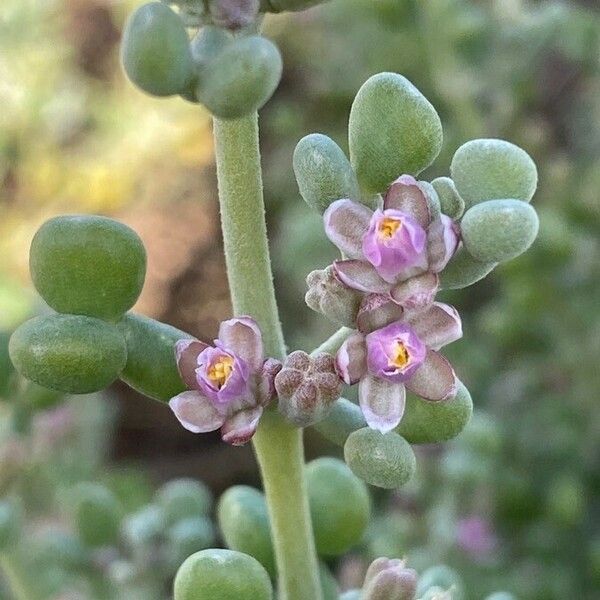
- 🍃 Fleshy Foliage: The leaves are thick, succulent, and cylindrical—looking almost like tiny green sausages. They are designed to store every drop of moisture the plant can find.
- 🌼 Dainty Blooms: It produces small, star-like flowers with four or five white to pale-yellow petals. The stamens are often quite long, giving the tiny blossoms a delicate, "fuzzy" appearance.
- 🌿 Yoked Leaves: Look closely at the stem; the leaves grow in distinct pairs (opposite each other), which is the signature trait of its genus.
🏡 In Your Garden
- 🧂 Salt Specialist: This plant is a "halophyte," meaning it thrives in salty soils that would kill most garden flowers. It is an excellent choice for coastal gardens or areas with poor, alkaline soil.
- ☀️ Extreme Xeriscaping: It hates "wet feet." If you are growing this, it requires a gritty, sandy substrate and should only be watered when the soil is bone-dry. It is a "set it and forget it" plant for those in hot, arid climates.
⚠️ Safety & Toxicity
- ✅ General Safety: Zygophyllum gaetulum is generally safe to touch and does not have thorns or irritating hairs.
- 🐕 Pet & Human Caution: While it is used in traditional medicine in Morocco for various ailments, it contains specific alkaloids and saponins. It should not be ingested by humans or pets without professional medical guidance, as concentrated amounts can cause stomach upset or more serious reactions.
✨ Fun Fact
The name Zygophyllum comes from the Greek words zygos (yoke) and phyllon (leaf). It literally translates to "yoked-leaf," because the leaves always grow in perfectly symmetrical pairs, resembling the wooden yoke used to join two oxen together!

Detailed Care Instructions








