Spotting brown patches on your beloved Money Tree (Pachira aquatica) can instantly send any plant parent into a panic. After all, these beautiful, braided beauties are famous for bringing good luck and positive energy into our homes, and seeing them struggle can feel disheartening. But take a deep breath! Plant issues happen to absolutely everyone, from beginners to seasoned botanists.
Leaves are essentially your plant’s way of communicating with you. Those brown spots are simply a little cry for help, and with a few minor adjustments to your care routine, your Money Tree will be thriving again in no time. Let’s decode what your plant is trying to tell you and get it back on the path to vibrant health.
The Problem: What Do These Brown Spots Mean?
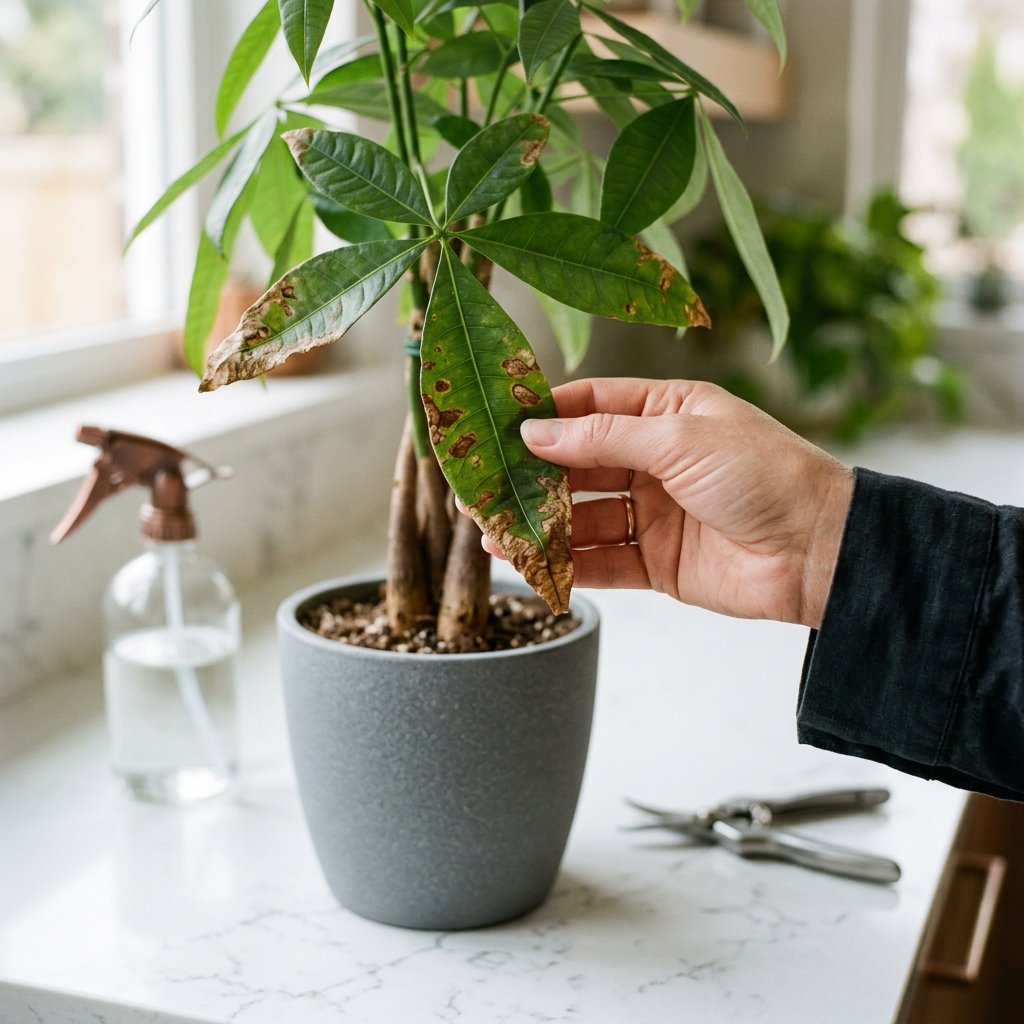
Not all brown spots are created equal. Taking a closer look at the type of browning on your Money Tree’s leaves will give you the best clues about what went wrong.
- Crispy, dry brown edges or tips: Usually points to a lack of moisture in the air or soil.
- Soft, dark brown, or mushy spots: Often a sign of too much water trapped in the roots or leaves.
- Brown spots with yellow halos: This usually indicates a fungal or bacterial infection.
- Bleached spots that turn brown and crispy: A classic sign of sunburn.
The Causes: Why Is Your Money Tree Getting Brown Spots?
Overwatering and Poor Drainage
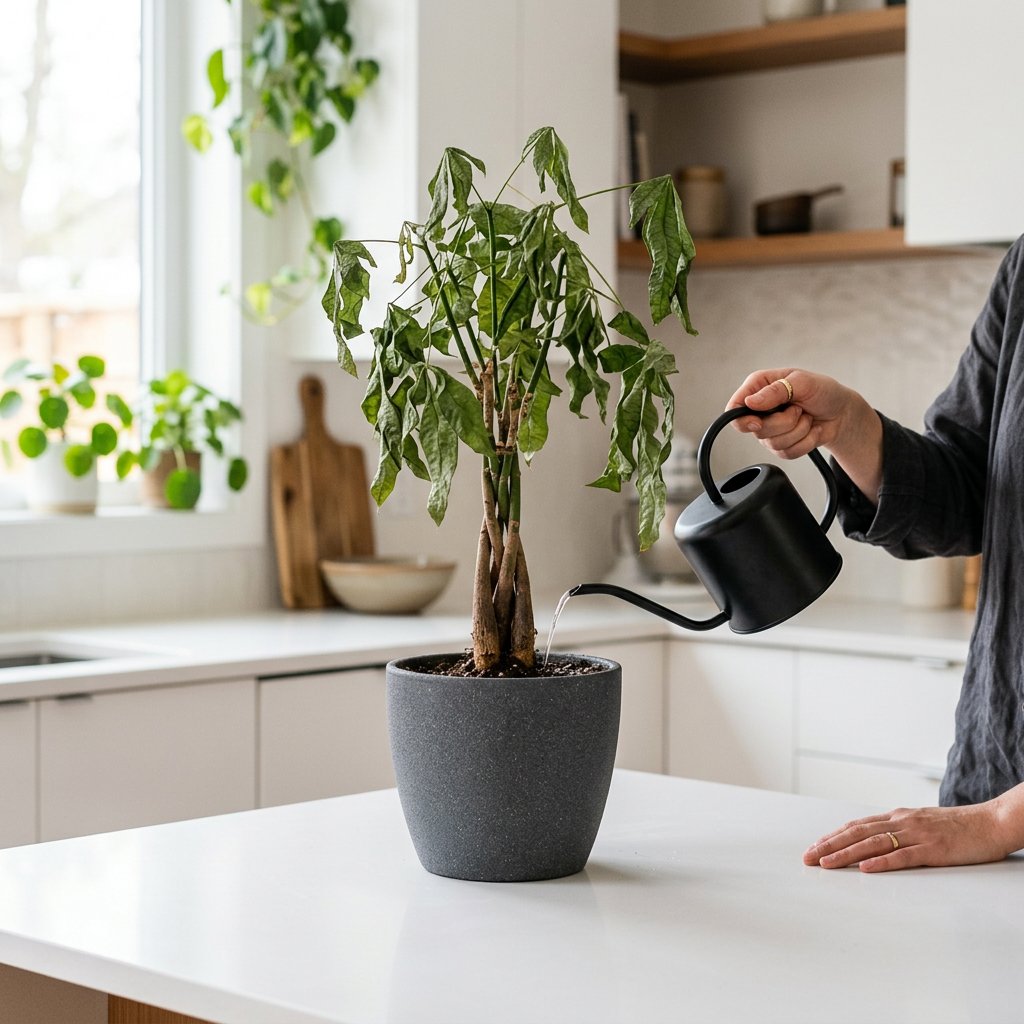
Money Trees love moisture, but they despise sitting in a soggy pot. When a plant sits in overly wet soil, the roots begin to suffocate and rot. This can lead to edema—a condition where the plant's roots absorb water faster than the leaves can use it. The cells swell, burst, and form mushy brown or black spots. You might also notice chlorosis (a yellowing of the leaf tissue around the spots due to a lack of chlorophyll).
Underwatering and Low Humidity
Native to Central and South American swamps, the Money Tree loves humidity. If your home has very dry air—especially during the winter when heaters are blasting—the tips and edges of the leaves will dry out, turning brown and brittle.
Sunburn
While Money Trees love bright light, they prefer it to be indirect. Placing your plant right up against a scorching South or West-facing window can bake the foliage, causing dry, pale brown scorch marks in the center of the leaves.
Pests and Fungal Diseases
Sometimes, uninvited guests are to blame. Pests like spider mites or thrips feed on plant sap, leaving behind tiny, speckled brown dots. Alternatively, poor air circulation and wet foliage can invite fungal leaf spot diseases.
Pro Tip: If you are unsure exactly what is wrong with your plant, don't stress! You can use the AI-powered plant disease scanner in the Plantiary app to take a quick photo and get an accurate diagnosis and treatment plan in seconds.
The Solutions: How to Treat and Prevent Brown Spots
Now that we understand the root of the issue, let’s take action. Follow these simple steps to nurse your Money Tree back to health.
Step 1: Check the soil moisture Before watering, always test the soil. Poke your finger about two to three inches deep into the potting mix. If it feels wet, hold off on watering. If it is completely bone dry, it’s time for a thorough drink.
Step 2: Adjust your watering technique Ensure your Money Tree is planted in a pot with drainage holes. When you water, do so until the liquid runs out the bottom, and always empty the saucer underneath so the plant doesn't sit in stagnant water.
Step 3: Relocate for better light and humidity Move your plant to a spot with bright, indirect light—a few feet back from a sunny window is perfect. To tackle dry air, place a humidifier nearby, group your plants together, or place the pot on a pebble tray filled with a little water to naturally boost ambient humidity.
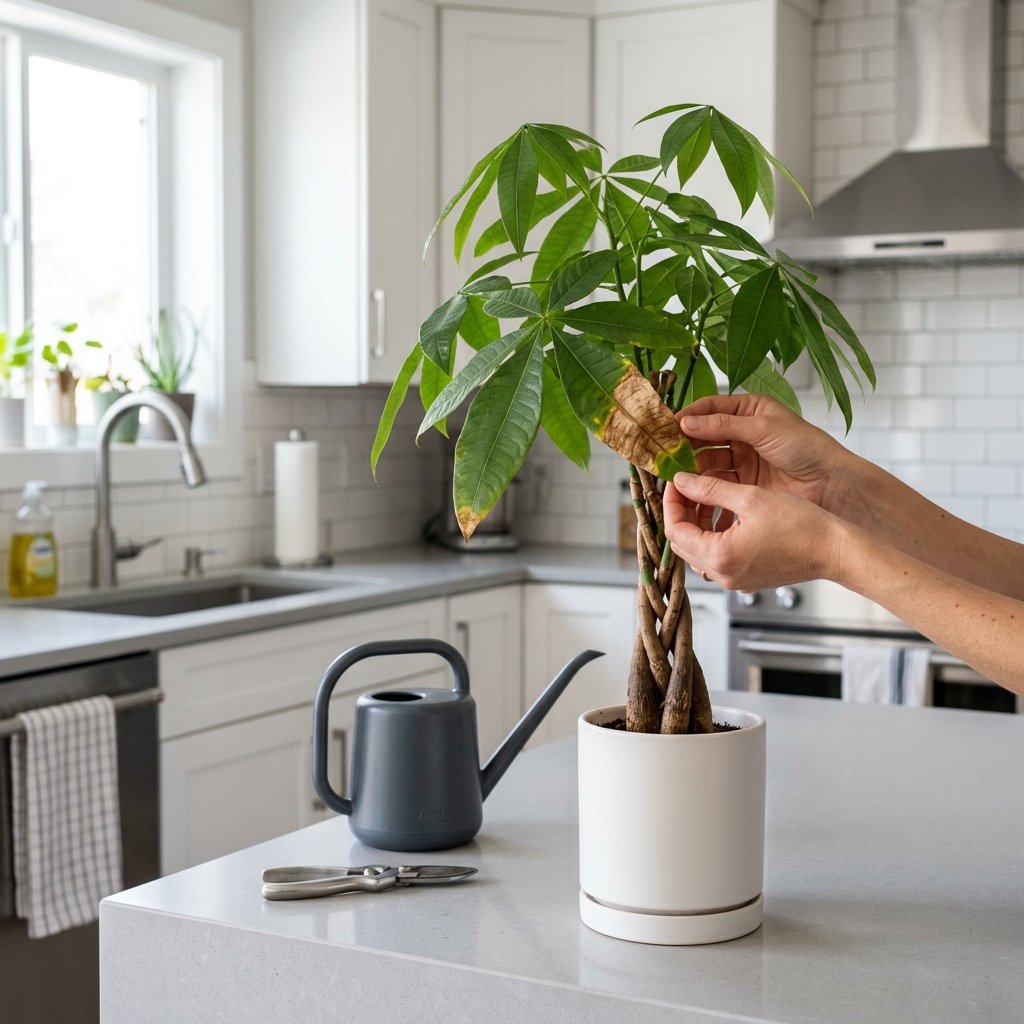
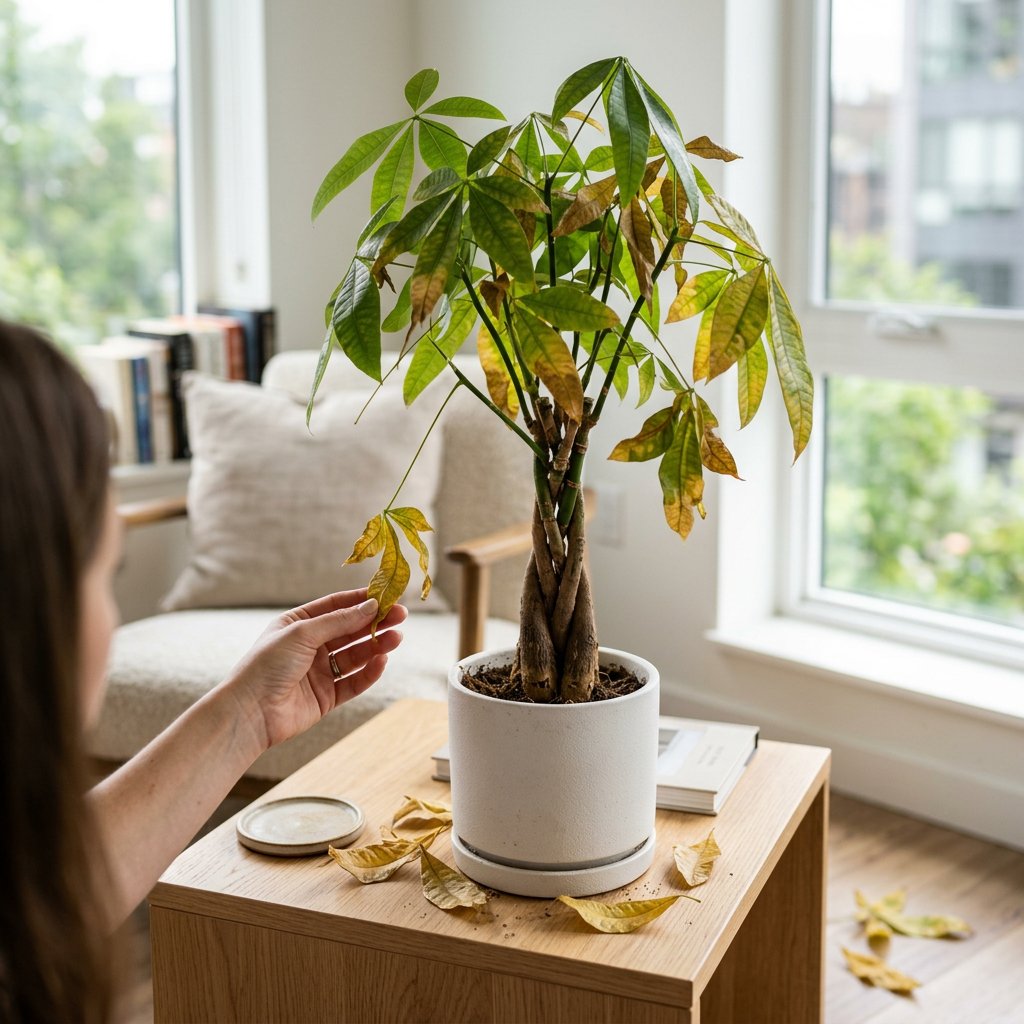
Step 4: Safely prune damaged leaves Leaves that have turned brown will not turn green again. Using a pair of clean, sterilized pruning shears, gently cut off the heavily spotted or fully browned leaves. This redirects the plant's energy away from the dying foliage and into pushing out fresh, healthy new growth.
Step 5: Treat pests and fungi safely If you suspect pests or a fungal issue, avoid harsh chemicals or unverified home remedies. Instead, spray the foliage with a horticultural oil like neem oil, or an insecticidal soap. For fungal spots, ensure you aren't splashing water onto the leaves when you water, and improve the airflow around your plant.
Don't be hard on yourself if your Money Tree looks a little less than perfect right now. Plant care is a continuous learning journey! For daily reminders, watering schedules, and an expert pocket-guide to all your houseplants, make sure to download the Plantiary app. With a little patience and the right care, your Money Tree will be back to bringing good fortune to your home in no time.