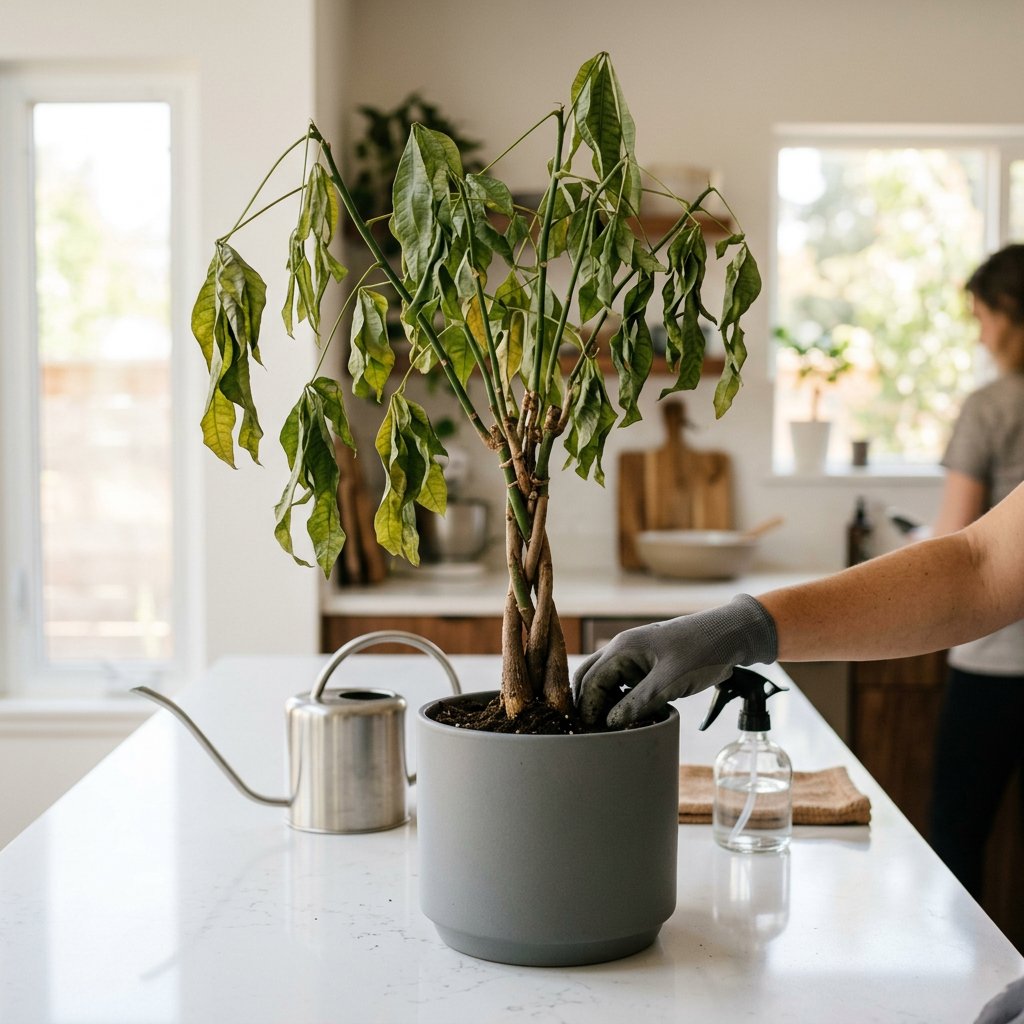
Have you noticed the lush, glossy green leaves of your beloved Money Tree (Pachira aquatica) suddenly developing crispy, bleached, or brown patches? First of all, take a deep breath and don’t be hard on yourself! Plant parenthood is a wonderful, ever-evolving learning journey, and even the most experienced indoor gardeners run into hiccups. Money Trees are famous for bringing good luck and positive energy into our spaces, but their foliage can be quite sensitive to environmental changes.
If your braided beauty is looking a little worse for wear, you are in the right place. Whenever you feel overwhelmed, remember that the Plantiary app is always in your pocket to help you decode what your leafy friends need. Let’s dive into how to identify, treat, and prevent leaf scorch so your Money Tree can thrive once again.
The Problem: Spotting Money Tree Leaf Scorch
Before we can fix the issue, we need to make sure we are accurately diagnosing it. If you aren't completely sure what is wrong, you can use the AI-powered plant disease scanner in the Plantiary app to get a diagnosis in seconds!
Typically, Money Tree leaf scorch presents with the following symptoms:
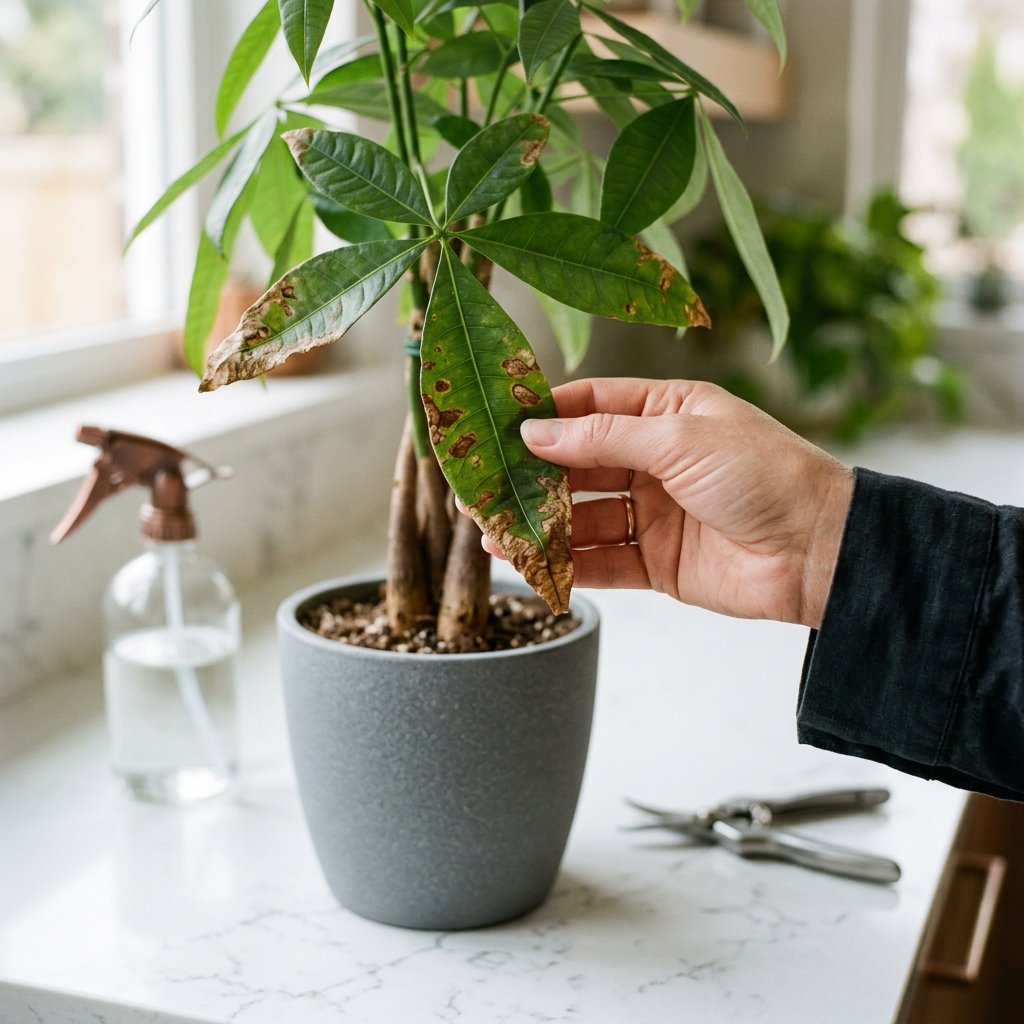
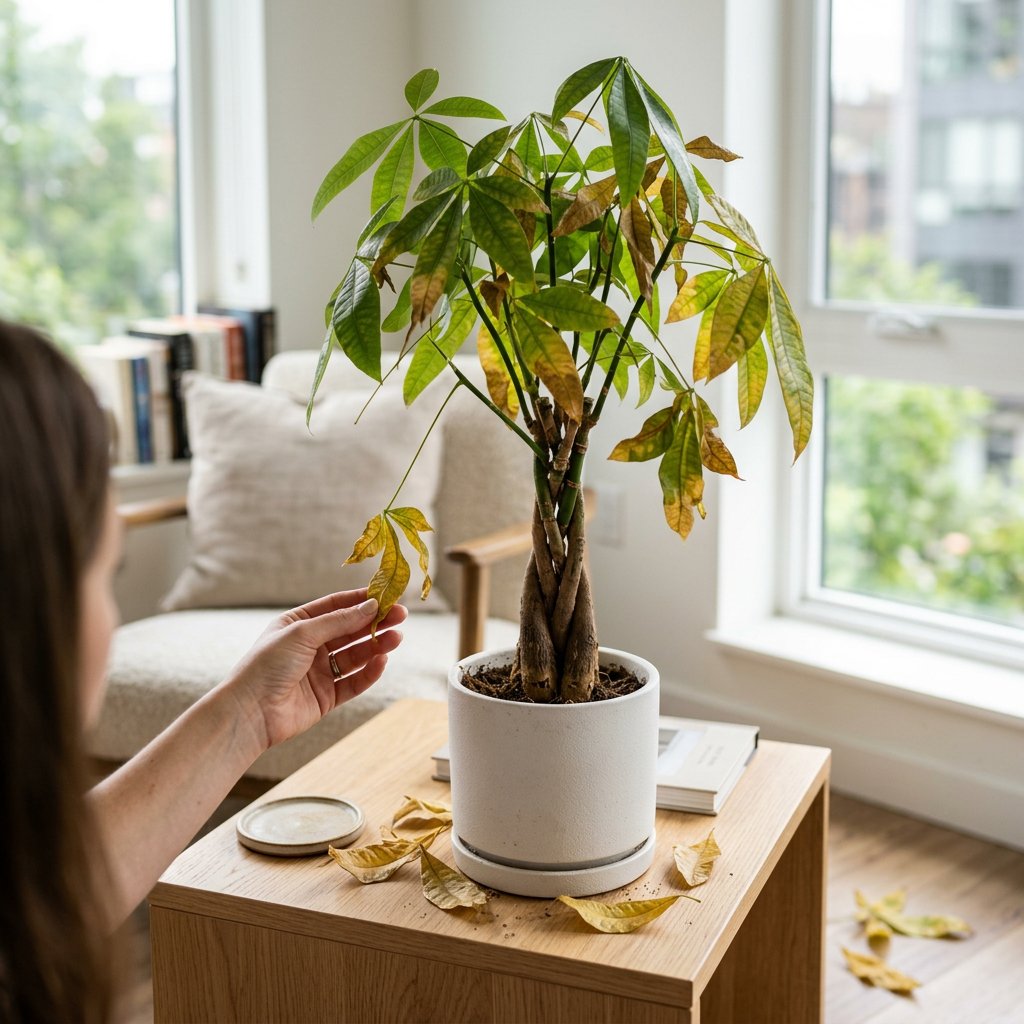
- Faded or Bleached Spots: The leaves may start to look pale, yellow, or white in certain areas. This is a condition known as chlorosis, which simply means the leaf is losing chlorophyll, the pigment that makes it green.
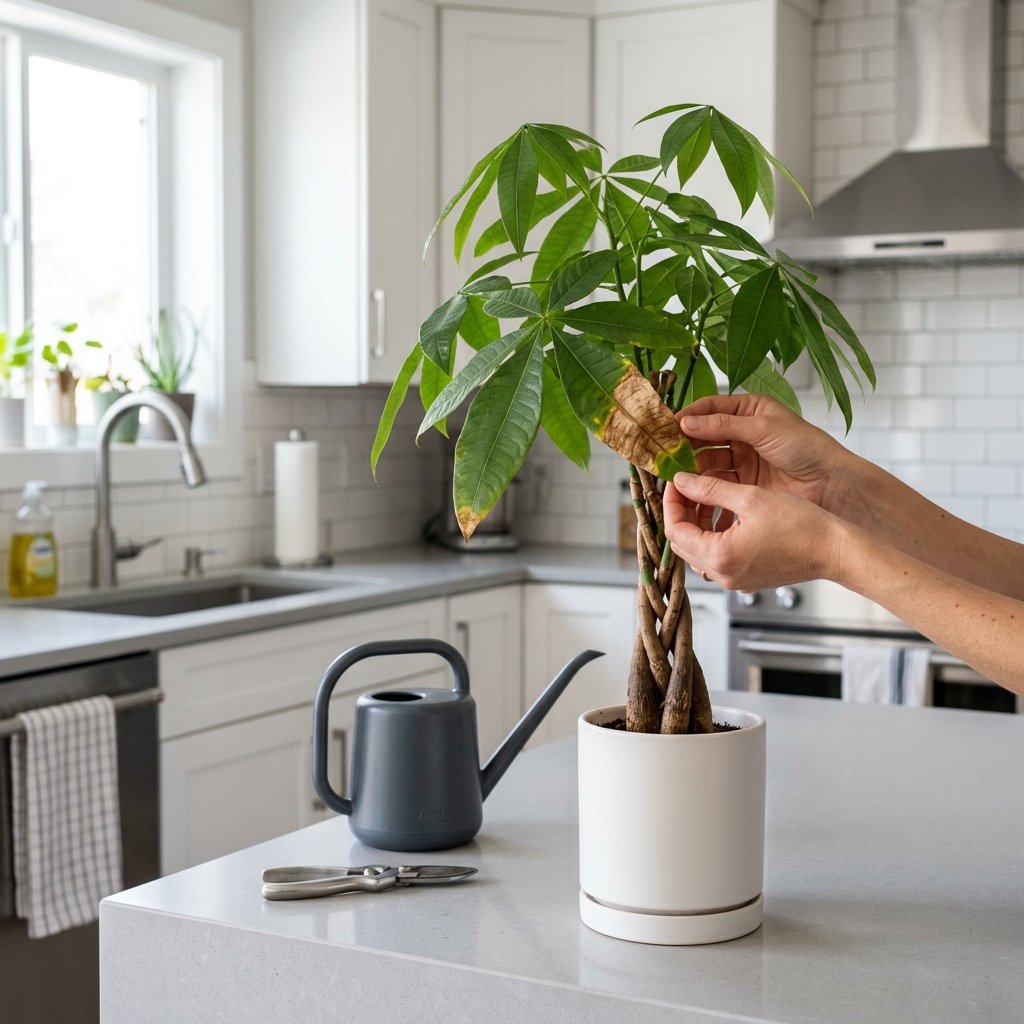
- Crispy, Brown Edges: The tips or margins of the leaves become dry, brittle, and brown.
- Papery Patches: In severe cases, large patches in the center of the leaves will turn brown and papery. This is called necrosis, a term botanists use to describe dead plant tissue.
- Directional Damage: The damage is usually most severe on the uppermost leaves or the side of the plant directly facing the window.
The Causes: Why is Your Money Tree Burning?
To prevent leaf scorch, we have to understand what causes it. Unlike humans, plants can't put on sunscreen or walk away when they get too hot!
- Direct, Intense Sunlight: In their native Central and South American wetland habitats, Money Trees grow under the canopy of taller trees. This means they are biologically designed to receive dappled or filtered light. When placed in a harsh, direct, south-facing or west-facing window, the intense UV rays physically burn their delicate leaves.
- Sudden Environmental Shifts: Did you recently move your plant from a dim corner directly into a bright, sunny spot? Plants need time to adjust to new lighting. Moving them too quickly causes environmental shock, leading to rapid sunburn.
- Dehydration and Low Humidity: While sunlight is the primary culprit, dry air and dry soil make things much worse. If a plant is underwatered, it cannot properly cool itself down through transpiration (the plant equivalent of sweating), making its leaves highly vulnerable to heat stress.
The Solutions: Step-by-Step Treatment and Prevention
The good news is that Money Trees are incredibly resilient. While scorched leaves will not turn green again, the plant will easily bounce back with a little bit of guided care.
Step 1: Relocate Your Plant Immediately
Move your Money Tree away from the harsh light source. The ideal spot for this plant is an area that receives bright, indirect sunlight. This means the plant should be in a bright room, but the sun's rays should never physically touch the leaves. A few feet back from a sunny window, or behind a sheer curtain, is perfect.
Step 2: Prune the Damaged Leaves
Once a leaf has turned crispy and brown, it cannot heal. Leaving it on the plant actually drains energy that the Money Tree could be using to push out fresh, healthy growth. Using a pair of clean, sterilized pruning shears, gently snip off the severely burned leaves at the base of their stems.
Step 3: Optimize Your Watering Routine
Support your plant's recovery by ensuring it is properly hydrated. Water your Money Tree thoroughly until water flows out of the drainage holes at the bottom of the pot. Then, wait until the top two to three inches of soil are completely dry before watering again. Never let your plant sit in a saucer of standing water, as this can lead to root rot.
Step 4: Acclimate Slowly in the Future
If you ever need to move your Money Tree to a brighter location, do it gradually! Move the plant a little closer to the light source every few days over the course of two weeks. This allows the plant to build up its natural defenses against brighter light.
Step 5: Boost the Humidity
Because they are tropical plants, Money Trees love humidity. Grouping plants together, placing a pebble tray filled with water beneath the pot, or using a room humidifier will keep the leaves supple and more resistant to drying out.
Remember, a few scorched leaves do not mean you are a bad plant parent! It is simply your Money Tree communicating its boundaries. By adjusting its placement and keeping up with good watering habits, you’ll be rewarded with a beautiful, vibrant plant. Log your new care routine and track your plant's recovery progress using the Plantiary app, and watch your Money Tree flourish!