Watching your beautifully braided Money Tree (Pachira aquatica) suddenly shed its leaves can feel like your good luck is literally falling apart. If you are waking up to a pile of leaves on the floor, take a deep breath! Please don't feel guilty; almost every plant parent experiences this at some point. Plants use leaf drop as a physical way to communicate that something in their environment isn't quite right. If you are ever unsure what is wrong with your plant, you can use the AI-powered plant disease scanner in the Plantiary app to get a diagnosis in seconds.
The good news is that Money Trees are incredibly resilient. By understanding what they are trying to tell us, we can quickly get them back to full, vibrant health. Let’s dive into what’s causing the leaf drop and how you can fix it.
The Problem: Decoding Your Money Tree's Symptoms
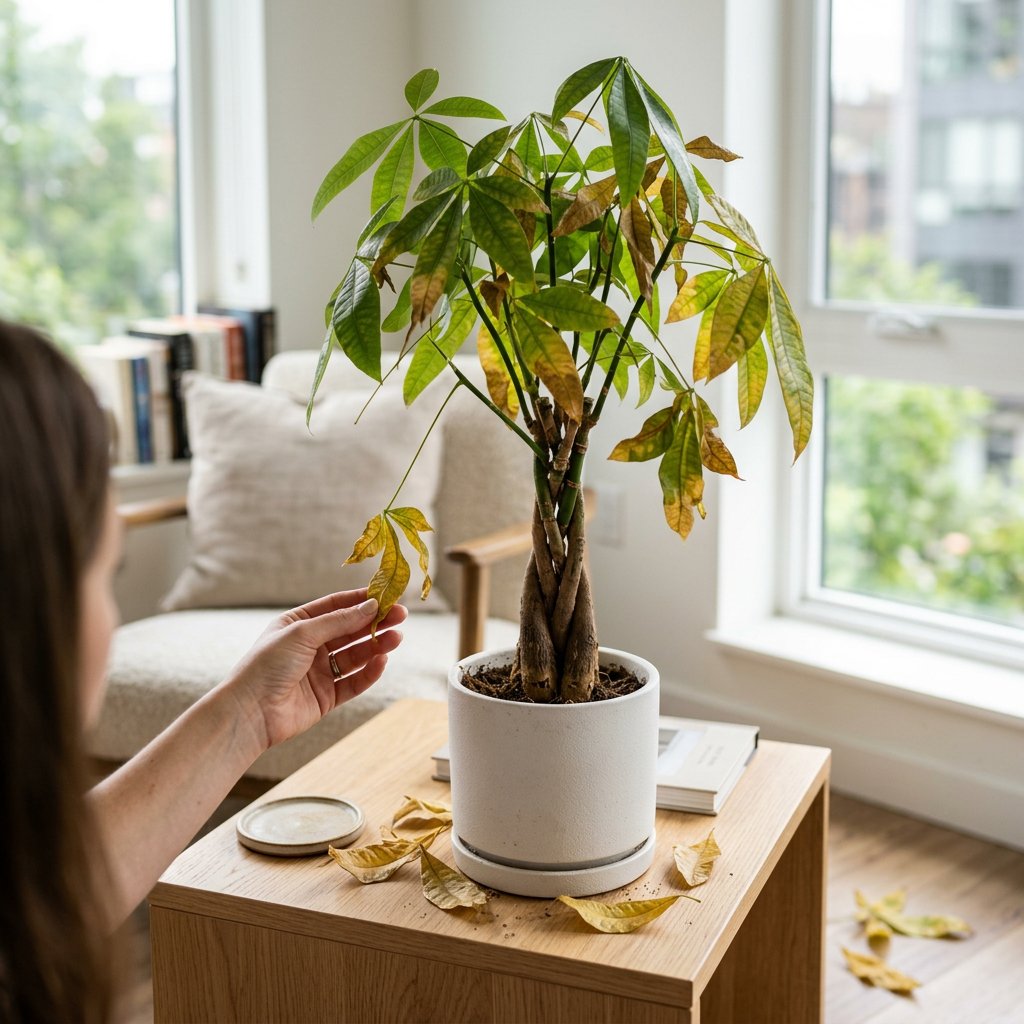
Before you can fix the issue, you need to look at how the leaves are falling. Inspecting the fallen foliage can give you major clues:
- Yellowing leaves: Often a sign of chlorosis, which simply means the plant is losing its green chlorophyll. This is usually tied to moisture issues in the soil.
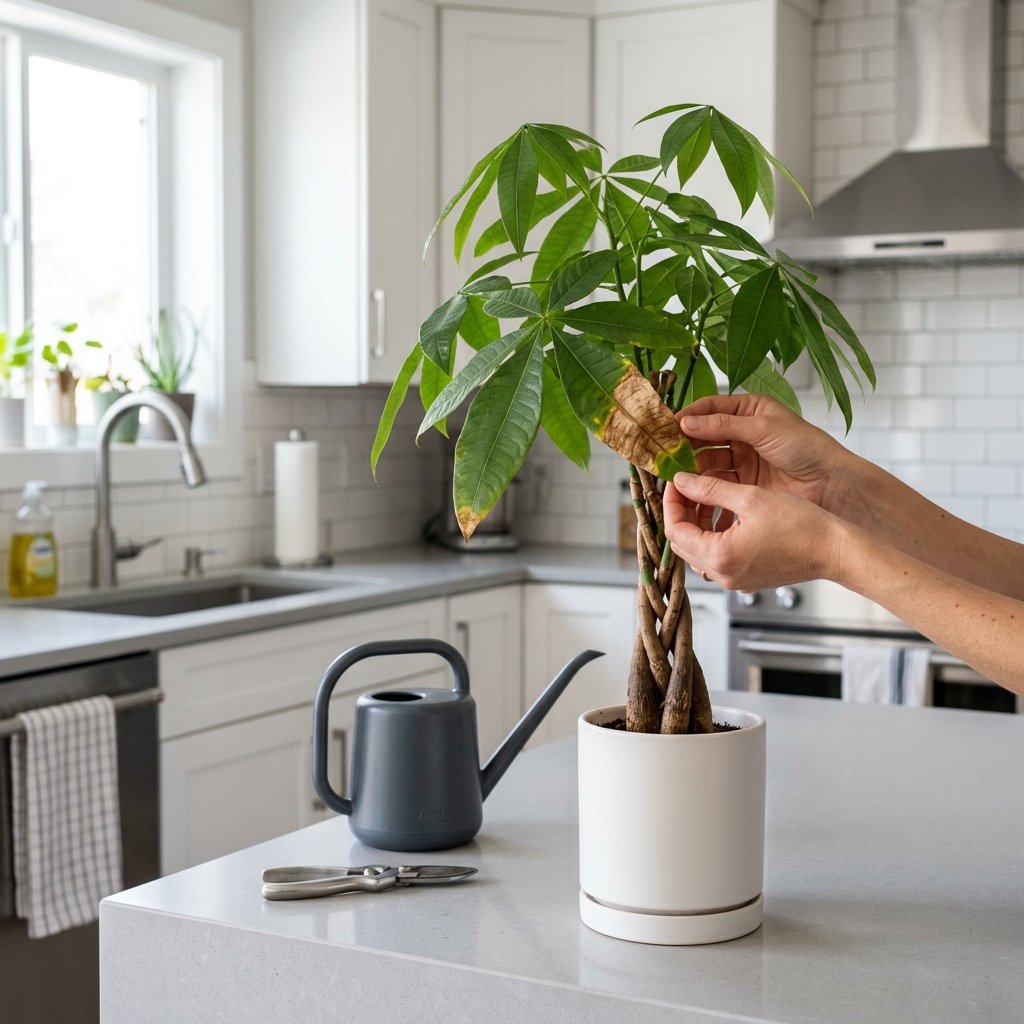
- Crispy, brown, and curling leaves: This typically points to a lack of moisture or extreme dry air.
- Perfectly green leaves dropping: This is the classic sign of environmental shock or sudden temperature changes.
The Causes: Why Are the Leaves Falling?
Money Trees are native to Central and South American swamps, meaning they love moisture but absolutely hate sitting in stagnant water. Here are the most common culprits behind leaf drop:
Overwatering and Root Rot
This is the number one cause of a declining Money Tree. When the soil stays constantly wet, the roots suffocate because they cannot absorb oxygen. This leads to root rot, a fungal condition where roots turn black and mushy. Unable to take up nutrients, the plant panic-drops its leaves, which usually turn yellow first.
Underwatering and Dehydration
On the flip side, if you let the soil completely dry out for too long, the plant will enter survival mode. To conserve the little water it has, it will drop its older leaves. These leaves usually feel brittle, dry, and crispy at the edges before they fall.
Environmental Shock
Money Trees are creatures of habit. If you recently bought your plant, moved it to a new room, or repotted it, the plant might experience shock. Similarly, placing your plant near a drafty window, an AC vent, or a heating radiator causes sudden temperature fluctuations that trigger immediate leaf loss.
The Solutions: Step-by-Step Treatment
Ready to play plant doctor? Follow these proven, actionable steps to stop the leaf drop and encourage fresh new growth.
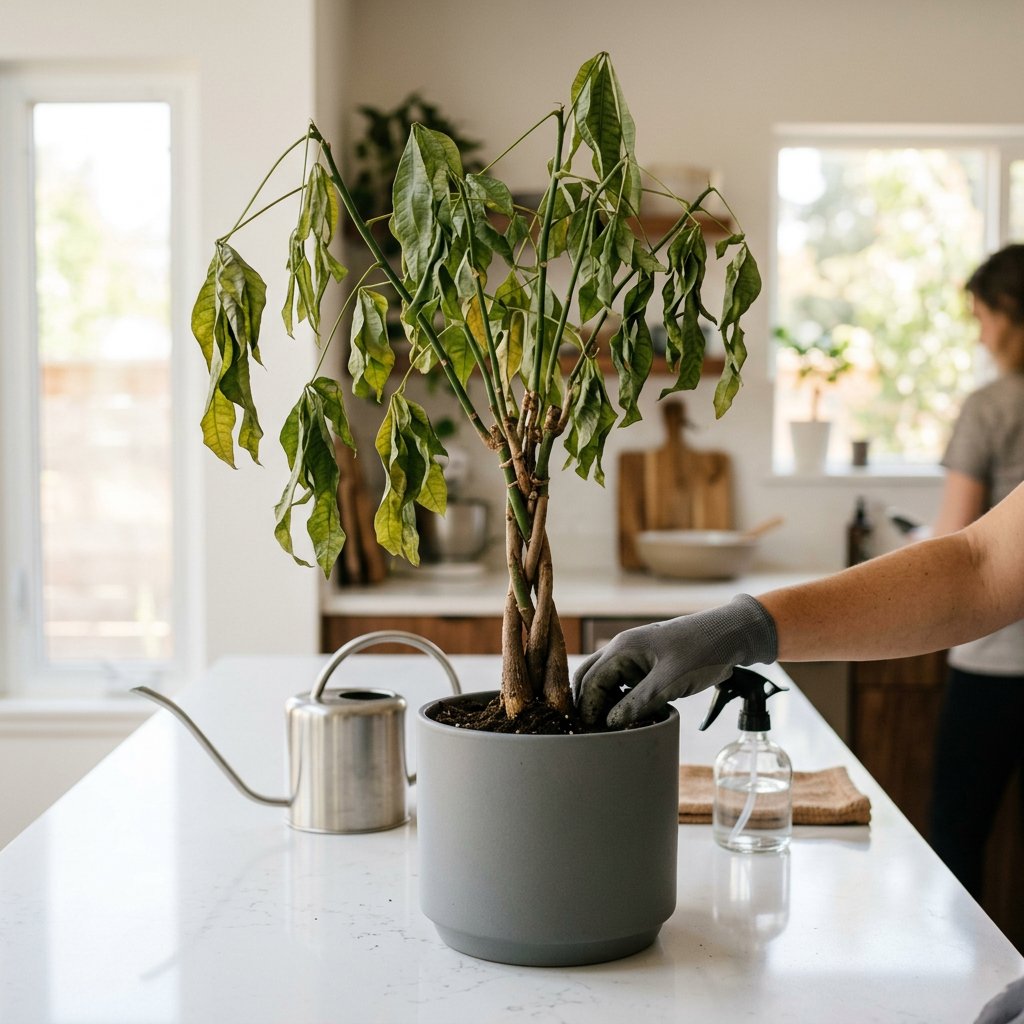
Step 1: Check the soil and root health. Gently poke your finger about 2 to 3 inches deep into the soil. If it feels soaking wet and smells slightly sour, you are overwatering. Carefully slide the plant out of its pot and inspect the roots. If you see mushy, dark roots, trim them away with sterile scissors and repot your Money Tree in fresh, well-draining soil (a mix of indoor potting soil and perlite works wonders). If the soil is completely bone-dry and compacted, your plant is extremely thirsty.
Step 2: Adjust your watering routine. Money Trees thrive on a "soak and dry" method. Only water your plant when the top 2 to 3 inches of soil are completely dry. When you do water, water thoroughly until it runs out of the drainage holes at the bottom of the pot. Never leave the pot sitting in a saucer full of excess water. Pro tip: Use the Plantiary app to set up a smart watering schedule so you never have to guess when it's time for a drink!
Step 3: Stabilize the lighting and temperature. Find a permanent, happy home for your Money Tree. They prefer bright, indirect light. Direct, harsh sunlight will scorch their leaves, while too little light will cause etiolation (a process where the plant stretches weakly toward the light source). Keep the plant in a room with a stable temperature between 65°F and 80°F (18°C - 27°C), safely away from drafty doors or climate control vents.
Step 4: Be patient and let it recover. Once you have corrected the watering and found the perfect spot, leave the plant alone to recover. Resist the urge to add fertilizer right now—fertilizing a sick or stressed plant can actually burn its roots and make the problem worse.
Seeing your Money Tree lose leaves can be discouraging, but remember that you are learning and growing right alongside your plants. With a little bit of observation and these simple tweaks, your plant will be pushing out adorable new umbrella-shaped leaves in no time!