Info
Often called the "Woody-Veiled Grisette," Amanita xylinivolva is a striking member of the Amanita family known for its elegant, ringless stem and a surprisingly tough, fabric-like base. Unlike its flashier, brightly colored cousins, this mushroom blends into the forest floor with sophisticated earthy tones. It belongs to a group of Amanitas known as "Grisettes," which are characterized by their deeply grooved cap edges and lack of a protective ring on the stalk.
🔍 How to Identify
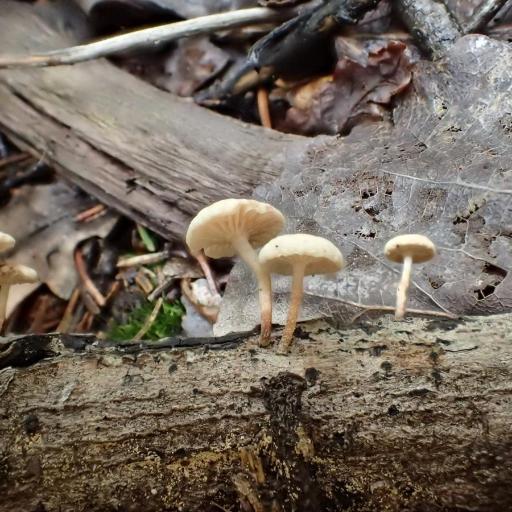
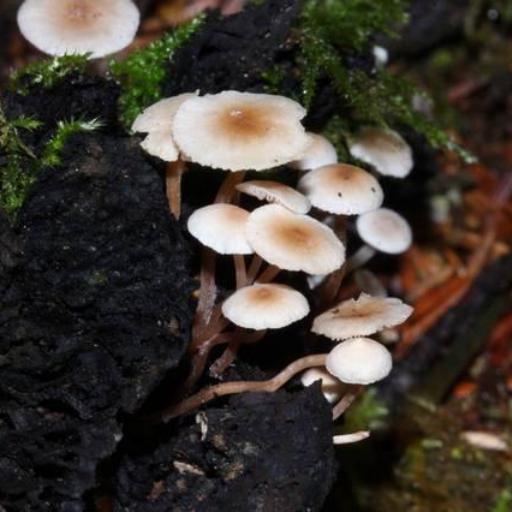
- 🍄 The Cap: Usually 4–8 cm wide, the cap is silver-gray to grayish-brown. It often has a small central bump (umbo) and very distinct, long grooves (striations) running inward from the edge.
- ⚪ The Gills: The gills are clean, white, and "free," meaning they do not attach to the central stem.
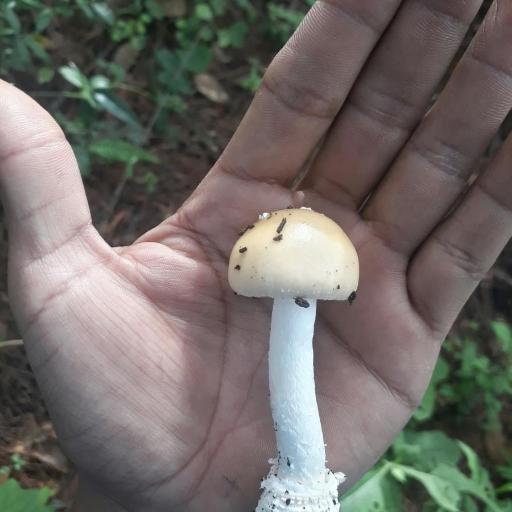
- 🪵 The Volva: Its most defining trait is the "woody" base. Unlike the fragile, papery base of other mushrooms, this one has a thick, felt-like sac that often turns brownish or ochre as it ages.
- 🦯 The Stem: The stalk is slender, white to pale gray, and notably smooth because it lacks the "skirt" or ring (annulus) found on many other Amanita species.
🌲 Habitat & Ecology
- 🌳 Tree Partner: This mushroom is mycorrhizal, meaning it lives in a symbiotic relationship with trees. It is most commonly found huddled near the roots of Oaks and other broadleaf trees, exchanging water and minerals for tree sugars.
- 🍂 The Forest Floor: It prefers well-established forests with deep leaf litter. You are most likely to spot it emerging after heavy rains in late summer or early autumn.
⚠️ Safety & Toxicity
- 🚨 WARNING: Never eat this mushroom. While some Grisettes are technically listed as edible in specific guidebooks, the Amanita genus contains the world’s most deadly fungi.
- 🛑 Risk of Confusion: It can be easily confused with lethal species like the Death Cap (Amanita phalloides) by an untrained eye. Ingesting toxic Amanita species leads to permanent liver and kidney damage or death.
- 🐾 Pets: Keep dogs away from these mushrooms during forest walks, as canine curiosity can lead to fatal poisoning.
✨ Fun Fact
The name xylinivolva literally translates to "woolly" or "wooden" veil. This refers to the unusually tough, non-fragile nature of the cup at its base, which feels more like a piece of heavy linen or soft wood than a delicate fungal membrane!
More Details