Info
Known as the "Barometer Earthstar," Astraeus hygrometricus is a fascinating fungal weather station. Often mistaken for a fallen star or a strange, leathery acorn, this mushroom is famous for its "hygroscopic" behavior—expanding its star-like arms when it rains and curling them tight during a drought. In some cultures, it is considered a symbol of resilience, surviving in dry, sandy soils where other mushrooms would quickly wither.
🔍 How to Identify
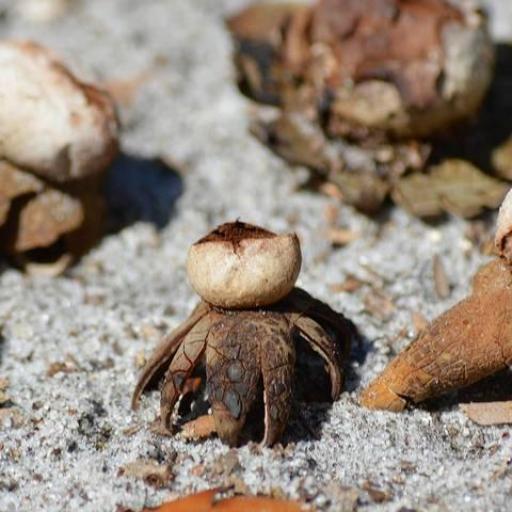
- ⭐ The Rays: When wet, the outer skin splits into 7 to 15 pointed rays that spread out like a star, often featuring a distinctive cracked, "lizard-skin" pattern.
- 💨 The Spore Sac: A central, parchment-like ball sits in the middle of the star. It is thin-skinned and releases clouds of brown spores through a ragged hole at the top when struck by raindrops.
- 🍂 The Color Palette: Usually earthy tones ranging from dark chocolate brown to sandy tan, allowing it to blend perfectly into the forest floor.
🌲 Habitat & Ecology
- 🤝 Tree Partners: This fungus is "mycorrhizal," meaning it forms a vital underground partnership with the roots of trees like Oaks and Pines, helping them absorb water in exchange for sugars.
- 🏜️ Tough Environments: Unlike many mushrooms that love soggy leaf mold, the Barometer Earthstar thrives in sandy, rocky, or nutrient-poor soil, often appearing along the edges of woodland paths.
- ⏳ Nature's Antique: Because the rays are so tough and fibrous, they can persist on the ground for months or even years, opening and closing repeatedly long after the mushroom has finished releasing its spores.
⚠️ Safety & Toxicity
- 🚫 Status: WARNING: Generally considered inedible.
- 👅 Details: While not typically classified as "deadly," this mushroom is extremely leathery and tough, making it impossible to chew or digest. Furthermore, it can easily be confused with other earthstar species, some of which may cause digestive upset. It is best enjoyed as a visual curiosity rather than a snack.
✨ Fun Fact
You can perform a "magic trick" with a dry Barometer Earthstar! If you find one curled up in a ball, place it in a bowl of water. Within minutes, the rays will unfurl and "bloom" right before your eyes as they absorb the moisture.
More Details
| Hymenium Type | Gleba |
| Spore Print Color | Brown |
| Mushroom Cap Shape | No Mushroom Cap |
| Mushroom Ecological Type | Mycorrhiza |







