Info
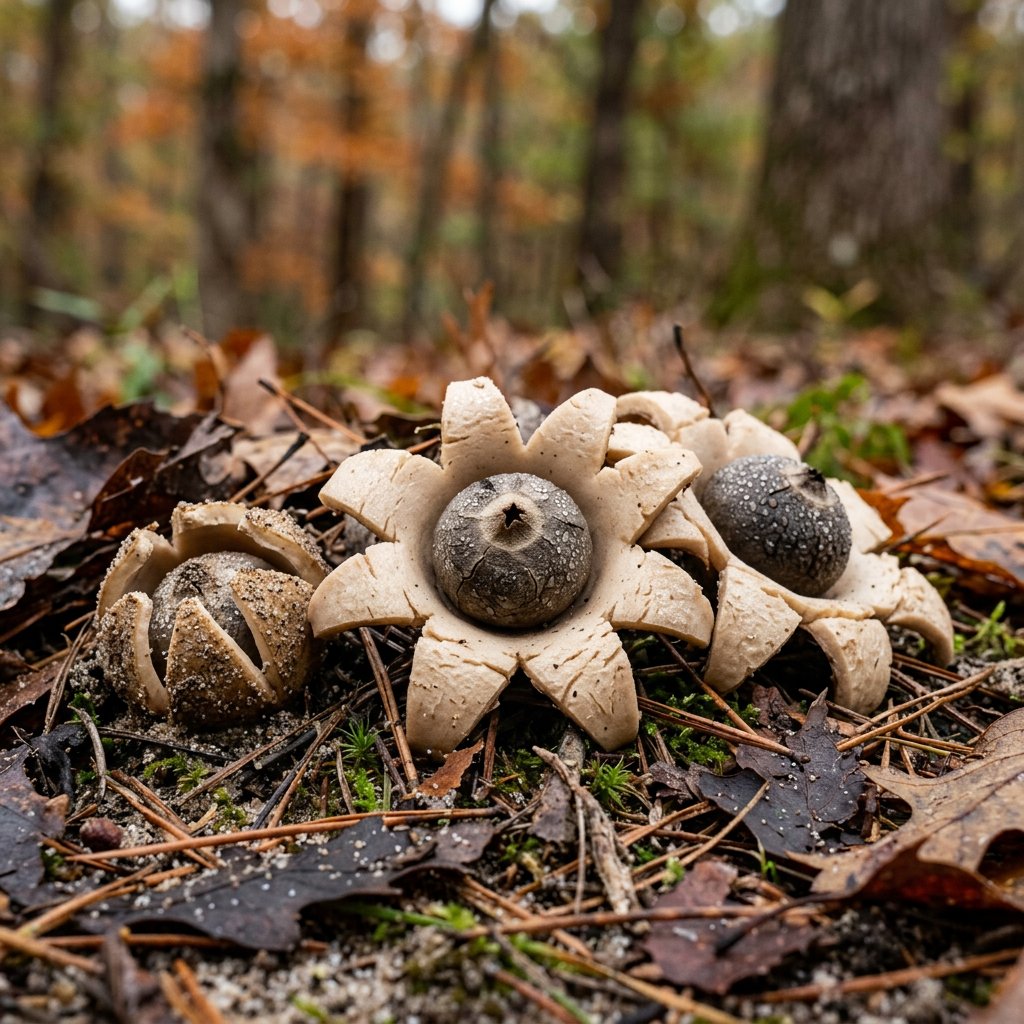
Often called the "Barometer Earthstar," Astraeus morganii is a master of mimicry, spending much of its life looking like a buried stone before "blooming" into a celestial star shape. These fungi are the forest’s ancient meteorologists, physically reacting to the moisture in the air. For centuries, their presence on the forest floor has served as a silent indicator of the coming rains.
🔍 How to Identify
- 🌟 The Rays: This mushroom features 6 to 10 thick, leathery rays that peel back from the center. When dry, they are dark and cracked; when wet, they become flexible and lighter in color.
- ⚽ The Spore Sac: A central, dusty-brown sphere sits in the middle of the "star." It has a thin, parchment-like skin with a small hole at the top (the ostiole) to release spores.
- 📏 The Texture: The inner surface of the rays often displays a deeply cracked, "alligator skin" pattern, which is a signature characteristic of the Astraeus genus.
🌲 Habitat & Ecology
- 🌳 Root Partners: Astraeus morganii is ectomycorrhizal, meaning it lives in a symbiotic relationship with the roots of trees, particularly Oaks and Pines. It helps the tree absorb water while the tree provides the fungus with sugars.
- 🏖️ Preferred Ground: You will most likely find these in sandy or nutrient-poor soils along the edges of woods or near clearings where the sun can reach the ground.
- 💧 Hygroscopic Movement: Unlike most mushrooms, this one "moves." The rays are hygroscopic, meaning they absorb water to unfold and expose the spore sac during rain, then curl back up to protect it during dry spells.
⚠️ Safety & Toxicity
- 🚫 WARNING: Inedible. While not known to be aggressively poisonous, Astraeus morganii is considered inedible due to its tough, woody, and leathery texture.
- 🐾 Pets & Kids: It is not a "choice" mushroom for foraging. If ingested by pets or children, it may cause digestive distress or a choking hazard due to its fibrous nature. Always wash your hands after handling wild fungi.
✨ Fun Fact
The name "Barometer Earthstar" comes from the mushroom's ability to predict rain. If you find a closed "star" in the woods, you can drop a bit of water on it; within minutes, the rays will begin to peel back and open, mimicking its natural reaction to a rainstorm!
More Details