Info
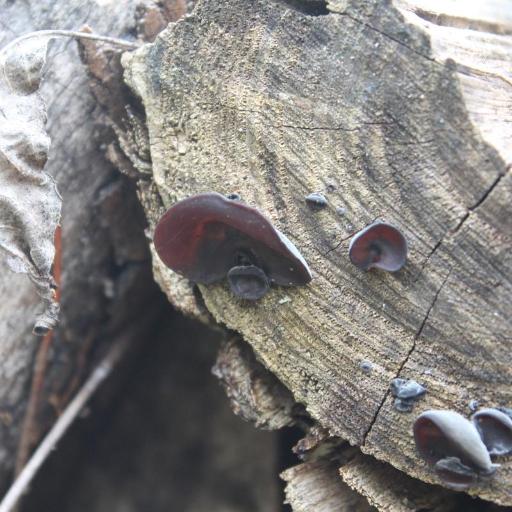
Often called the "Black Wood Ear," this mushroom looks remarkably like a dark, velvety ear growing directly out of a tree trunk. It has a distinctively rubbery, gelatinous texture that makes it a staple in many East Asian cuisines, where it is prized more for its "snap" and crunch than its flavor. In the wild, its eerie, flesh-like appearance often leads to folklore naming it as the "ears" of the forest spirits.
🔍 How to Identify
- 👂 The Shape: It typically grows in a cup-like or ear-like shape, often becoming wavy or convoluted as it matures. It lacks a traditional "cap and stem" look.
- 🌫️ The Surface: The outer surface is covered in a dense layer of tiny, fine hairs, giving it a greyish, velvety, or "frosted" appearance compared to its smoother relatives.
- 💧 The Texture: When moist, it is pliable and rubbery like a piece of silicone; when dry, it shrivels into a hard, brittle, black crust.
🌲 Habitat & Ecology
- 🌳 Deadwood Specialist: You will almost always find this species growing on dead or decaying hardwood logs and fallen branches, where it acts as a primary decomposer.
- 🌦️ Resurrection Power: This fungus is a master of dehydration. It can survive long droughts by drying out completely, only to "reanimate" and continue releasing spores as soon as it touches a drop of rainwater.
⚠️ Safety & Toxicity
- 🛑 WARNING: Never consume a wild mushroom unless its identity is confirmed by a professional mycologist. While many Auricularia species are edible, they can be easily confused with toxic look-alikes by the untrained eye.
- 🍽️ Culinary Note: While considered edible after thorough cooking, this mushroom is known to have mild anticoagulant (blood-thinning) properties. It is generally advised that people on blood-thinning medication or those scheduled for surgery avoid consuming large amounts.
✨ Fun Fact
In ancient folklore, wood ear mushrooms were sometimes called "Judas's Ears." This stems from a legend that the spirit of the forest grew ears on the trees to listen to the whispers of travelers, ensuring no secrets remained hidden in the deep woods!
More Details
| Hymenium Type | Smooth |
| Spore Print Color | White |
| Mushroom Cap Shape | No Mushroom Cap |
| Hymenium Attachment | No Hymenium Attachment |
| Mushroom Ecological Type | Saprobiont |