Info
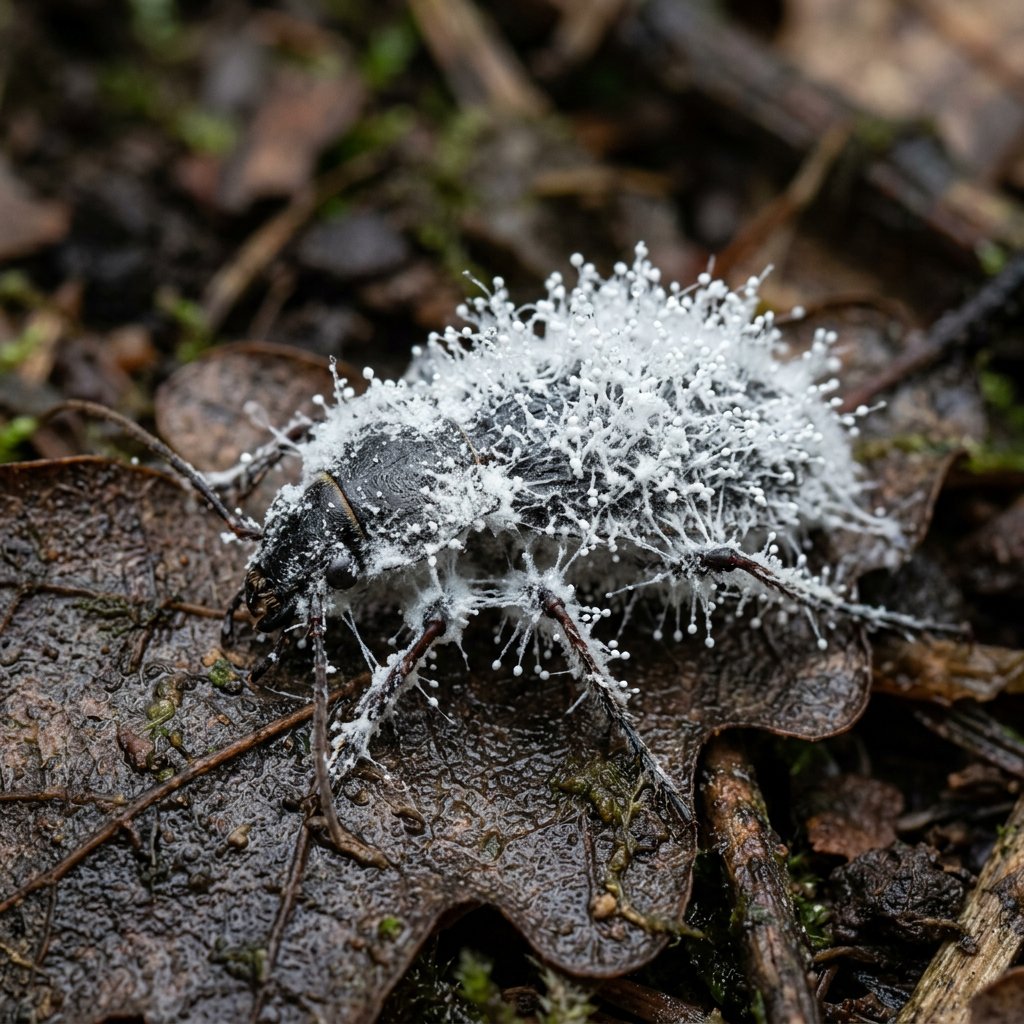
Known as the "White Muscardine" fungus, Beauveria bassiana is a silent hunter of the insect world. Instead of growing from the soil like a typical mushroom, this fascinating fungus acts as a natural parasite, turning beetles, aphids, and even caterpillars into white, fuzzy "mummies." It is one of the most important biological tools used by organic gardeners today to manage pests without harsh chemicals.
🔍 How to Identify
- ❄️ The White Frost: Unlike forest mushrooms with caps and stems, this fungus appears as a white, powdery, or cottony coating that completely blankets the body of a dead insect.
- 🧟 Insect Mummification: The infected insect (the host) will appear stiff, brittle, and stuck to a leaf or bark. It looks as though it has been dipped in powdered sugar or covered in a fine layer of snow.
- 🔬 Microscopic Spores: Under a lens, the fungus consists of tiny, globose spores that cluster together like miniature clouds, which are easily blown away by the wind to find their next target.
🌲 Habitat & Ecology
- 🧪 The Biological Assassin: This fungus is found naturally in soils worldwide. It waits for an insect to crawl by, at which point its spores attach to the insect's skin (cuticle), dissolve their way inside, and begin consuming the host from within.
- 🌿 Nature’s Equilibrium: In a balanced ecosystem, Beauveria bassiana keeps populations of "bad bugs" like weevils and whiteflies in check. It is specifically prized in greenhouses and organic orchards as a "living pesticide."
⚠️ Safety & Toxicity
- 🛡️ Status: Generally considered safe for humans, pets, and most mammals, as it cannot survive at high body temperatures.
- 🐝 Beneficial Warning: While it isn't toxic in the traditional sense, it is a "broad-spectrum" fungus. This means it doesn't distinguish between a pest and a friend; it can unfortunately infect honeybees or ladybugs if they come into direct contact with concentrated spores.
- 🌬️ Respiratory Caution: Gardeners using commercial powders should avoid inhaling the dust, as concentrated spores can cause minor respiratory irritation or allergic reactions in sensitive individuals.
✨ Fun Fact
This fungus is named after Agostino Bassi, an Italian entomologist who discovered in 1835 that it was responsible for a plague killing off silk-producing caterpillars. His discovery was a massive breakthrough, as it was the first time anyone proved that a microorganism could cause disease in an animal!
More Details







