Info
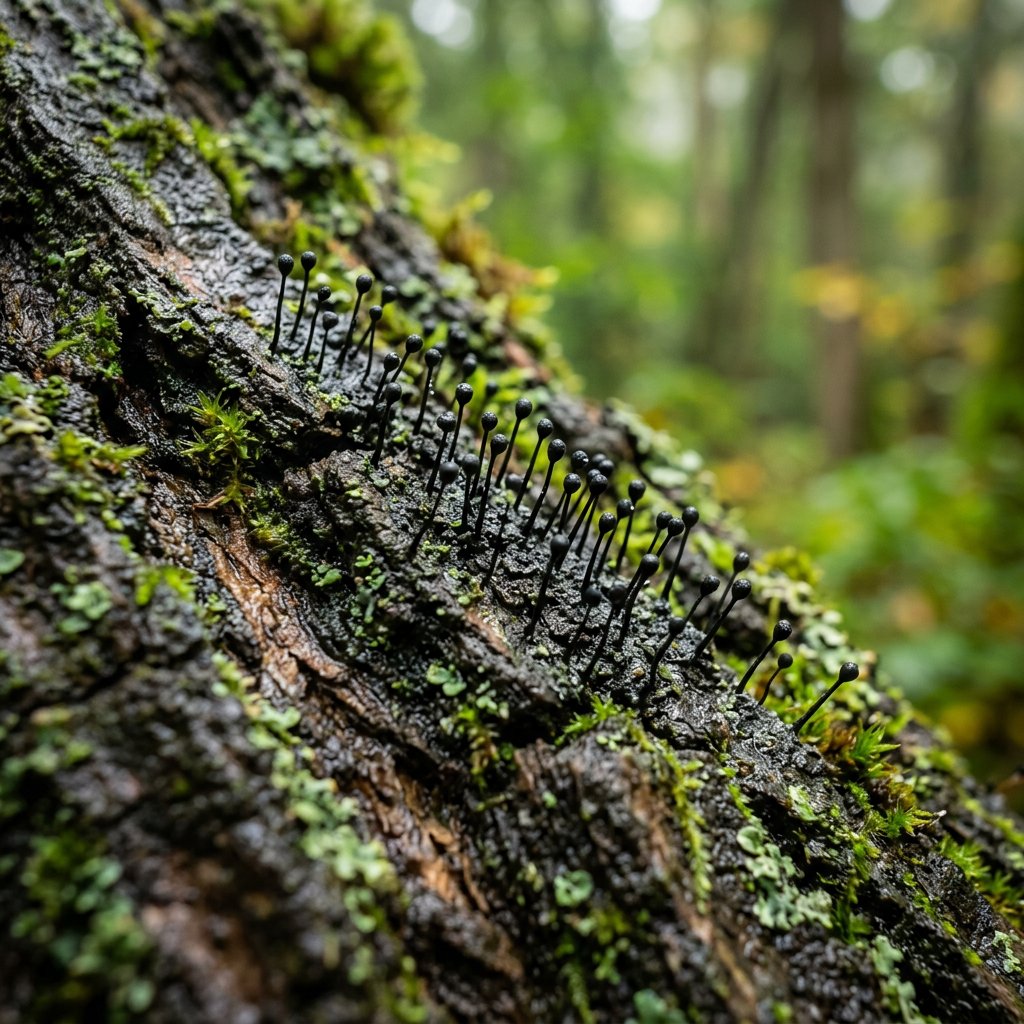
Commonly known as the Willow Stubble Lichen, this tiny marvel belongs to the fascinating world of "Pin Lichens." It looks less like a traditional mushroom and more like miniature, dark pins stuck into the bark of ancient trees. Often overlooked by the casual hiker, it is a storyteller of age, signaling that the forest around it has remained undisturbed for a long time.
🔍 How to Identify
- 🍄 The "Pins": The most striking feature is the tiny fruiting bodies (apothecia) which resemble black sewing pins or matchsticks, usually only 1–2mm tall.
- 🪵 The Cap: The head of the pin (the mazaedium) is brownish-black and often has a subtle dusty or powdery appearance where the spores are released.
- 🧂 The Body: The main body (thallus) is a thin, greyish crust embedded within the bark, often so faint it looks like a simple stain on the wood.
🌲 Habitat & Ecology
- 🍂 Ancient Bark: While the name suggests Willow (Salix), it is also frequently found on old Oak, Pine, and other deciduous trees, particularly those with rough, dry bark.
- ☁️ The Micro-shelter: It prefers sheltered "dry-side" micro-habitats, often appearing on the underside of leaning trunks or deep within bark crevices where it is protected from direct rain.
- 🌿 Symbiotic Life: As a lichen, it is a partnership between a fungus and an alga, working together to survive in environments where few other things can grow.
⚠️ Safety & Toxicity
- 🚫 Non-Edible: WARNING. While Calicium salicinum is not known to be deadly, it is a lichenized fungus and is not considered edible. Its tiny size and tough, woody structure make it biologically unsuitable for consumption.
- 🐾 General Safety: It poses no known risk of skin irritation or toxicity to pets or children, though its presence usually indicates a delicate ecosystem that should be left undisturbed.
✨ Fun Fact
🔬 Forest Time-Capsules: Scientists use "Pin Lichens" like this one as biological indicators. Because they grow so slowly and require very specific conditions, their presence tells researchers that a forest is likely an "old-growth" site with a high conservation value.
More Details