Info
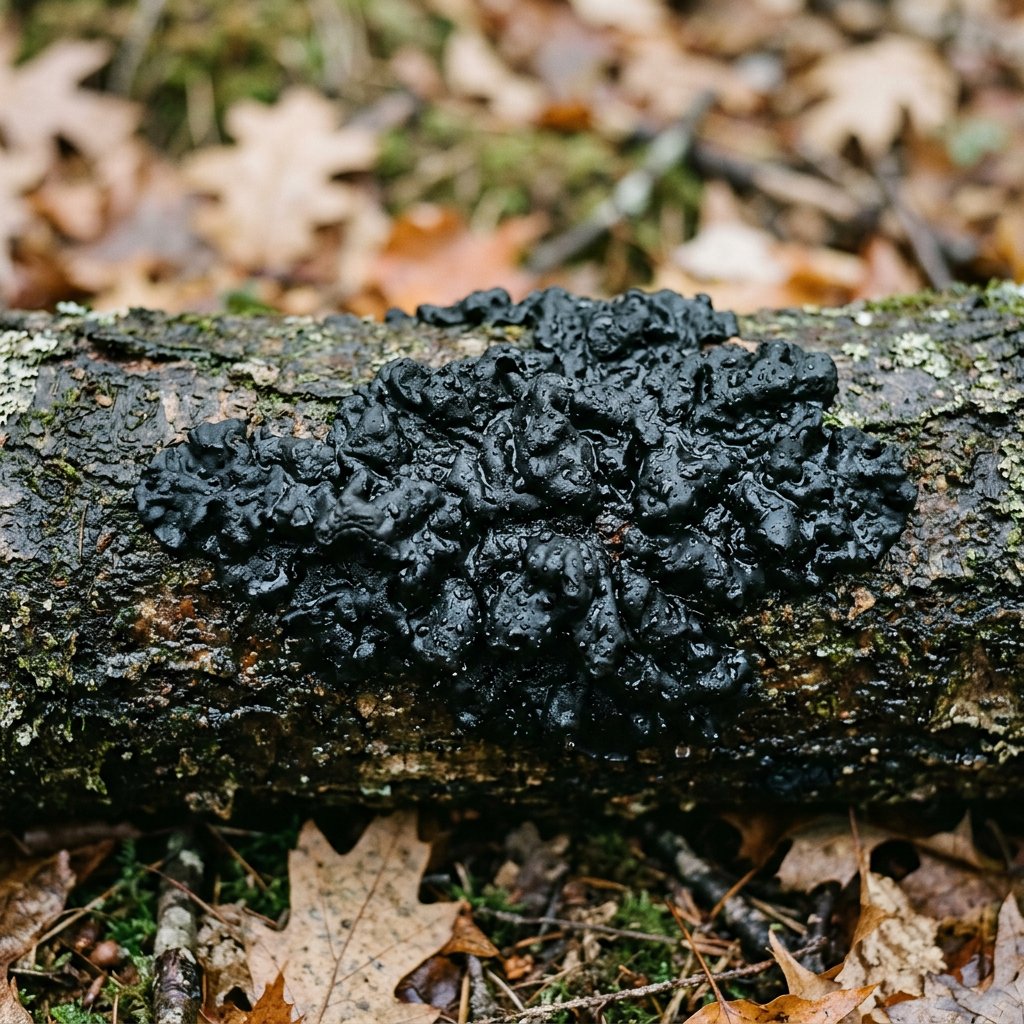
Often called the Dog’s Nose Fungus, this bizarre mushroom looks exactly like its namesake: a cold, wet, black snout poking out of a rotting log. Found primarily in North American hardwood forests, it is a master of disguise that often startles hikers who think they’ve stumbled upon a buried animal. While it won't bark, its glossy, leathery texture makes it one of the most peculiar sights in the fungal kingdom.
🔍 How to Identify
- 👃 The "Snout" Shape: It grows as a rounded, cushion-shaped mass (stroma) that is typically 2 to 7 centimeters wide, mimicking the shape of a canine nose.
- ⚫ Color & Texture: When young, it is covered by a thin, tan-to-grayish "veil." As it matures, this skin ruptures to reveal a shiny, coal-black, and pitted surface that feels hard or carbon-like.
- 🕳️ The Pores: If you look closely at the black surface, you’ll see tiny pin-sized holes called perithecia. These are the openings through which the mushroom releases its spores.
🌲 Habitat & Ecology
- 🌳 Hardwood Specialist: You will almost exclusively find Camarops petersii growing on well-decayed, barkless logs of deciduous trees, with a very strong preference for Oak.
- 🍂 Nature’s Recycler: This fungus is saprobic, meaning it feeds on dead organic matter. It plays a vital role in the ecosystem by breaking down tough wood fibers and returning nutrients to the forest floor.
⚠️ Safety & Toxicity
- 🛑 WARNING: Not Edible. While not known to be "deadly" in the way some Amanitas are, this mushroom is tough, woody, and entirely unpalatable.
- 🐕 Pet Safety: While there are no specific reports of high toxicity to dogs or cats, its hard, carbonaceous texture could cause a choking hazard or digestive blockage if ingested by a curious pet. It is best to leave it on the log where it belongs.
✨ Fun Fact
The resemblance to a dog's nose isn't just a coincidence of shape; the surface of the mushroom is often moist and "tacky" to the touch, perfectly mimicking the cold, damp sensation of a real dog's snout!
More Details







