Info
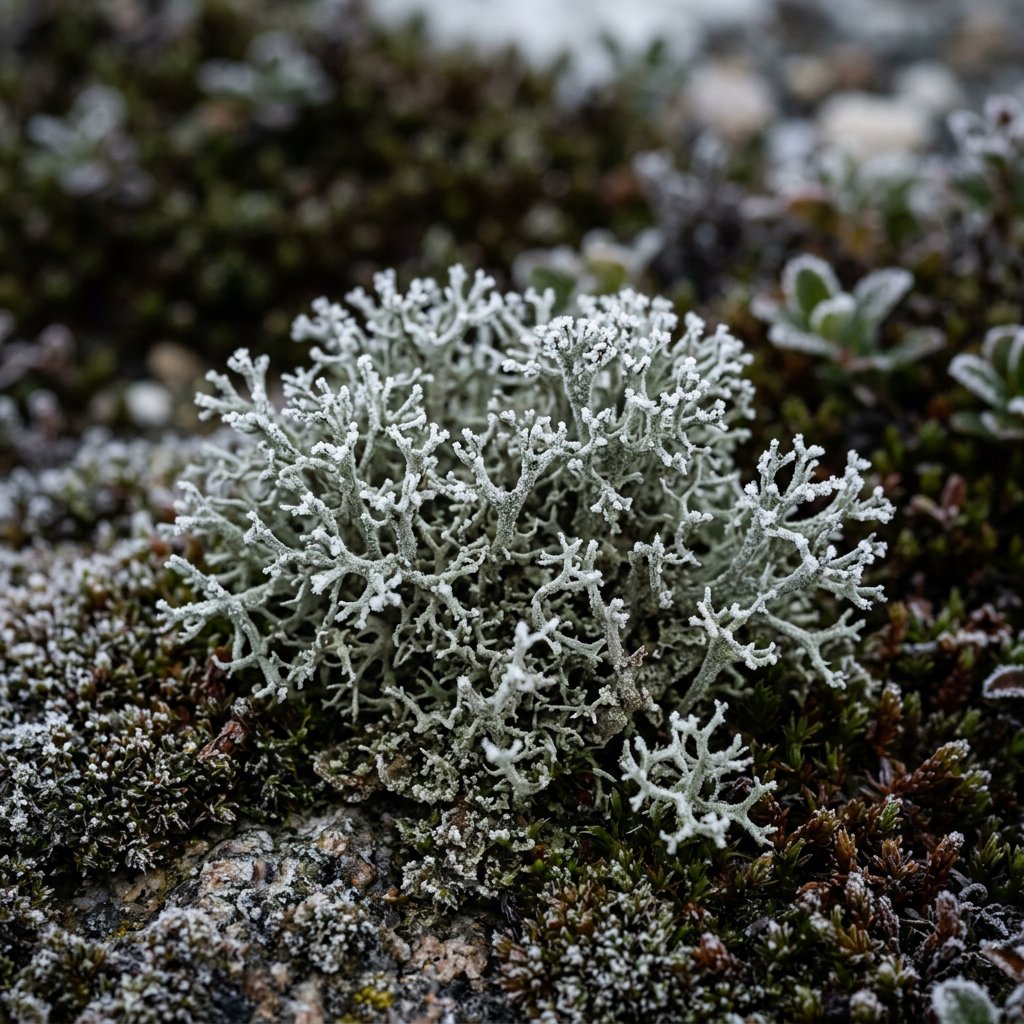
Often referred to as the Lacy Reindeer Lichen, Cladonia confusa looks like a fragment of sea coral that decided to live on land. While it is frequently called a "mushroom" by casual observers, it is actually a fruticose lichen—a fascinating biological partnership where a fungus provides a home for algae to live inside it. In the misty highlands and sandy coastal plains where it thrives, it forms soft, springy cushions that look like they belong in a miniature fairy-tale forest.
🔍 How to Identify
- 🌿 The "Coral" Structure: It grows in complex, shrub-like tufts. Unlike leafy lichens that flatly hug bark, this species stands upright and forms dense, rounded mounds.
- 🎨 Lemon-Lime Hue: It typically displays a distinctive pale yellowish-green or creamy-white color, which helps it stand out against darker soil or moss.
- 🦌 Branching Pattern: The "stems" (known as podetia) are hollow and branch out repeatedly into delicate, fine tips that resemble tiny deer antlers.
🌲 Habitat & Ecology
- ☁️ Mist Chaser: Because it lacks true roots, Cladonia confusa drinks directly from the air. It thrives in humid environments, often carpeting the ground in tropical montane cloud forests or sandy heathlands.
- 🛡️ Soil Protector: In fragile ecosystems, these lichens act as a living mulch. They stabilize the soil against erosion and provide a micro-habitat for tiny invertebrates like tardigrades and mites.
⚠️ Safety & Toxicity
- 🛑 WARNING: While Cladonia confusa is not considered a "deadly" organism like some true mushrooms, it is not edible for humans. It contains secondary metabolites like usnic acid.
- 🤢 Digestive Distress: Ingesting this lichen can cause significant stomach irritation and nausea. It is best enjoyed with the eyes, not the mouth.
- 🐾 Pet Safety: While generally non-toxic to the touch, it is very fibrous and chemically complex; keep dogs or cats from chewing on it to avoid digestive blockages.
✨ Fun Fact
Cladonia lichens are the ultimate slow-motion residents of the forest. Some colonies grow as slowly as 3 to 5 millimeters per year. A patch the size of a dinner plate could easily be over 50 years old!
More Details







