Info
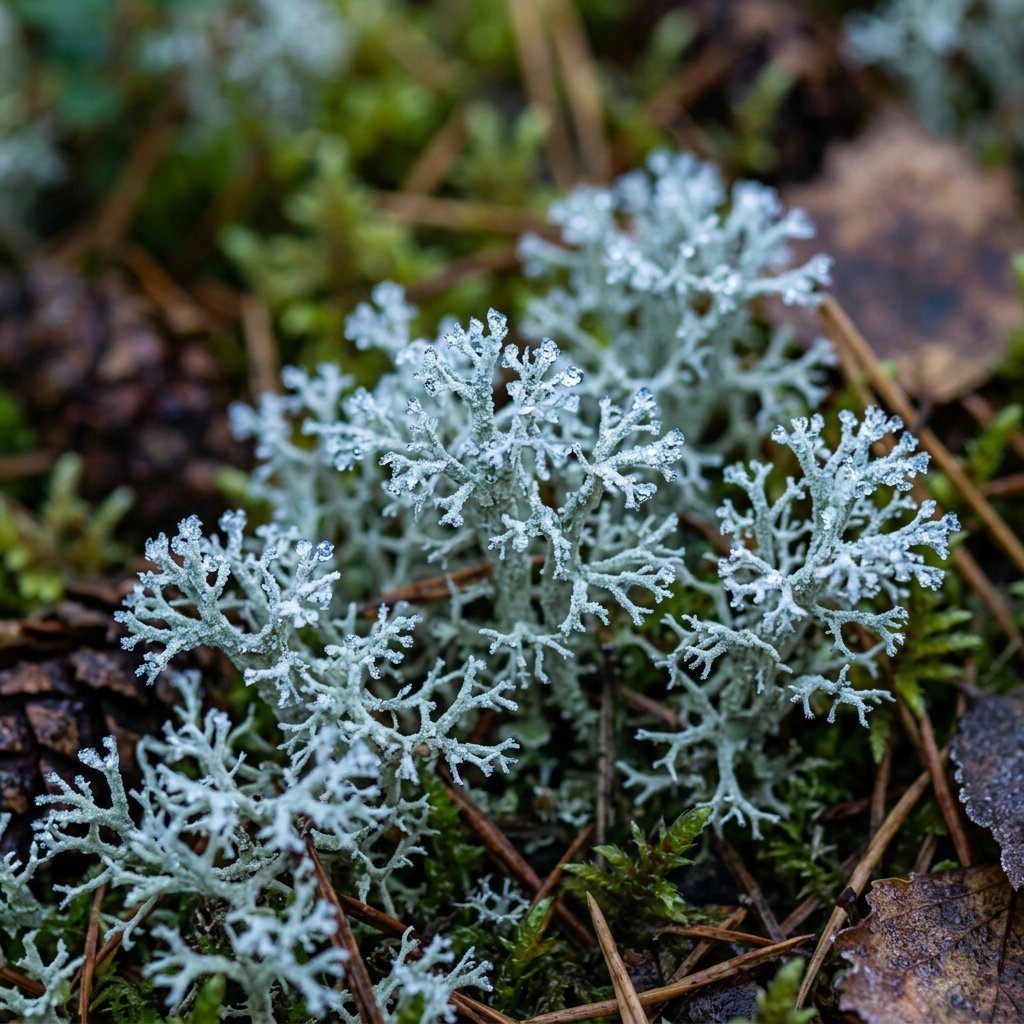
Often called "Green Reindeer Lichen," Cladonia mitis looks like a miniature, frozen forest carpeting the ground. While it behaves like a moss, it is actually a complex symbiotic community—a partnership between a fungus and an alga. In the vast Arctic tundras and boreal forests, this resilient organism serves as a vital winter lifeline for roaming caribou and reindeer herds.
🔍 How to Identify
- 🌿 Branching Pattern: Features intricate, "dichotomous" branching where the stems split into two, resembling tiny, tangled deer antlers.
- 🎨 Color Palette: It is characteristically pale yellowish-green or chartreuse, which helps distinguish it from its ash-gray cousins.
- ☁️ Texture: When damp, it feels soft and spongy like a cushion; however, during dry spells, it becomes incredibly brittle and will "crunch" loudly under your boots.
🌲 Habitat & Ecology
- ❄️ The Arctic Pantry: It thrives in nutrient-poor environments where most plants fail, such as sandy soils, rocky barrens, and open woodlands across the Northern Hemisphere.
- 🐢 Slow Motion Growth: This lichen is a master of patience, often growing only 3 to 5 millimeters per year. A mat the size of your hand could be decades old.
- 🏠 Micro-Ecosystem: The dense, tangled mats provide essential shelter for tiny invertebrates and help retain soil moisture in harsh, wind-swept landscapes.
⚠️ Safety & Toxicity
- 🛑 WARNING: While Cladonia mitis is a primary food source for reindeer, it is not considered edible for humans.
- 🧪 Bio-Accumulator: Lichens act like atmospheric sponges; they absorb everything from the air, including heavy metals and pollutants, which can make them toxic if ingested.
- 🐾 Pet Safety: It is generally non-toxic to touch, but keep curious dogs from snacking on it, as the "lichen acids" used to break down rocks can cause mild stomach upset in pets.
✨ Fun Fact
Architectural modelers and model train enthusiasts have used dried and dyed Cladonia lichen for decades to create realistic-looking miniature trees and shrubbery for their displays!
More Details







