Info
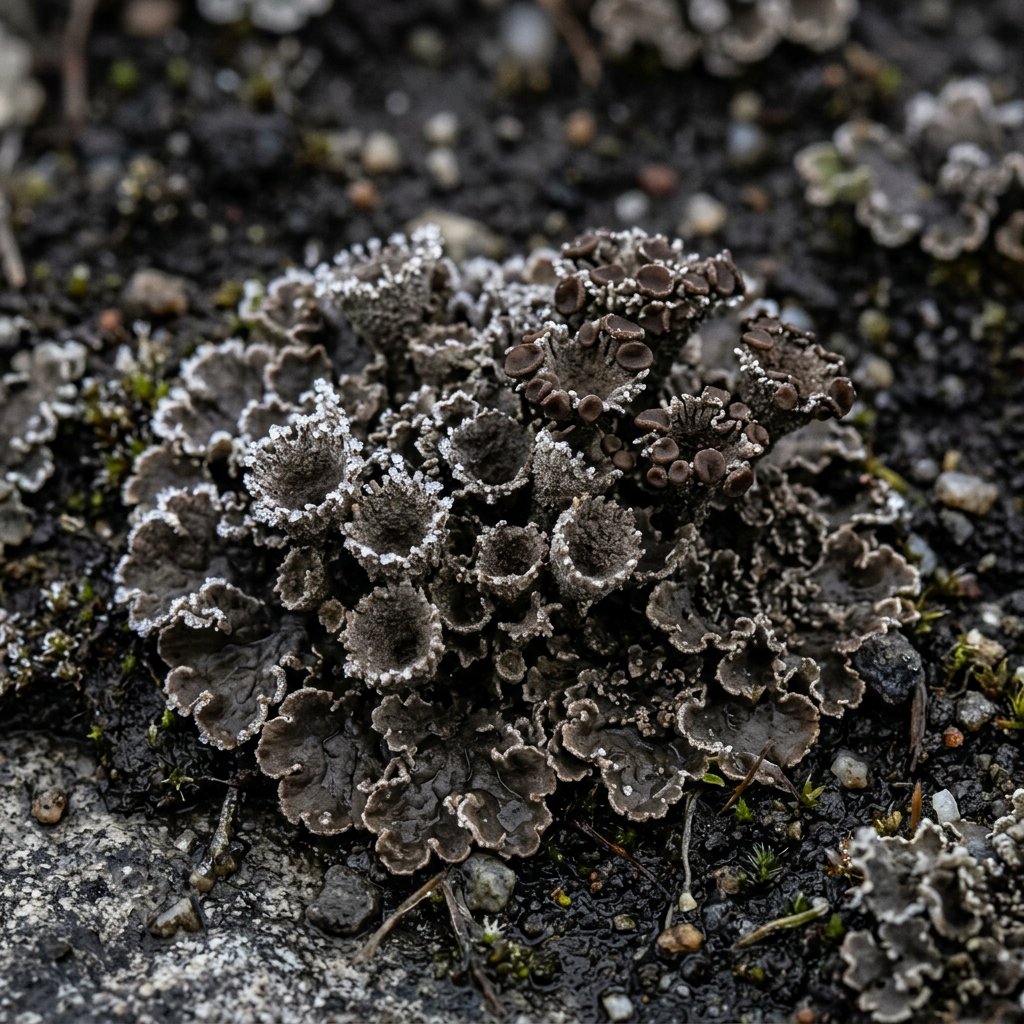
Known affectionately as the Rosette Cup Lichen, this miniature wonder looks like a collection of tiny, dusty-green goblets fit for a forest sprite. While it is technically a fungus, it lives a "double life" in a symbiotic partnership with algae, allowing it to survive in harsh, sun-drenched environments where typical mushrooms would quickly wither. It is a staple of rocky terrains, often forming beautiful, crusty mosaics across the ground.
🔍 How to Identify
- 🍃 The Rosette Base: Unlike many of its cousins, this species forms a distinct, tight rosette of leaf-like scales (squamules) that hug the ground. These scales are usually olive-green to brownish and have a slightly waxy texture.
- 🍷 The "Cups": Rising from the leafy base are stalks that end in wide, shallow funnels called podetia. These "cups" look like tiny wine glasses and are often covered in a fine, flour-like dusting.
- 🟤 Brown Rims: The edges of the cups often feature tiny, dark brown bumps. These are the fruiting bodies (apothecia), which the fungus uses to release its spores into the wind.
🌲 Habitat & Ecology
- 🪨 The Lime Lover: This species is a "calciphile," meaning it thrives in calcium-rich environments. You will most often find it on chalky soils, limestone rocks, or stabilized sand dunes where the pH is alkaline.
- 🤝 Environmental Pioneer: Because it can draw nutrients from the air and minerals from bare rock, it is often one of the first organisms to colonize barren landscapes. It acts as a "soil builder," slowly breaking down stone and trapping organic matter for future plants to grow.
⚠️ Safety & Toxicity
- 🚫 Status: NOT EDIBLE. While most lichens are not "deadly" in the traditional sense, they are almost entirely indigestible to humans and provide no nutritional value.
- 🧪 Chemical Irritants: Many Cladonia species contain lichen acids (such as fumarprotocetraric acid) which can cause severe stomach upset if eaten and may cause mild contact dermatitis (skin rash) in sensitive individuals if handled excessively.
✨ Fun Fact
Lichens like the Rosette Cup are world-class survivors; they have been sent into the vacuum of space on the exterior of the International Space Station and survived the radiation and extreme cold, returning to Earth still capable of photosynthesis!
More Details