Info
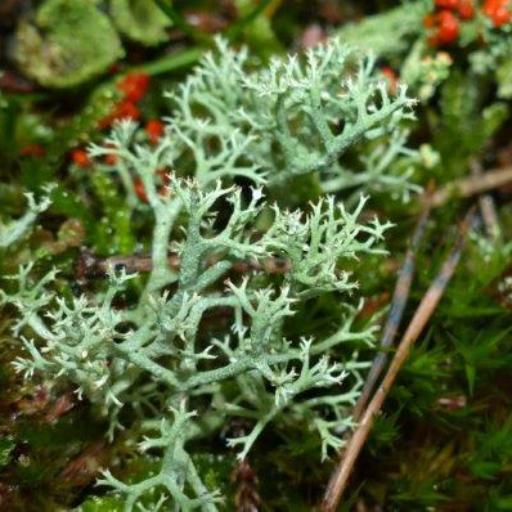
Known as the "Seafoam Lichen," Cladonia portentosa blankets the ground like a fallen, frozen cloud. While it looks like a miniature undersea coral, it is actually a complex symbiotic partnership between a fungus and an alga. In the wild, it creates soft, spongy carpets that crunch underfoot during dry spells, earning it a reputation as one of nature’s most delicate ground covers.
🔍 How to Identify
- ☁️ Branching Pattern: It forms dense, intricate tufts that branch in three directions (trichotomous), creating a spherical, puffy appearance without a single "main" trunk.
- 🎨 Color Palette: It displays a distinct pale, yellowish-grey or "seafoam" green color that is remarkably consistent across the entire clump.
- 🦴 Texture: It is highly hygroscopic; when the air is damp, it feels like a soft sponge, but during dry weather, it becomes bone-dry and brittle.
🌲 Habitat & Ecology
- 🧪 Acidic Soil Specialist: You will most likely spot this lichen on open heaths, moors, or coastal sand dunes where the soil is nutrient-poor and acidic.
- 🌬️ Clean Air Indicator: Because it absorbs water and nutrients directly from the atmosphere rather than its roots, it is very sensitive to pollution. Finding it is a sign of high air quality in the area.
⚠️ Safety & Toxicity
- ⚠️ WARNING: While not considered "poisonous" in the same way as a Death Cap mushroom, Cladonia portentosa is not edible for humans. It contains usnic acids which can cause severe stomach irritation if ingested.
- 🐾 Wildlife & Pets: While reindeer thrive on it (it’s a cousin to "Reindeer Moss"), it is not suitable for household pets. When dry, its brittle structure can also pose a minor choking hazard or cause mouth irritation.
✨ Fun Fact
This lichen is a superstar in the world of hobbies! Because of its intricate, tree-like branching, it is frequently dried, preserved, and dyed by hobbyists to create realistic miniature trees and shrubs for model train sets and architectural dioramas.
More Details







