Info
Often mistaken for a moss or a tiny silver shrub, Cladonia rangiferina is a hardy survivor of the frozen north. Known famously as Reindeer Lichen, it isn't actually a plant or a typical mushroom, but a complex partnership (symbiosis) between fungi and algae. In Nordic folklore and tundra ecology, it is the "mana" that keeps caribou herds alive through the harshest, most desolate winters.
🔍 How to Identify
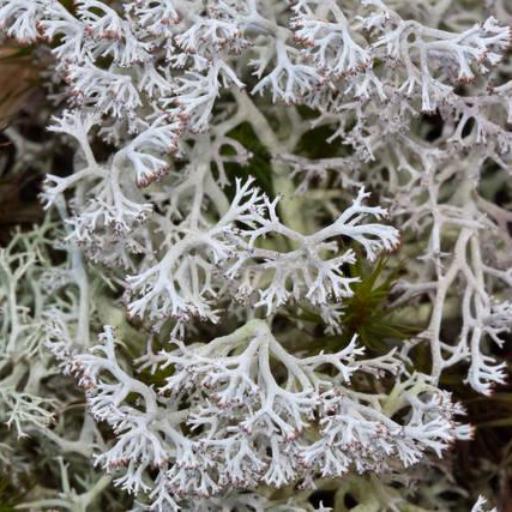
- 🌿 Branching Structure: It looks like a miniature, leafless shrub or a piece of delicate grey coral, branching out into fine, tangled tips that resemble tiny antlers.
- 🌫️ Ashy Color: It maintains a distinctive pale silver-grey or greenish-white hue, lacking the vibrant chlorophyll-green of true mosses.
- ☁️ Hollow Stems: Unlike plants with solid stems, the "branches" of this lichen are hollow, allowing it to stay lightweight and brittle when dry.
🌲 Habitat & Ecology
- ❄️ Arctic Architect: It thrives in nutrient-poor environments where most plants fail, such as open tundra, rocky cliffs, and the floor of boreal "taiga" forests.
- 🦌 Essential Winter Buffet: During winter, reindeer and caribou use their hooves to dig through deep snow specifically to find this lichen, which provides them with crucial carbohydrates.
- 🧪 Air Quality Monitor: Lichens have no roots and absorb everything from the air; because of this, they are used by scientists as bio-indicators to measure local pollution levels.
⚠️ Safety & Toxicity
- ⚠️ WARNING: While technically listed as edible in survival manuals, it contains "usnic acid" which is extremely bitter and can cause severe stomach upset if eaten raw.
- 🐾 Pets & Kids: It is generally safe to touch, making it a favorite for fairy gardens and model railroading. However, keep it away from curious pets, as it can accumulate heavy metals or environmental toxins from the atmosphere.
✨ Fun Fact
Slow and steady wins the race—Reindeer Lichen grows at a glacial pace. In some harsh environments, it may only expand by 3 to 5 millimeters per year, meaning a patch the size of your hand could be decades old!
More Details







