Info
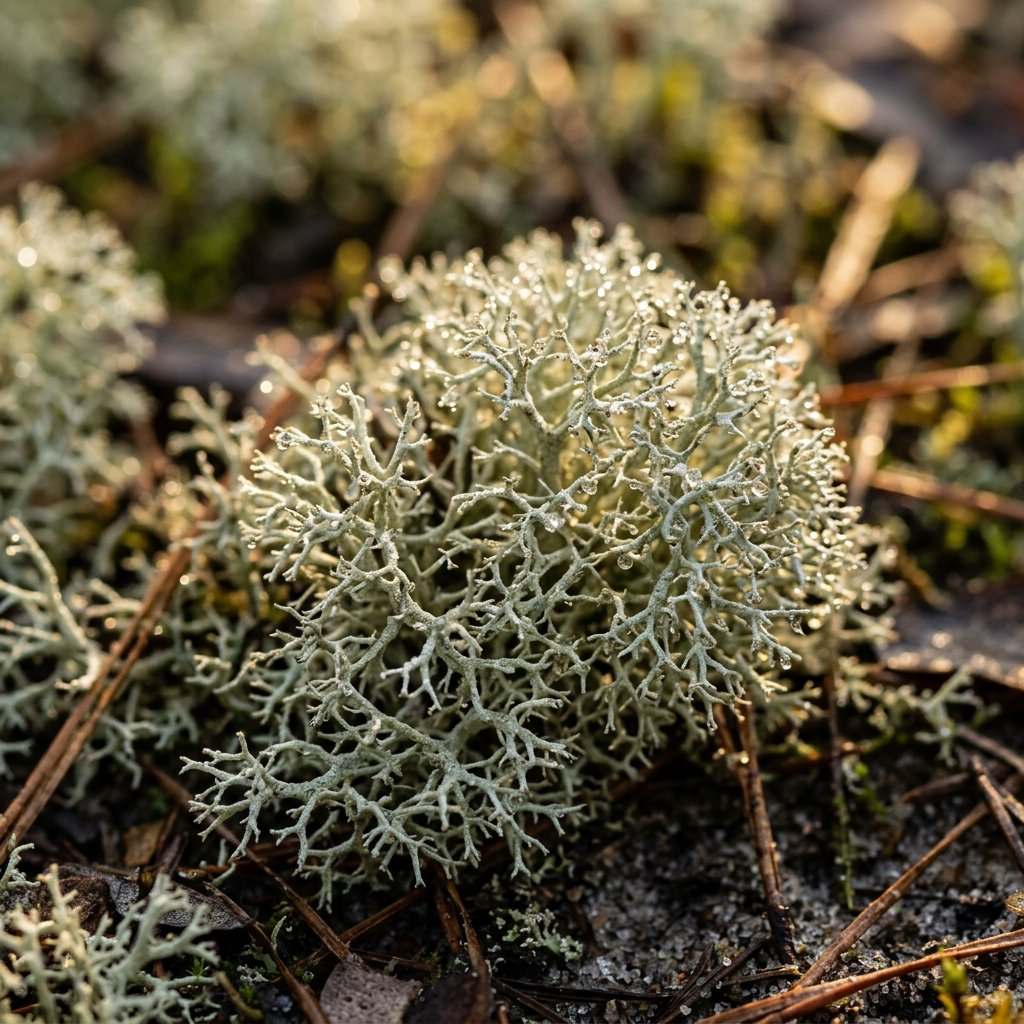
Known widely as the Dixie Reindeer Lichen, this species looks more like a delicate piece of sea coral or a miniature "puff" of frosted shrubbery than a traditional mushroom. While it belongs to the fungi kingdom, it is actually a lichen—a complex partnership between a fungus and an alga. In the folklore of northern regions, its close relatives are the "manna" that sustains caribou and reindeer through the winter, though this specific variety prefers the warmer, sunnier climates of the American South.
🔍 How to Identify
- 🌿 Branching Pattern: It forms dense, bushy tufts that look like tiny, leafless shrubs. The branching is irregular and very intricate, often appearing "tangled."
- 🎨 Color Palette: It displays a distinct pale yellowish-green or "seafoam" grey-green hue. It lacks the vibrant emerald green of true mosses.
- ☁️ Texture: When the weather is dry, it becomes incredibly brittle and will "crunch" loudly if stepped on. After a rainfall, it transforms into a soft, sponge-like cushion.
- 🚫 Lack of Cups: Unlike many other Cladonia species, Subtenuis rarely develops the tiny "golf tee" or cup-shaped structures (podetia) at its tips.
🌲 Habitat & Ecology
- 🏖️ Ground Dweller: Unlike many lichens that cling to tree bark, the Dixie Reindeer Lichen is "terrestrial." It prefers open, sunny areas with sandy or acidic soil where larger plants struggle to grow.
- 🌬️ Air Quality Indicator: Because it lacks roots and absorbs everything—moisture, nutrients, and pollution—directly from the atmosphere, its presence is often a sign of relatively clean air in the environment.
⚠️ Safety & Toxicity
- 🍄 [Status]: Non-toxic but inedible. While it isn't "poisonous" in the way a Death Cap mushroom is, it is not food for humans.
- 🐾 Pet Safety: It contains usnic acid, a natural compound that can be a mild skin irritant for some humans or cause digestive upset if a curious dog or cat decides to snack on a patch. It is best enjoyed visually rather than physically.
✨ Fun Fact
Lichens are some of the oldest living organisms on Earth! Some colonies of reindeer lichen are estimated to be over 100 years old, growing only a few millimeters each year. They are so hardy that certain lichen species have actually survived being exposed to the vacuum and radiation of outer space on the exterior of the International Space Station!
More Details