Info
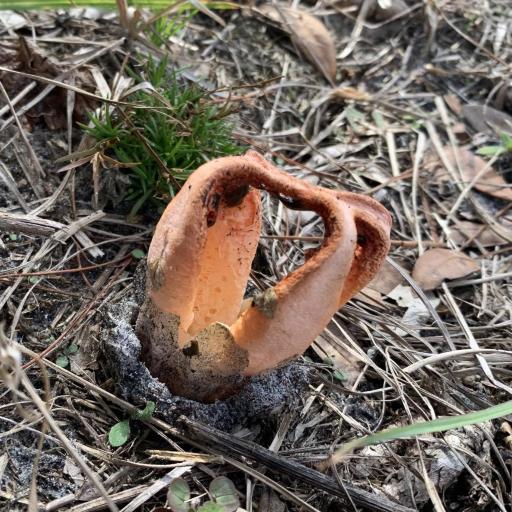
Often called the "Column Stinkhorn," this fungus looks more like a prop from a science fiction film than a traditional mushroom. Emerging from a subterranean "egg," its bright coral-to-orange limbs reach upward and fuse at the top, creating a striking architectural structure. It is famous—or perhaps infamous—for its potent odor of rotting meat, which it uses to manipulate the local insect population.
🔍 How to Identify
- 🐙 The Columns: Unlike the lattice-like cage of its relatives, this species features 2 to 5 vertical orange-red arms that are spongy and hollow, joining together at the peak.
- 💩 The Gleba: The inner upper surfaces of the columns are coated in a dark, olive-brown slime. This is the spore mass, which emits a foul, carrion-like stench.
- 🥚 The Base: The entire structure emerges from a white or grayish leathery "egg" (the volva), which often remains visible at the base of the columns.
🌲 Habitat & Ecology
- 🍂 Garden Visitor: It is a saprobic fungus, meaning it feeds on decaying organic matter. You are most likely to find it popping up in bark mulch, wood chips, or well-manured garden beds after heavy rains.
- 🪰 The Fly Strategy: While most mushrooms rely on the wind to spread spores, the Column Stinkhorn uses "chemical warfare." Its smell attracts flies and beetles, who land on the slime, get spores stuck to their feet, and transport them to new locations.
⚠️ Safety & Toxicity
- 🚫 WARNING: While not known to be deadly toxic, the Column Stinkhorn is classified as inedible.
- 🤢 Digestive Distress: Consuming stinkhorns can cause severe gastric upset. Furthermore, the odor is so pervasive that it can linger on the hands and clothes, making it a very poor candidate for the kitchen.
- 🐾 Pets and Kids: The bright color may attract curious pets or toddlers. While a small nibble is unlikely to be fatal, the bacteria associated with the rotting slime and the fungus itself can cause vomiting.
✨ Fun Fact
In some regions, these mushrooms are nicknamed "The Devil’s Fingers." Despite their ghoulish appearance, they are incredibly fast growers; once the "egg" ruptures, the full column structure can reach its maximum height in just a few hours!
More Details
| Hymenium Type | Gleba |
| Spore Print Color | Olive Brown |
| Mushroom Cap Shape | No Mushroom Cap |
| Mushroom Ecological Type | Saprobiont |