Info
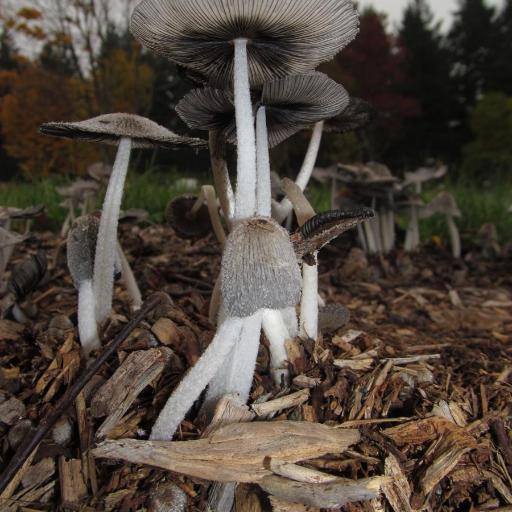
The Hare’s Foot Inkcap is a fleeting beauty of the fungal world, often appearing as if by magic after a summer rain. Its name, lagopus, is derived from the Greek words for "rabbit foot," a tribute to the soft, white velvety hairs that cover the young mushroom. This delicate species is famous for its "here today, gone tomorrow" lifestyle, completing its entire life cycle in a matter of hours before dissolving into a dark, inky liquid.
🔍 How to Identify
- 🐰 The Cap: Initially shaped like a tiny, fuzzy grey cylinder or egg. As it grows, it expands into a bell shape and eventually flattens out, often with the edges splitting and curling upward.
- 🌬️ The "Fur": The most striking feature is the coating of white, woolly scales that look like felt. These are remnants of a protective veil that disappear as the mushroom stretches and ages.
- 🖤 The Gills: Tucked underneath are crowded gills that start off white, turn grey, and finally become black as the spores mature and the edges begin to liquefy.
🌲 Habitat & Ecology
- 🍂 The Substrate: This mushroom is a "saprobe," meaning it eats dead stuff. You’ll frequently spot it in garden mulch, woodchip piles, or nutrient-rich soil filled with decaying vegetable matter.
- ⏱️ Morning Glory: They are incredibly ephemeral. They usually sprout during the night and are often fully "inked" and withered by the time the afternoon sun hits them. To see one in its "rabbit foot" stage, you have to be an early riser!
⚠️ Safety & Toxicity
- 🛑 WARNING: While not known to be deadly, the Hare's Foot Inkcap is not considered edible.
- 🧪 The Details: It lacks any significant flesh to eat, and its rapid decomposition makes it unappealing. Furthermore, many similar-looking species in the inkcap family can cause digestive upset or have "disulfiram-like" reactions if consumed with alcohol. As with all wild fungi, do not consume unless identified by a professional.
✨ Fun Fact
The process where the mushroom digests itself into a black goo is called deliquescence. This isn't just decay; it’s a clever strategy! By liquefying the gills, the mushroom allows its spores to be more easily carried away by the wind or passing insects.
More Details







