Info
Often called the "Scarlet Caterpillar Fungus," this striking orange mushroom is a real-life science fiction character. While its cousins are famous in traditional medicine, Cordyceps militaris is a vibrant forest find that tells a story of survival and transformation. It is most famous for its "parasitic lifestyle," where it transforms an unsuspecting insect into its own personal nursery.
🔍 How to Identify
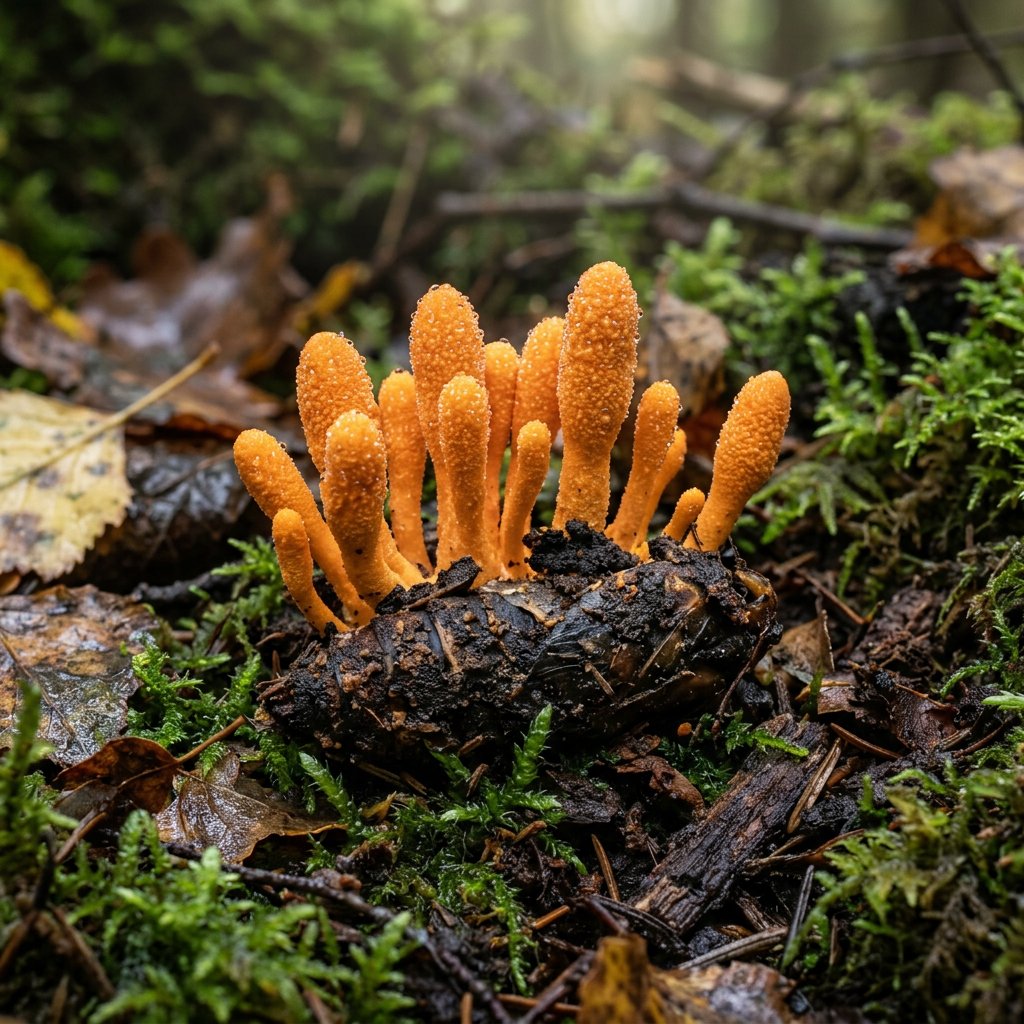
- 🍄 The Fruit Body: Look for small, club-shaped stalks (stromata) that poke vertically out of the soil. They are typically 2–8 cm tall and range from bright orange to reddish-orange.
- 🧫 The Texture: The upper part of the club is covered in tiny, pimple-like bumps called perithecia. These are the microscopic "flasks" that hold and shoot out spores.
- 🐛 The Secret Base: If you carefully dig around the base, you won’t find traditional roots. Instead, you will discover the mummified remains of a moth pupa or larva that the fungus has completely consumed and replaced with its own mycelium.
🌲 Habitat & Ecology
- 🍂 The Insect Hunter: Unlike typical mushrooms that grow on rotting wood, this species is entomopathogenic. It thrives in temperate forests, hiding among moss or damp leaf litter where moth larvae are buried.
- 🌧️ Seasonal Emergence: It typically appears in late summer and throughout the autumn. It requires high humidity and consistent rainfall to "zombify" its host and push its orange fruiting body through the earth.
⚠️ Safety & Toxicity
- ⚠️ WARNING: While Cordyceps militaris is widely cultivated in labs for health supplements and is generally considered non-toxic, never consume any wild mushroom unless you are an expert.
- 🐾 Pets & Kids: There are no known toxicities to domestic animals. However, because it grows from the decaying remains of insects, it is best kept away from curious pets to avoid any secondary bacterial issues from the host carcass.
✨ Fun Fact
🧬 This fungus is a miniature bio-factory! It produces a unique compound called "cordycepin," which is currently being researched by scientists for its potential anti-cancer, anti-viral, and anti-inflammatory properties. It’s a tiny mushroom with massive medical potential.
More Details