Info
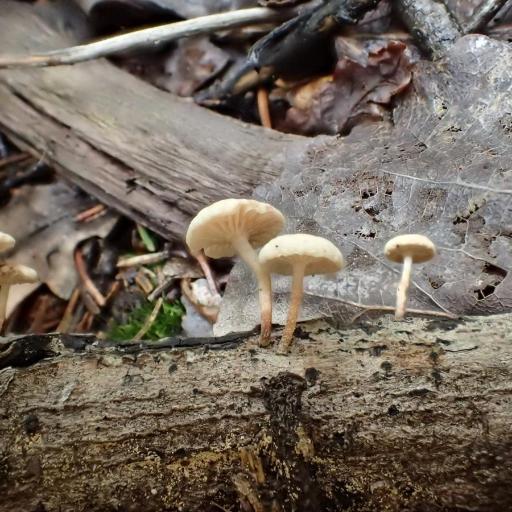
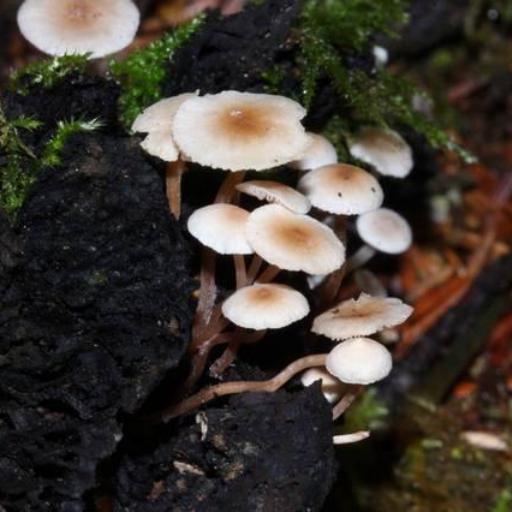
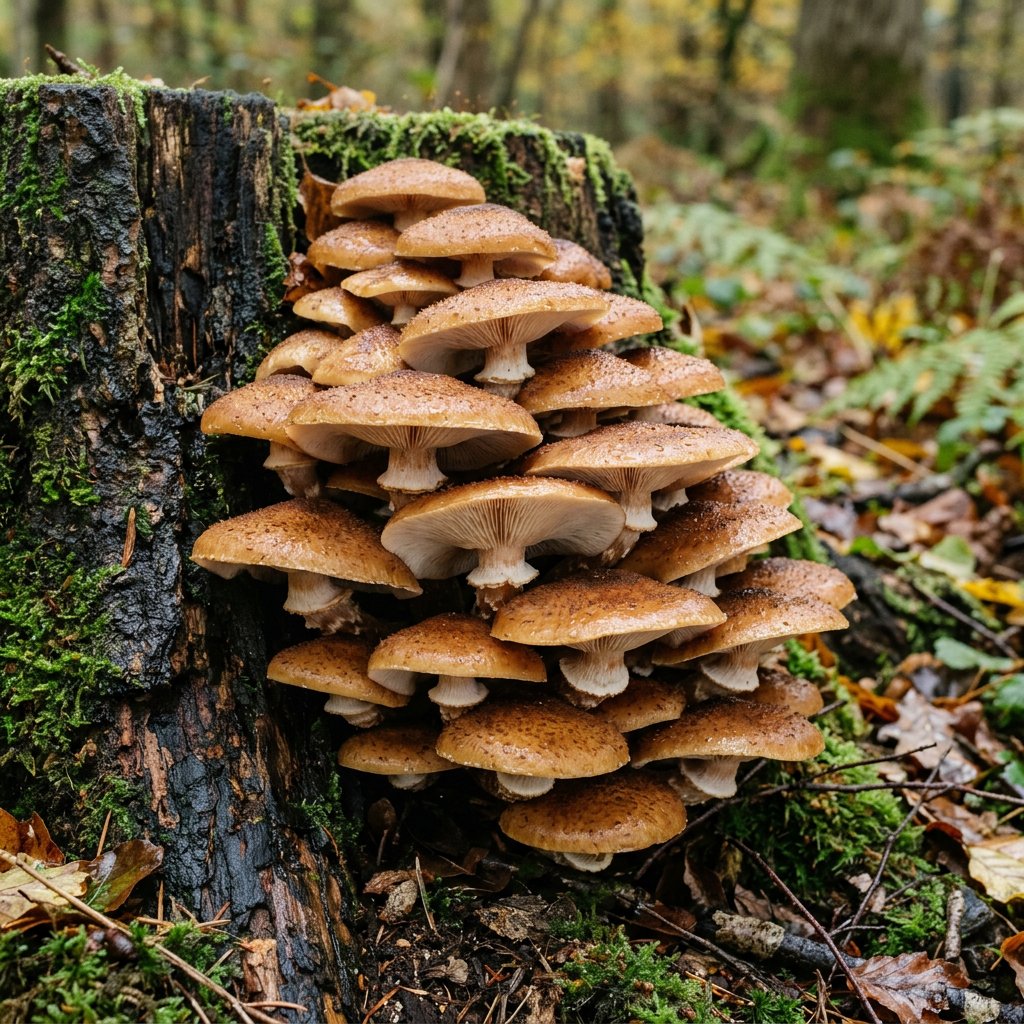
Known as the Ringless Honey Mushroom, these golden-hued clusters are a common sight at the base of hardwood trees after late-summer rains. Unlike its cousin, the classic Honey Mushroom, this species is the "rebel" of the family, lacking the characteristic protective veil or ring around its stem. In the forest ecosystem, it is a formidable force, acting as both a silent recycler of dead wood and a persistent parasite of living roots.
🔍 How to Identify
- 🍄 The Cap: Typically honey-yellow to tawny brown. The surface is dry and often dotted with tiny, dark, hairlike scales, especially toward the center.
- 🍂 The Gills: The gills are whitish to pale tan and are "subdecurrent," meaning they slightly run down the top of the stem.
- 🚫 The Stem: Toughened and fibrous, the stem is brownish near the base. Most importantly, it is entirely smooth—it lacks the "skirt" or ring (annulus) found on other Armillaria species.
- ❄️ Spore Print: When placed on a dark surface, these mushrooms drop a stark, creamy-white spore print, which is a vital clue for identification.
🌲 Habitat & Ecology
- 🌳 Social Clusters: These mushrooms are rarely loners; they grow in large, tight bunches (cespitose) at the base of trees or where roots are buried underground.
- 🍂 The Oak Connection: While they aren't picky, they have a deep-seated love for Oak trees. They cause "white rot," a process where the fungus breaks down the lignin in the wood, eventually turning it soft and spongy.
- 🏠 Urban Residents: Because they thrive on buried wood and tree roots, you are just as likely to find them in a manicured suburban lawn as you are in a deep forest.
⚠️ Safety & Toxicity
- 🚨 WARNING: Never consume any wild mushroom unless you have 100% certainty of its identity. This mushroom has several toxic look-alikes, including the Jack-o'-Lantern (Omphalotus illudens) and the deadly Galerina.
- 🤢 Preparation Matters: While some consider it edible, it must be thoroughly cooked. Even when cooked, many people experience significant gastric distress or "mushroom poisoning" symptoms. It is generally recommended that beginners avoid eating this species.
- 🐕 Pet Safety: Keep dogs away from these clusters; ingestion can lead to severe vomiting and abdominal pain for pets.
✨ Fun Fact
- 🧬 A Change of Name: For decades, this mushroom was known as Armillaria tabescens. However, recent DNA sequencing moved it to its own genus, Desarmillaria, because it is genetically distinct enough from the "ringed" honey mushrooms to deserve its own family branch!
More Details