Info
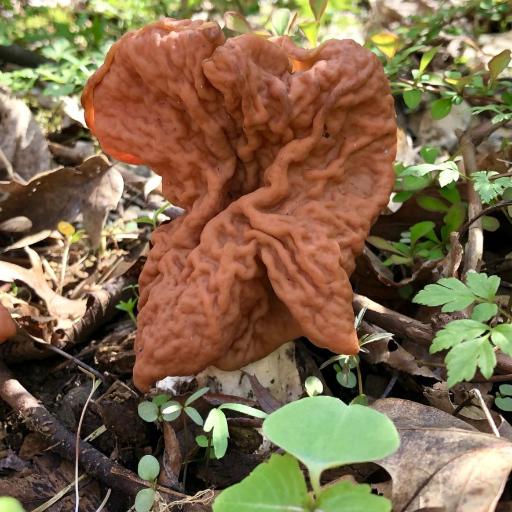
Known colloquially as the "Elephant Ear" or the "Brown False Morel," Discina brunnea (often classified as Gyromitra brunnea) is a curious spring dweller that mimics the look of a crumpled piece of leather or a small, earthy brain. It belongs to a group of fungi that straddle the line between fascinating forest sculptures and dangerous look-alikes. Appearing just as the first wildflowers bloom, it is a master of disguise in the deciduous woods.
🔍 How to Identify
- 🧠 The Cap: Displays a distinctively lobed or "brain-like" structure. It is typically a rich reddish-brown to cinnamon color, often appearing folded or saddle-shaped rather than uniformly pitted like a true morel.
- 🤍 The Underside: The underside of the cap lobes is usually much paler—ranging from white to a light tan—and has a slightly velvety texture.
- 🪵 The Stem: Features a short, stout, and thick stem that is often ribbed or multi-channeled where it meets the cap. If sliced open, the stem is typically solid or chambered, rather than completely hollow.
🌲 Habitat & Ecology
- 🍂 Forest Home: This mushroom is a saprobic species, most frequently found in hardwood forests across North America. It has a particular affinity for the decaying roots and leaf litter around Oak and Hickory trees.
- 📅 Spring Sentinel: It is a dedicated spring species. You will likely spot it during "morel season," appearing when the ground begins to warm and the spring rains have soaked the forest floor.
⚠️ Safety & Toxicity
- 🚫 WARNING: Potentially Deadly. Discina brunnea contains varying levels of the toxin gyromitrin. When ingested, the body converts this into monomethylhydrazine—a highly toxic compound.
- 🤢 Cumulative Risk: While some old-school foragers claim to eat them after extensive boiling, this is extremely dangerous. The toxins are cumulative and can cause sudden, severe liver damage, neurological distress, and even death. It is considered toxic to humans, cats, and dogs.
✨ Fun Fact
- 🚀 Rocket Science: The chemical toxin found in this mushroom, monomethylhydrazine, is the exact same chemical used by NASA as a propellant for rockets and satellites! This "rocket fuel" is what makes the mushroom so dangerous to the human nervous system.
More Details







