Info
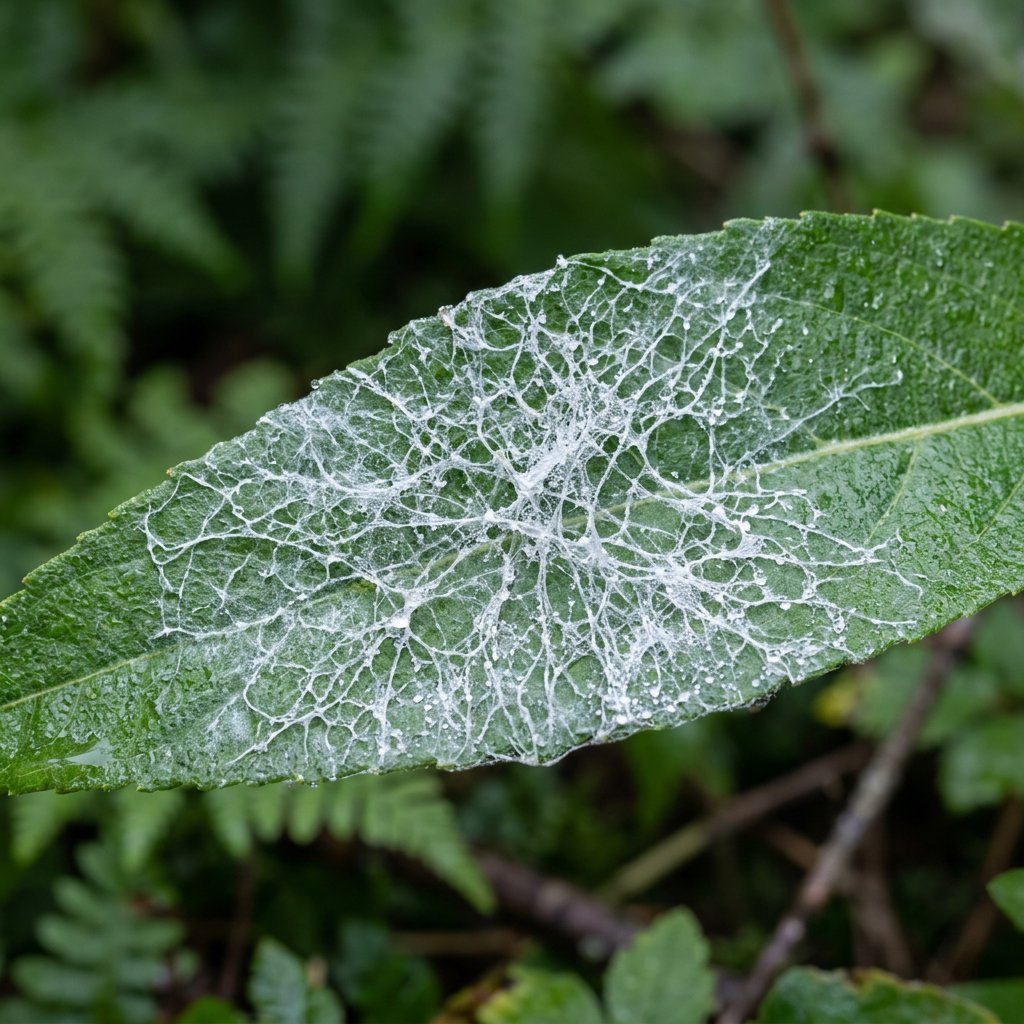
Known commonly as the Willow Powdery Mildew, Erysiphe adunca is a specialized fungus that trades the traditional "mushroom" shape for a ghostly, white dusting. Instead of sprouting from the soil, it blankets the leaves of willow and poplar trees, making them look as if they’ve been caught in a premature summer snowstorm. While it is a parasite, it is a master of microscopic architecture, creating intricate structures that are invisible to the naked eye.
🔍 How to Identify
- ❄️ The "Flour" Look: The first sign is a white, powdery coating on the surface of leaves that looks like spilled flour or suede fabric.
- ⚫ Micro-Dots: In late summer and autumn, look closely for tiny, pinhead-sized spheres embedded in the white fuzz. These start out yellow or orange before turning jet black.
- 🧶 Microscopic Hooks: Under a magnifying glass, these black spheres (chasmothecia) feature long, stiff "arms" with elegantly curled, hooked tips—the feature that gives the species its name.
🌲 Habitat & Ecology
- 🌳 Host Specificity: You will almost exclusively find this fungus on the foliage of Willow (Salix) and Poplar (Populus) species. It is a "biotroph," meaning it needs a living host to survive.
- 🌬️ Wind Travelers: The fungus reproduces via lightweight spores that are carried by summer breezes. Unlike many fungi that require heavy rain, this powdery mildew thrives in humid air followed by warm, dry days.
- 🍂 Seasonal Cycle: It spends the winter hiding in the crevices of tree bark or fallen leaves, waiting for the new spring buds to open so it can begin its lifecycle anew.
⚠️ Safety & Toxicity
- 🟢 Status: SAFE. This fungus is non-toxic to humans and animals.
- 🧤 Handling: It is safe to touch, though it may leave a dusty residue on your fingers. It does not pose a threat to pets, though it is a significant "pest" for gardeners who prize the aesthetics of their ornamental willow trees.
✨ Fun Fact
- ⚓ The Anchor Trick: The species name adunca is Latin for "hooked." Scientists believe the microscopic hooks on its fruiting bodies act like tiny anchors, helping the fungus latch onto the rough surface of the tree bark so it doesn't get washed away during winter storms!
More Details







